
Chinese Surnames Explained: Where They Came From and Why They Lead the Name
A Chinese name opens with the family surname, and behind that one character sits roughly four thousand years of tribal branches, royal grants and vanished states. This guide walks through the rule that puts the surname first, the stories behind the biggest names — Wáng, Lǐ, Zhāng, Liú, Chén and Huáng — and the ancient xìng-and-shì system that produced them, illustrated frame by frame from four explainer videos so you can see every character we discuss.
Key takeaways
- The surname comes first and is usually one character; the given name follows, one or two characters long and chosen for meaning.
- China uses about 4,000 surnames, and the top 100 cover roughly 87% of the population — lǎobǎixìng, "the old hundred surnames", literally means ordinary people.
- Wáng (king), Lǐ (plum) and Zhāng (bow) alone approach 300 million bearers — nearly the population of the United States sharing three surnames.
- The character 姓 xìng itself pairs "woman" with "to give birth": the oldest surnames were inherited from mothers, and the eight great prehistoric ones all contain the woman radical.
- Most surnames people wear today began as shì, branch names drawn from states, noble ranks, official posts and trades — the minister of war's Sīmǎ and the potter's Táo among them.
- One surname can wear many spellings: mainland pinyin writes Zhāng, Taiwan's Wade-Giles writes Chang, and Hong Kong's Cantonese writes Cheung.
Twelve frames through the story of Chinese surnames
- 1
The surname comes first — and it is usually one character
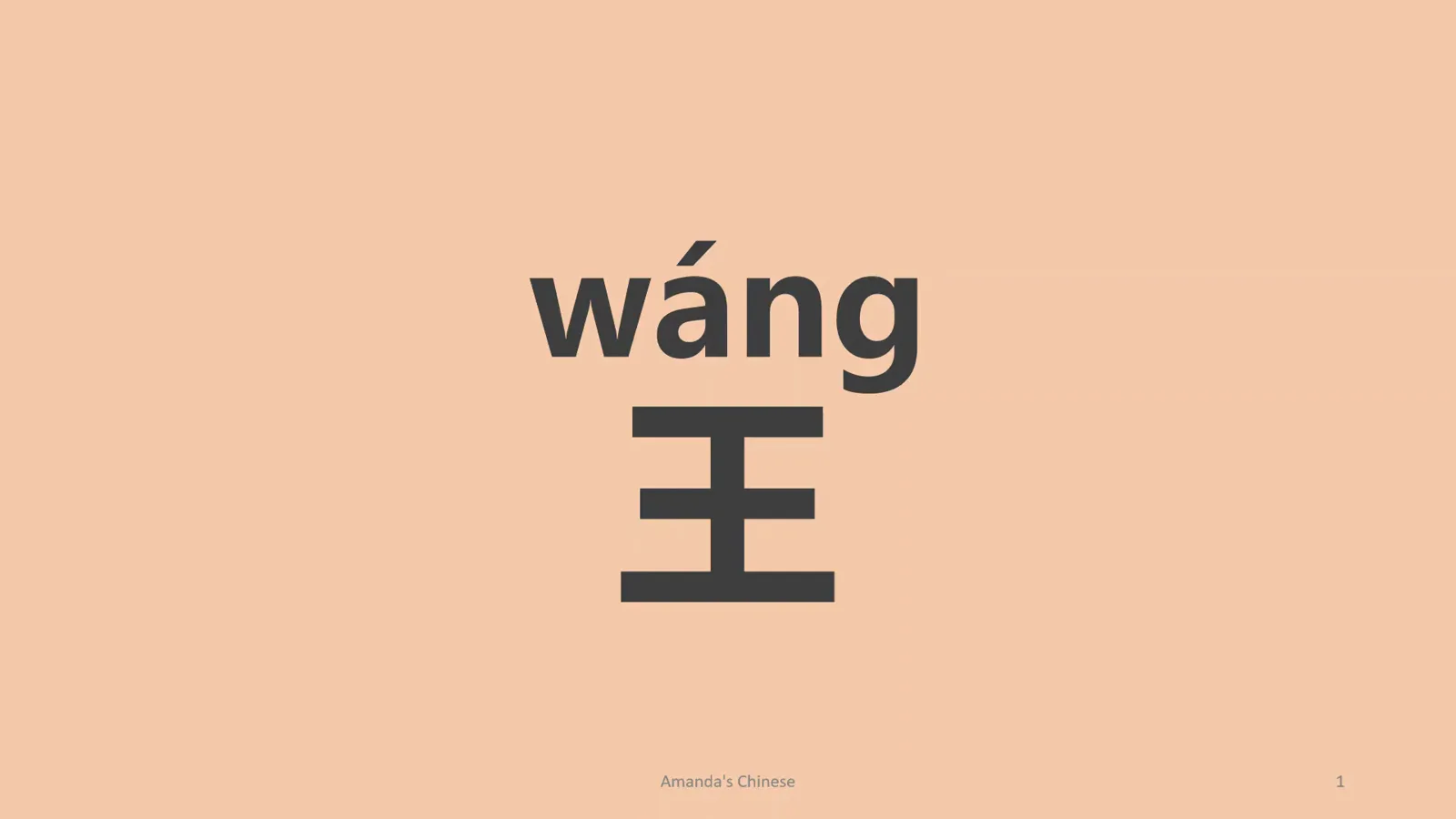
A Chinese name opens with the xìng, the family surname, followed by the given name. In China the surname is almost always a single character — rare exceptions like Sīmǎ and Zhūgě have two — while the given name runs one or two characters and is chosen for meaning rather than fashion. In a name like Wáng Xiǎomíng, the very first syllable already tells you the family.
Wáng opens the name: one character, one family.Watch at 0:04 - 2
About 4,000 surnames — and 100 of them cover most of China
China has roughly four thousand family names in use, a fraction of the 150,000-odd last names recorded in the United States. The concentration is extreme: the hundred most common surnames are shared by about 87% of the population. That is why Chinese speakers call ordinary folks lǎobǎixìng — literally "the old hundred surnames".
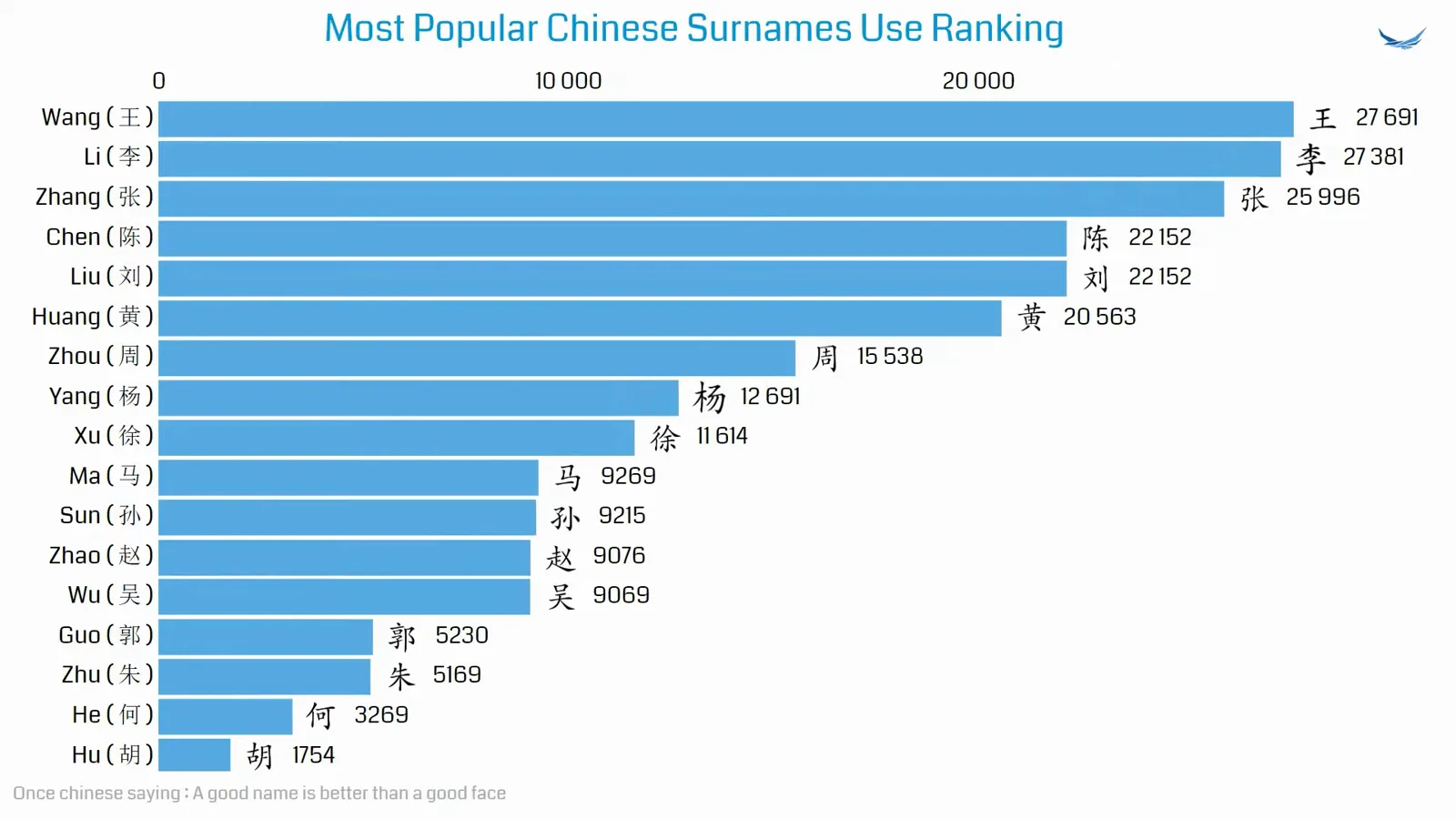
In the animated ranking, Wang, Li and Zhang pull away from the field early and never look back.Watch at 1:20 - 3
Wáng 王 — the king of surnames
Wang tops the modern ranking with more than 90 million bearers. The character means king, and the name reaches back to the Zhou dynasty, when China was ruled by kings rather than emperors. Descendants and retainers of those royal houses took Wáng as their badge, and it has never left the top spot since.
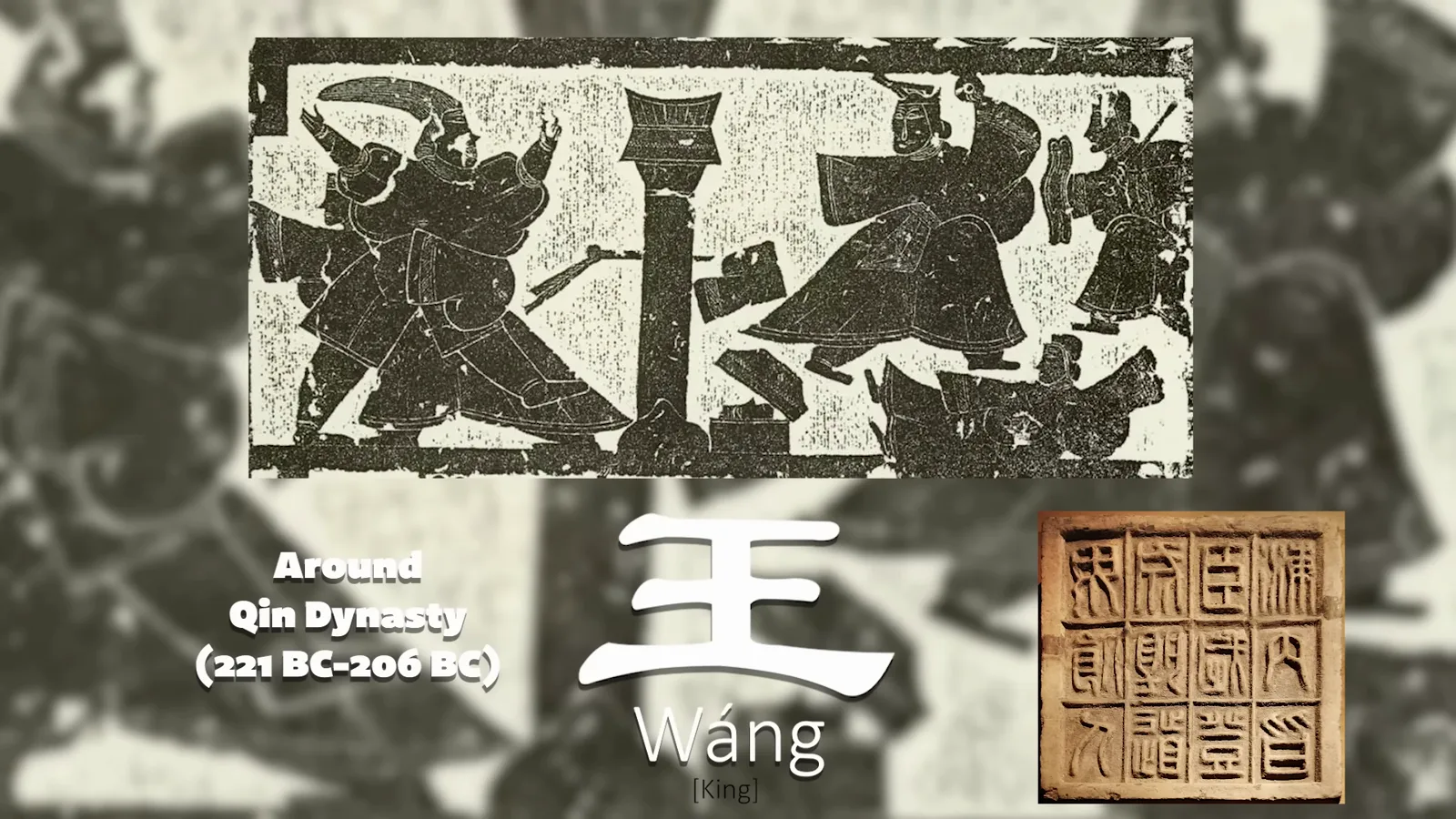
Qin-era artwork and a seal stamp frame the character for king.Watch at 2:11 - 4
Lǐ 李 — the plum tree that grew an empire
Li means plum, and it was the surname of the Tang dynasty imperial family, founded by Lǐ Yuān and carried to greatness by his son Lǐ Shìmín, Emperor Taizong. Because it was the imperial name it was widely adopted, and the sage Lǎozǐ — born Lǐ Ěr — gives it an even older pedigree. By the Song dynasty it was already China's second most common surname.
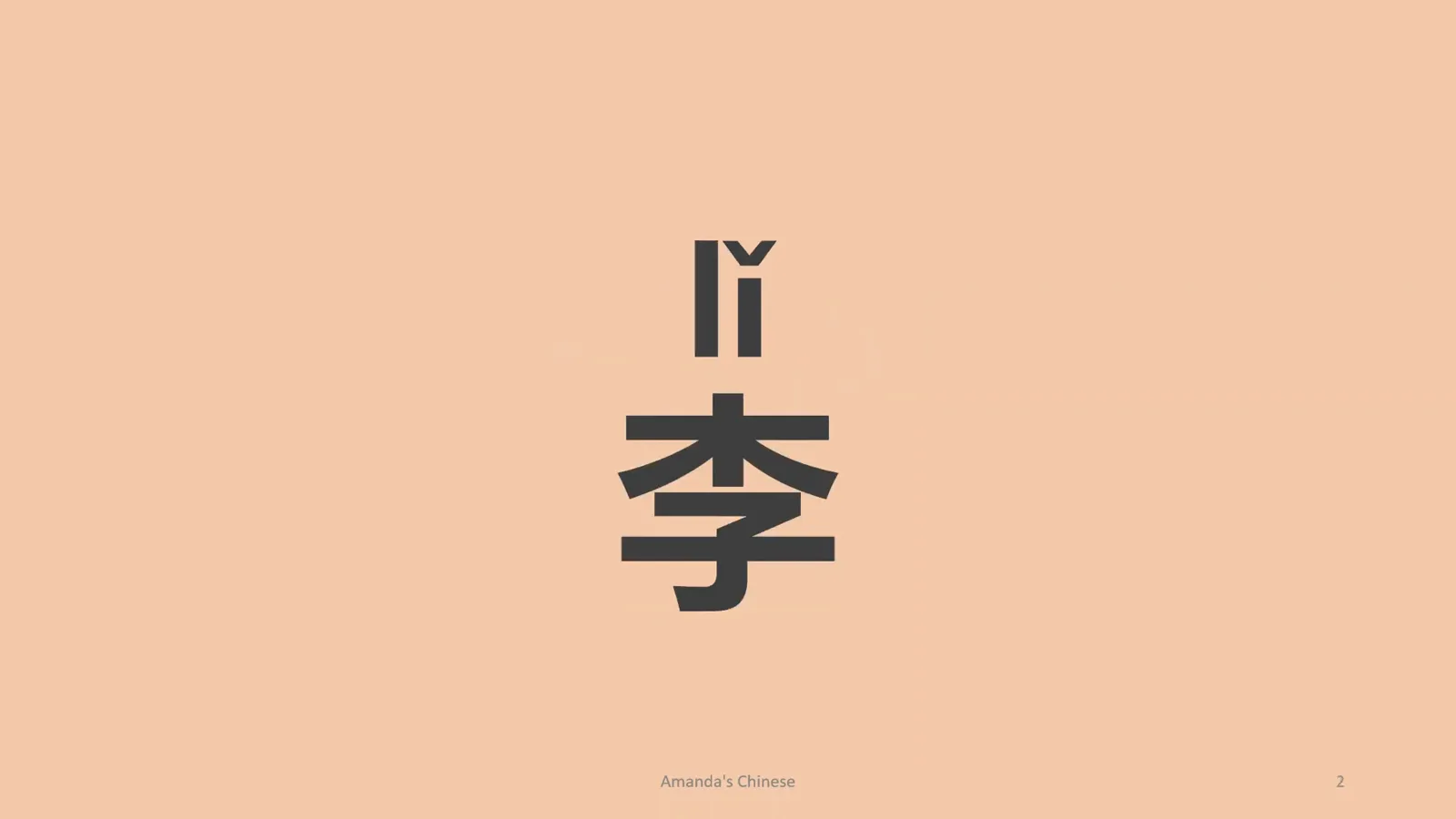
One syllable, one plum, ninety million bearers.Watch at 0:08 - 5
Zhāng 张 — the archer's surname
Zhang's origin story is drawn on its face: the left side of the character is gōng, the bow. One tradition says the Yellow Emperor's grandson invented the bow and arrow and was granted this surname in reward. The Three Kingdoms general Zhāng Fēi carried it — though note that the actress Zhang Ziyi actually writes a different character, 章.
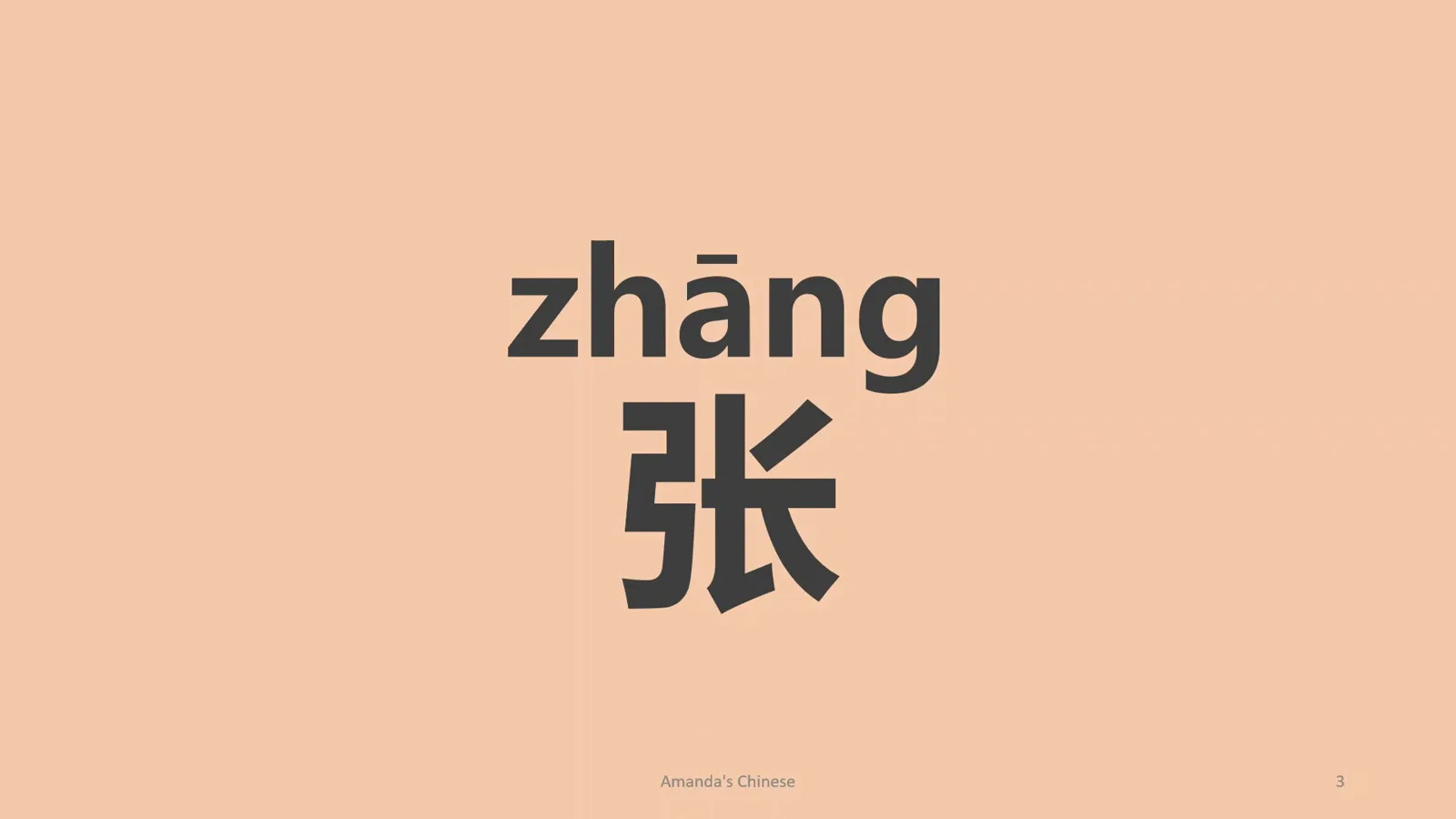
The bow radical sits on the left — the surname is its own etymology.Watch at 0:11 - 6
Liú 刘 — four hundred years of Han emperors
Liu is the family name of the Han dynasty, the empire that gave the Han people their name. When the dynasty fell, the name did not: Liu still ranks fourth in China today, a two-thousand-year echo of imperial power carried by tens of millions of families.
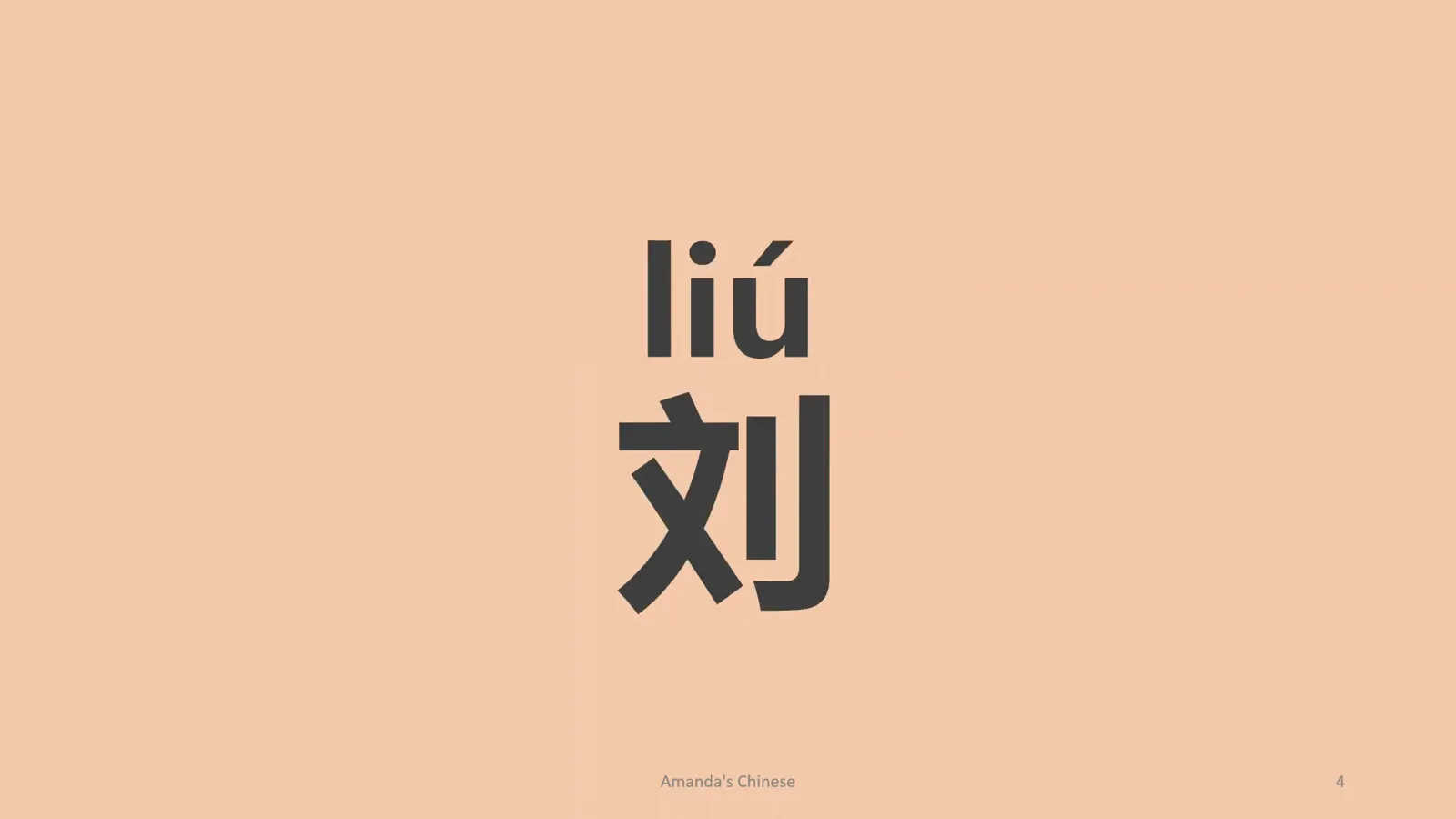
The Han imperial surname still holds fourth place nationwide.Watch at 0:13 - 7
Chén 陈 — the state that became a surname
Chen began as the name of a small vassal state of the Zhou dynasty; the people of that state took its name as their own. Today it is the fifth most common surname in China — and the most common in Singapore and Taiwan, carried across the sea by generations of southern Chinese emigrants.
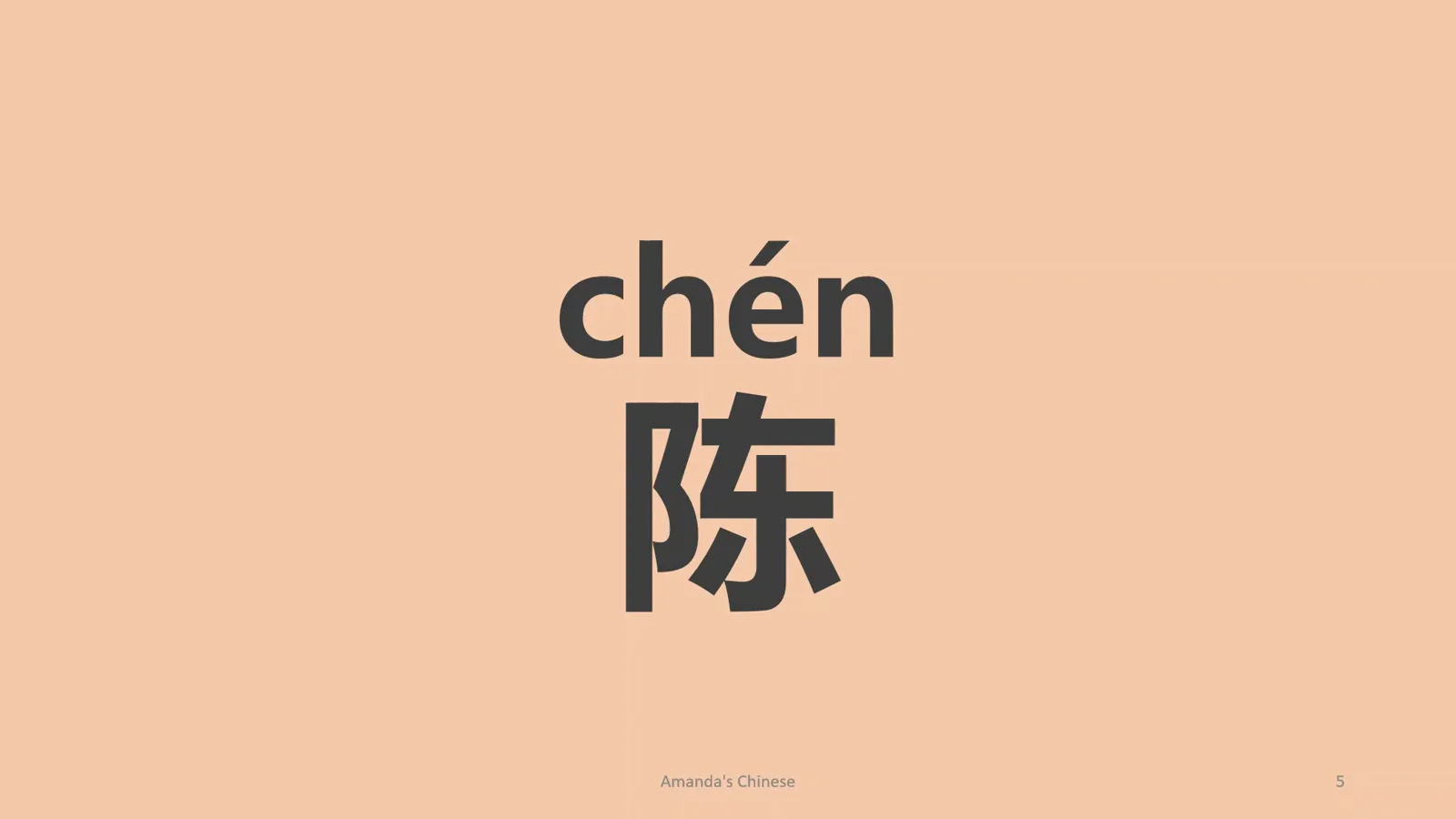
A vanished Zhou-era state, alive in tens of millions of passports.Watch at 0:16 - 8
Huáng 黄 — yellow, and a drowned kingdom
Huang means yellow, the color of the Yellow River and of the emperor. The surname came from the ancient coastal state of Huang, and its bearers drifted south over the centuries: in Guangdong province it is now the single most common surname.
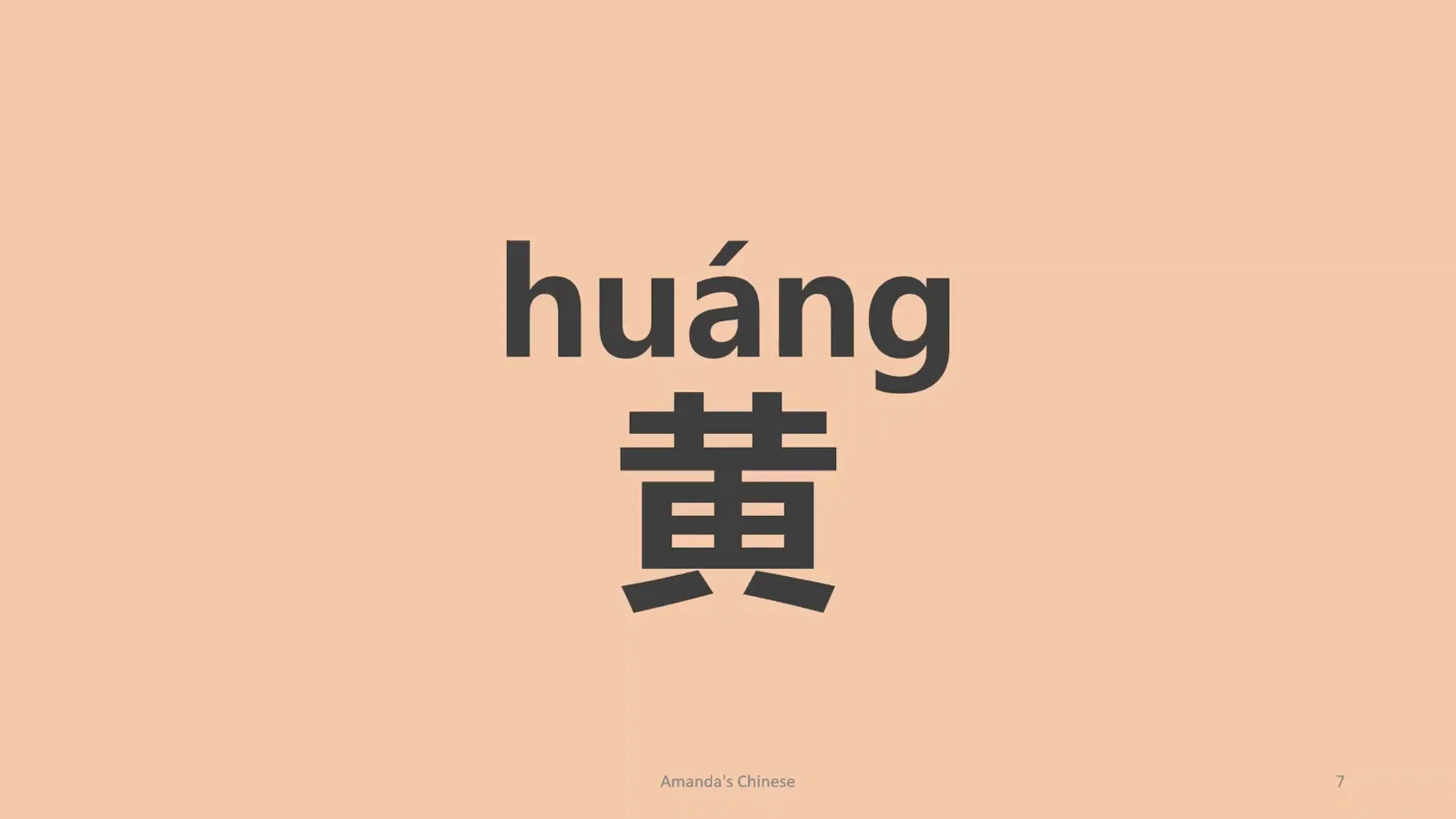
The character for yellow doubles as a family name for tens of millions.Watch at 0:21 - 9
Before there were Wangs: the Yellow Emperor's twelve surnames
The Records of the Grand Historian say the Yellow Emperor had 25 sons, and fourteen of them were given twelve surnames — Jī, Yǒu, Qí, Jǐ, Téng, Zhēn, Rèn, Xún, Xī, Jǐ, Xuān and Yī. In that matriarchal age a xìng passed down the mother's side; the character for surname itself is built from "woman" plus "to give birth", and the eight great prehistoric surnames — Jī, Jiāng, Sì, Yíng and the rest — all carry the woman radical inside.
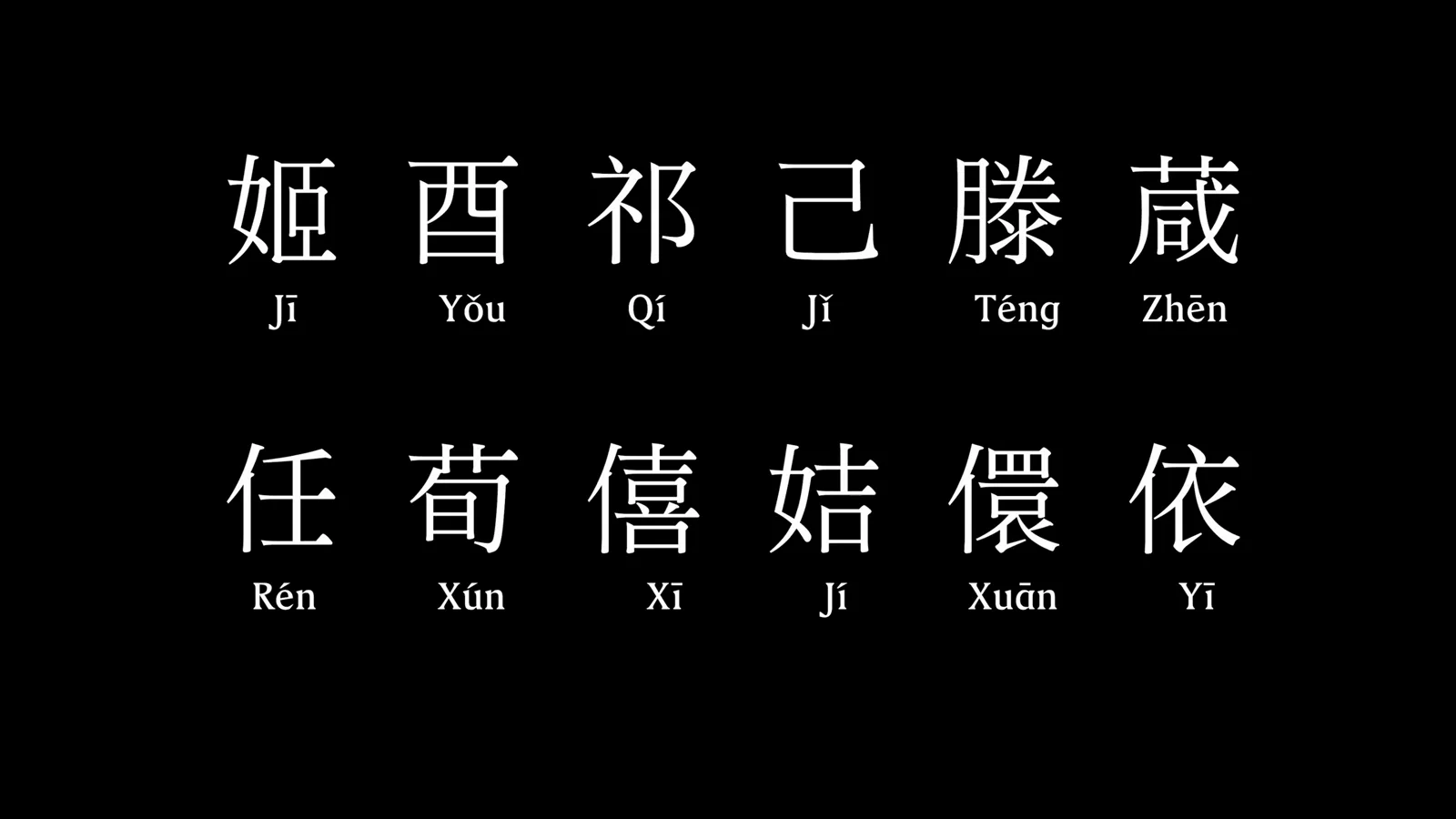
Twelve ancient surnames, every one of them inherited from a mother.Watch at 1:40 - 10
From tribes to branches: how shì became today's surnames
The xìng named the whole tribe; a second marker, the shì, named one branch of it. During the Warring States period people began taking their shì as their xìng, and by the Han dynasty the two had merged into the single paternal surname used ever since. A Han-era survey traced most surnames to states, noble ranks, official posts, places and trades — the minister of war's Sīmǎ and the potter's Táo among them.
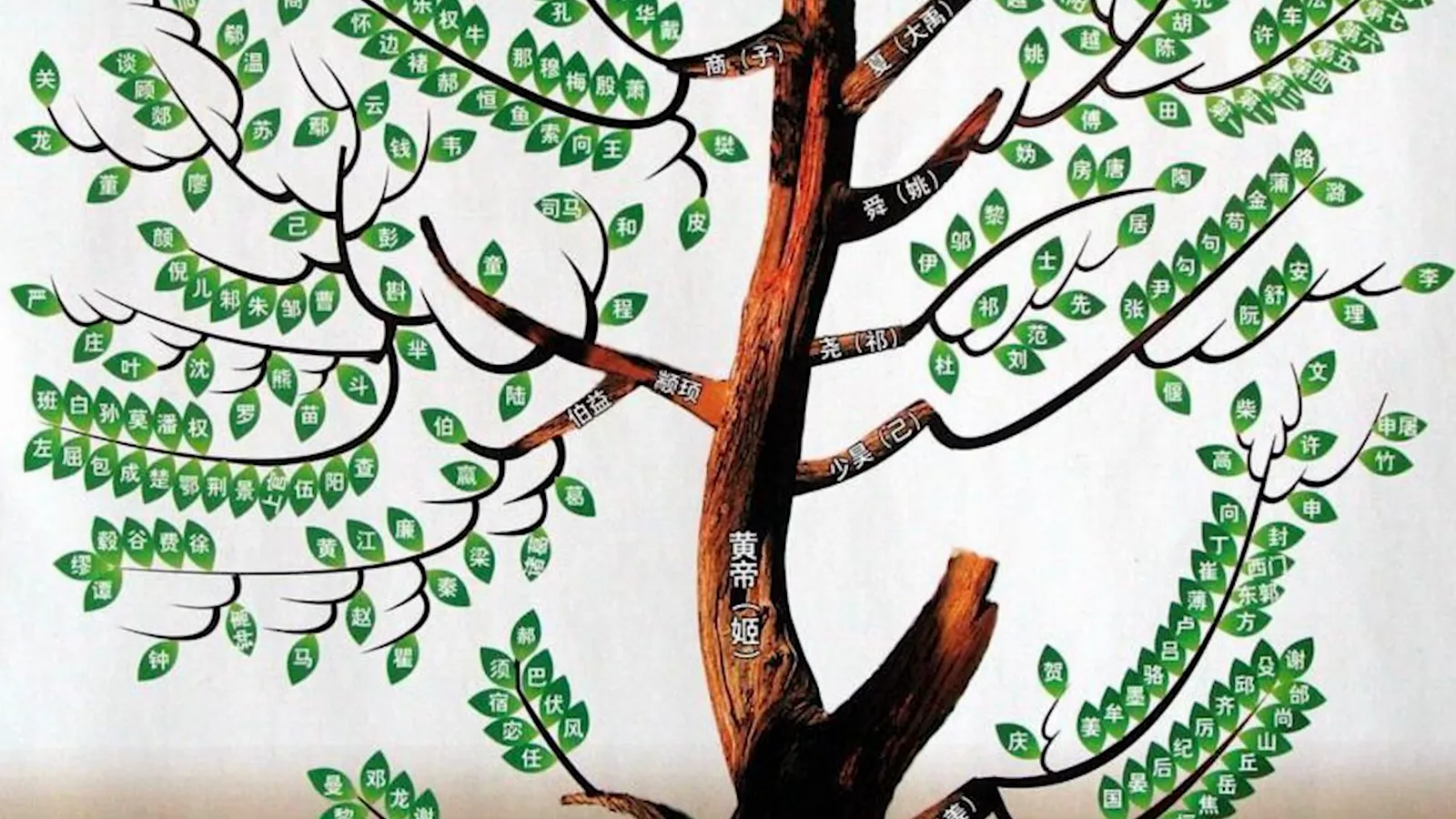
One tree, countless branches: tribes splitting into the surnames of today.Watch at 0:51 - 11
One surname, many spellings
The same Chinese surname reaches the alphabet by different roads. Mainland pinyin writes Zhāng; Taiwan's Wade-Giles writes Chang; Hong Kong's Cantonese writes Cheung. Add Hokkien, Hakka and other dialects and the variants multiply — so Jung Chang, Philip Chung and Zhang Ziyi may or may not share the surname you think they do. If you are starting out, learn pinyin; it is the system built for English speakers.
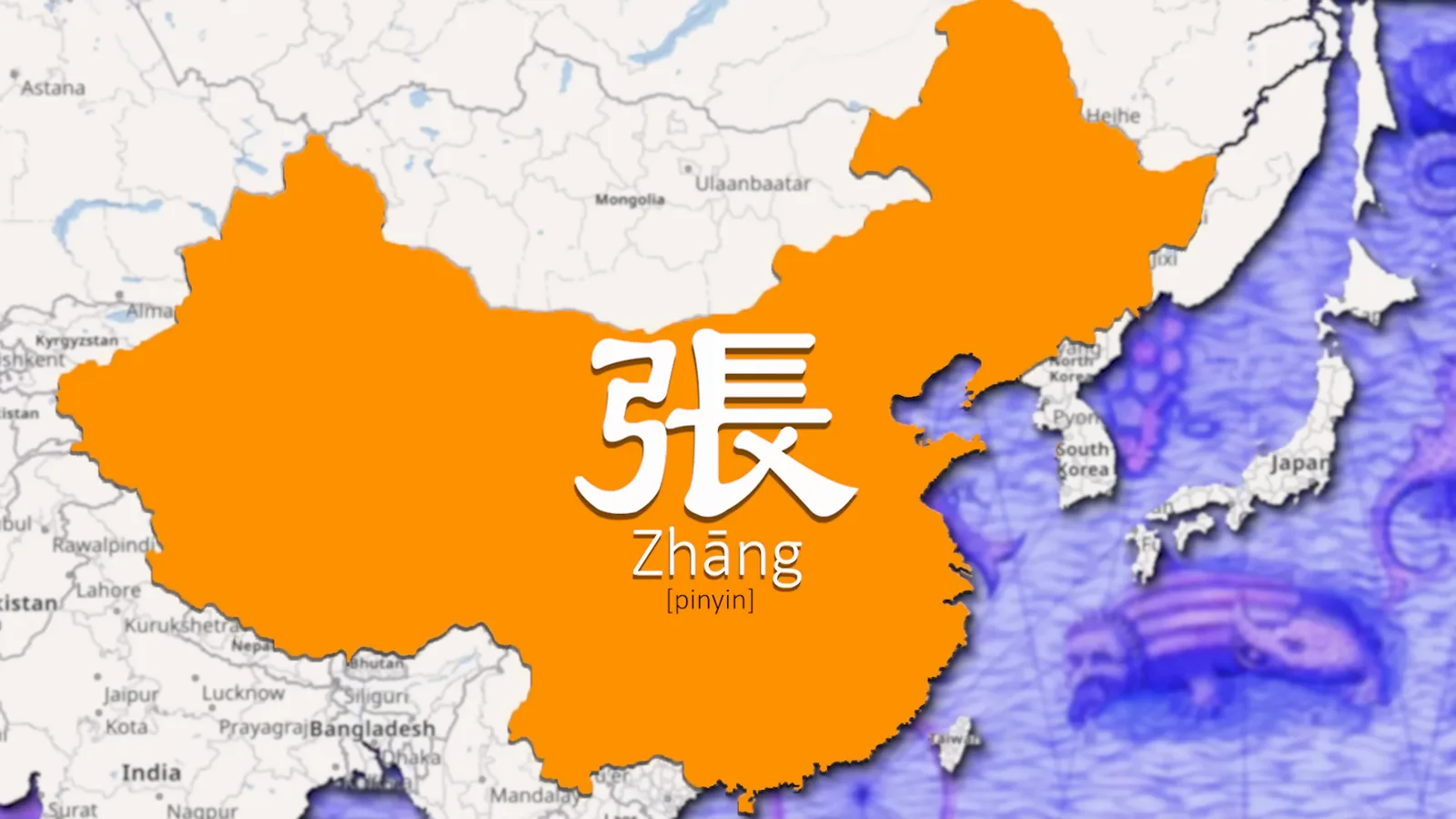
One surname, romanized three different ways across the Chinese-speaking world.Watch at 2:40 - 12
The given name keeps count of the generations
Surnames stay fixed, but many families thread a code through the given name: siblings share the same first character, and each new generation takes the next character of a family poem called the pàizìgē. One generation of the Luó family writes zōng, the next writes shǒu. Sharing a character with a living ancestor, by contrast, has long been considered rude — the exact opposite of the Western "junior".
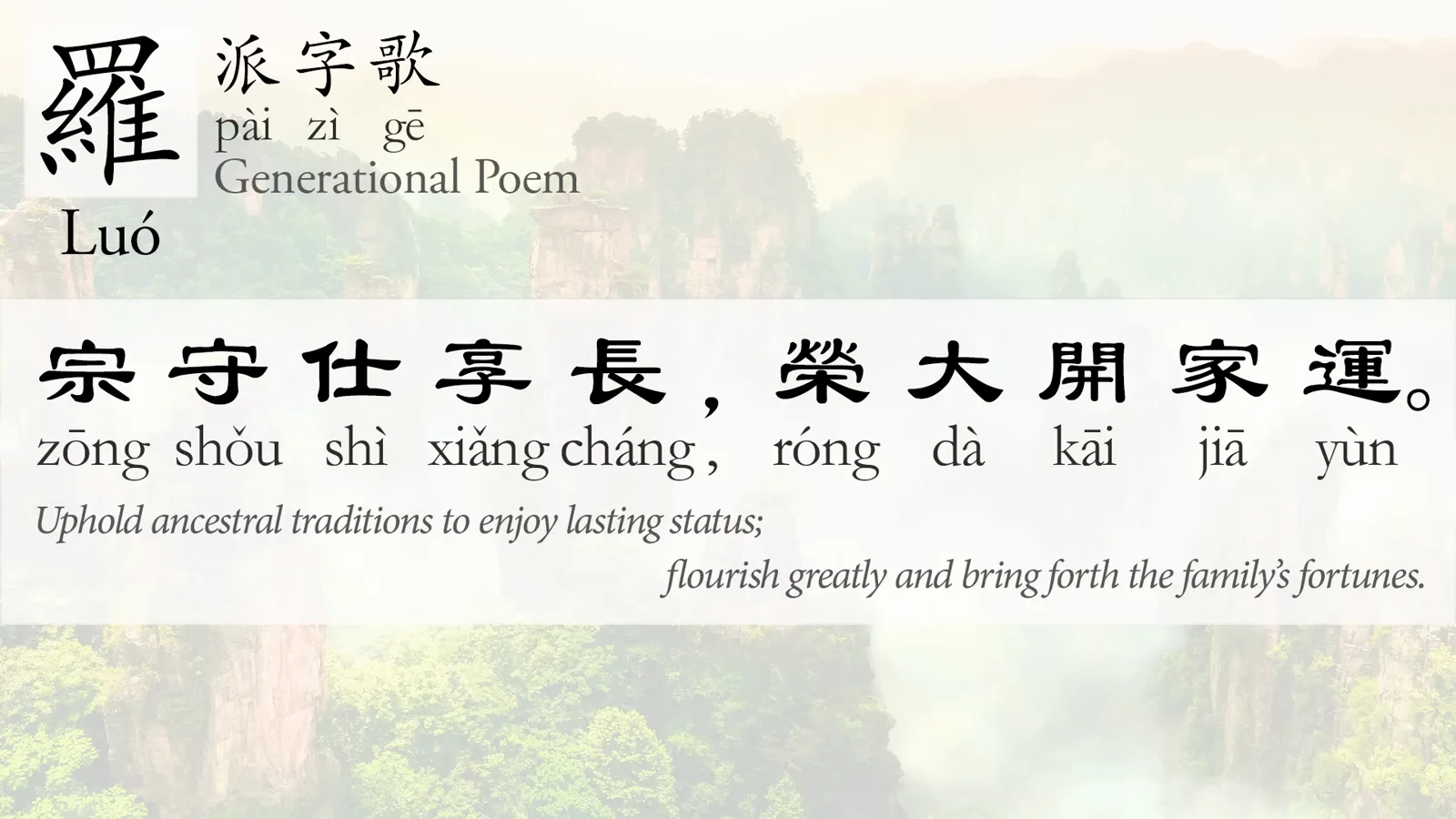
A family poem hands each generation its first given-name character.Watch at 6:40
Frequently asked questions
- Why do Chinese surnames come before given names?
- Because the family is placed before the individual: the surname announces which family you belong to, and the given name picks you out inside it. China, Korea and Vietnam all follow this surname-first order, and Japanese names do too — even though Western documents often reverse them abroad.
- How many Chinese surnames are there?
- About 4,000 are in use today — far fewer than the 150,000-odd surnames recorded in the United States. The spread is lopsided: the 100 most common surnames cover roughly 87% of China's population, which is why "lǎobǎixìng" (the old hundred surnames) is a synonym for ordinary people.
- Why are Wang, Li and Zhang so common?
- Imperial adoption played a huge role — Li spread as the Tang dynasty's imperial family name — and the merger of ancient shì branch names into surnames funneled millions of people into a shared pool. The result: Wang, Li and Zhang together approach 300 million people, nearly the population of the United States.
- Is every Zhang spelled the same way in English?
- No. Mainland pinyin writes Zhāng, Taiwan's Wade-Giles writes Chang, and Hong Kong's Cantonese romanization writes Cheung — same character, three spellings. And some identical spellings hide different characters: Zhang Ziyi's surname is 章, not the archer's 张.
- What is the oldest Chinese surname?
- The oldest recorded ones are the twelve surnames the Yellow Emperor's sons received, listed in the Records of the Grand Historian — Jī and friends — plus the eight great prehistoric surnames such as Jiāng and Yíng. They all contain the "woman" radical, because in that era surnames passed down the mother's side.
- Can people with the same surname marry?
- In prehistory they could not: the ban on same-xìng marriage was a way to prevent inbreeding within a tribe. By the Han dynasty the rule had relaxed to the paternal line, and today sharing a surname is no obstacle at all — the taboo that survived is naming a child after an elder.
Keep going
© 2026 AIChineseName.