
The Radicals Hidden Inside Chinese Names, and What They Mean
Almost every Chinese character is assembled from smaller meaning-bearing parts called radicals. Once you can spot a handful of common radicals, a Chinese name stops being a wall of strokes and starts reading like a small sentence: water here, a person there, grass on top. This guide introduces eight radicals that show up constantly in given names, each with the meaning it contributes and characters you will actually meet.
Key takeaways
- A radical is the recurring semantic component inside a character.
- Radicals on the left or top usually carry the core meaning.
- The water radical 氵 hints at rivers, flow, and adaptability.
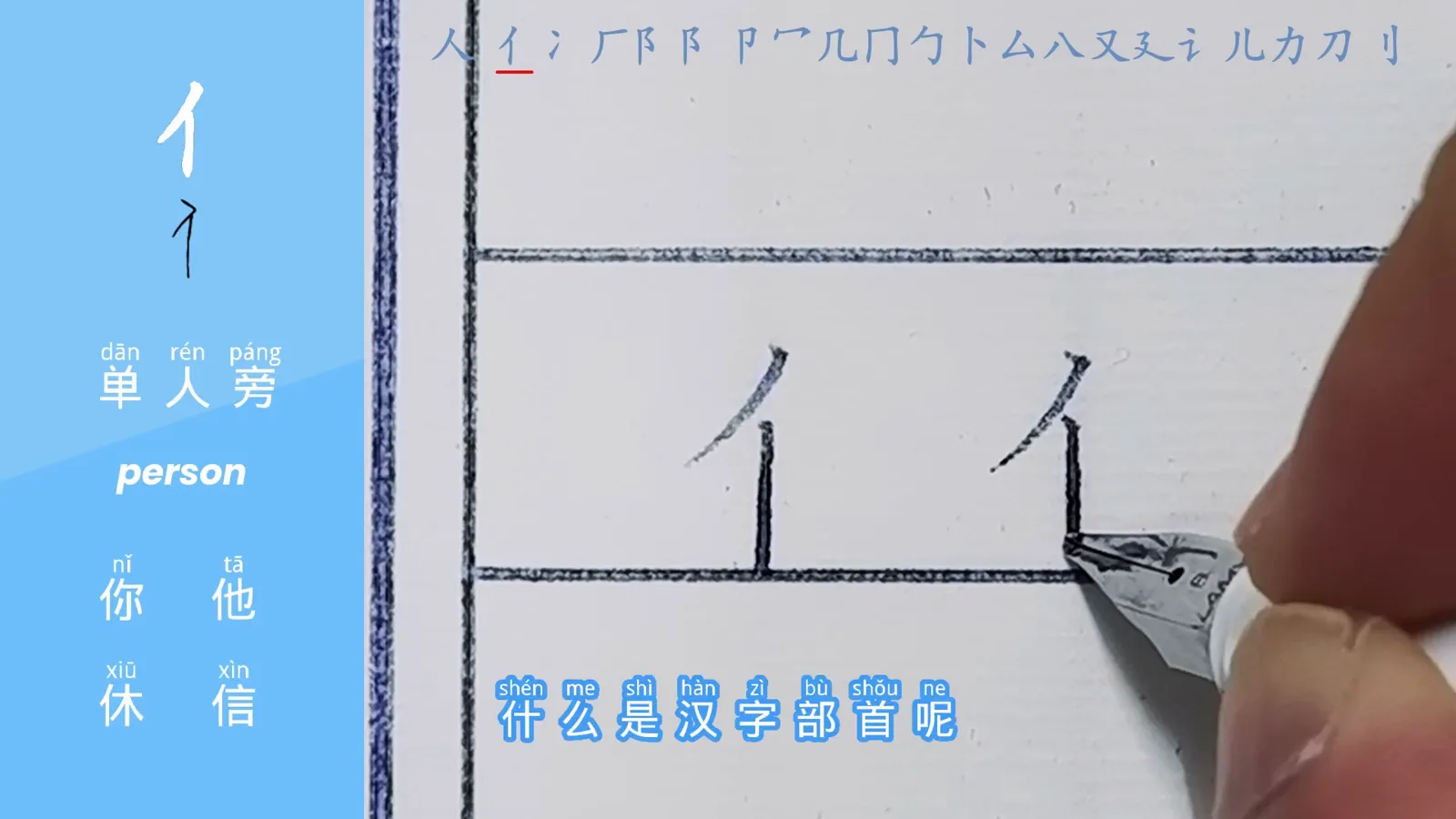
- The person radical 亻 marks characters about people and conduct.
- Knowing a few radicals lets you guess a name's feel without a dictionary.
- The same radical keeps its meaning across many different name characters.
Eight radicals you will meet in Chinese names
- 1
亻 — the standing-person radical
Written as a lean 人 shifted to the left side of a character, 亻 signals that the character concerns a person or their behaviour. It appears in 你 (you) and the name characters 休 and 信 (trust).
The left-side 亻 person radical, shown with example characters 你 他 休 信.Watch at 0:12 - 2
儿 — the legs radical
The 儿 component at the foot of a character originally depicted legs or a person standing. It underpins warm, human name characters such as 元, 光 (brightness), 先 and 兄.
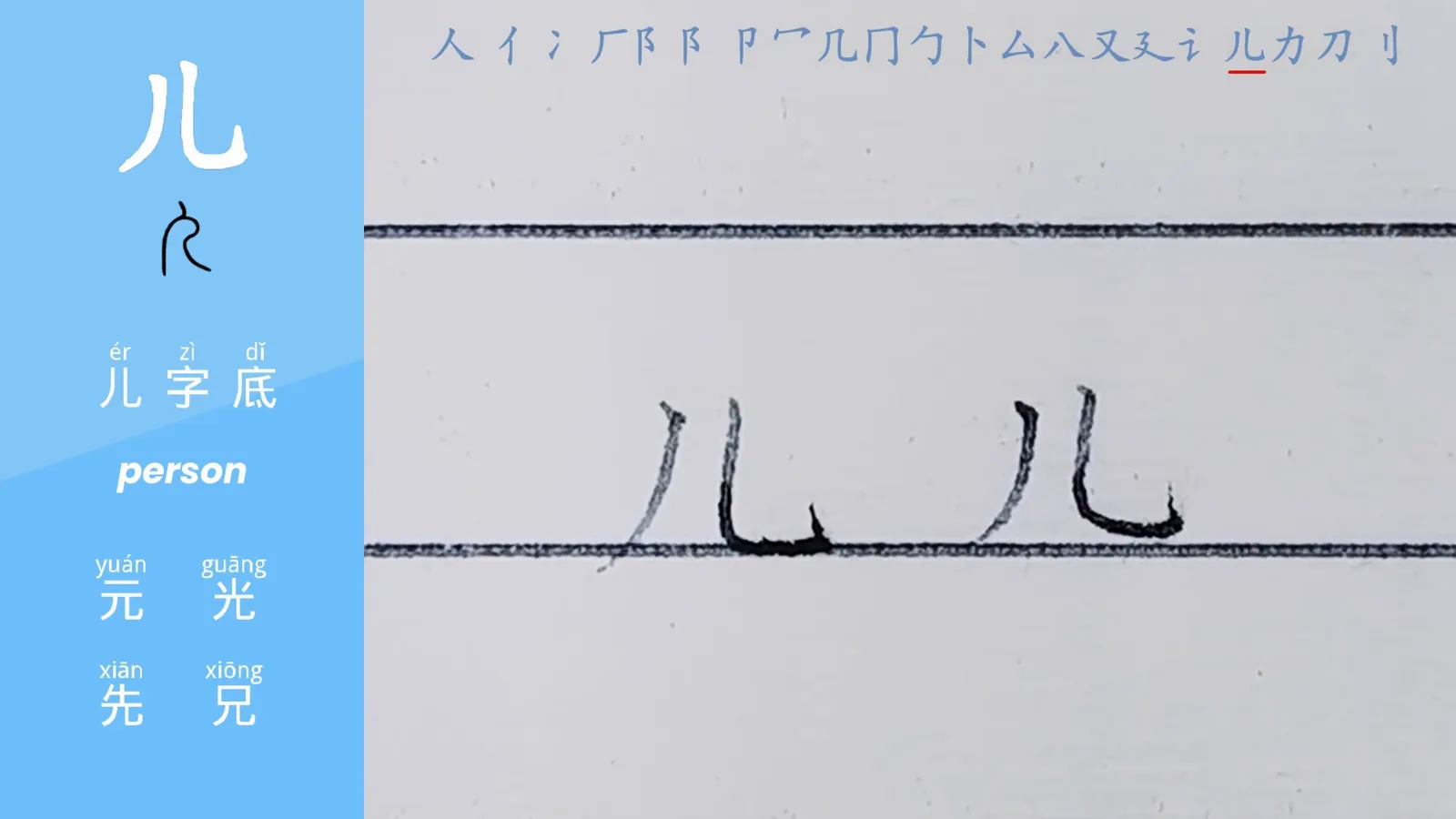
The bottom 儿 legs radical with example characters 元 光 先 兄.Watch at 3:42 - 3
刀 / 刂 — the knife radical
Derived from the picture of a blade, the knife radical carries ideas of cutting, decisiveness, and sharpness. It shows up as 刀 or, on the right edge, as the two vertical strokes 刂, in characters like 刃 and 分.
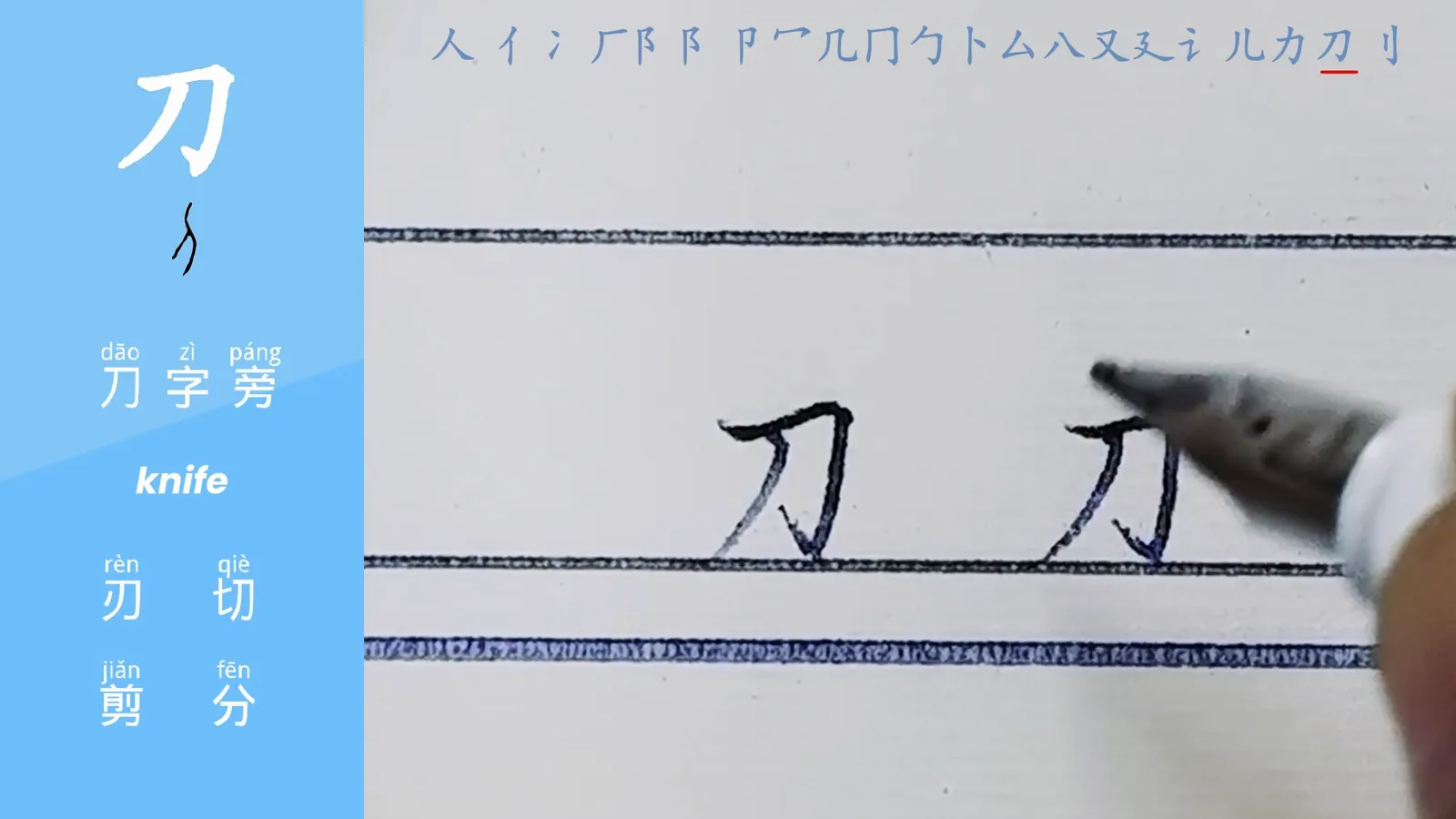
The 刀 knife radical with example characters 刃 切 剪 分.Watch at 4:02 - 4
氵 — the three-dots water radical
Three quick dots on the left stand for 水, water. Names carrying 氵 often evoke rivers, depth, clarity, and flow — you meet it in 河 (river) and countless given names such as 汤 and 演.
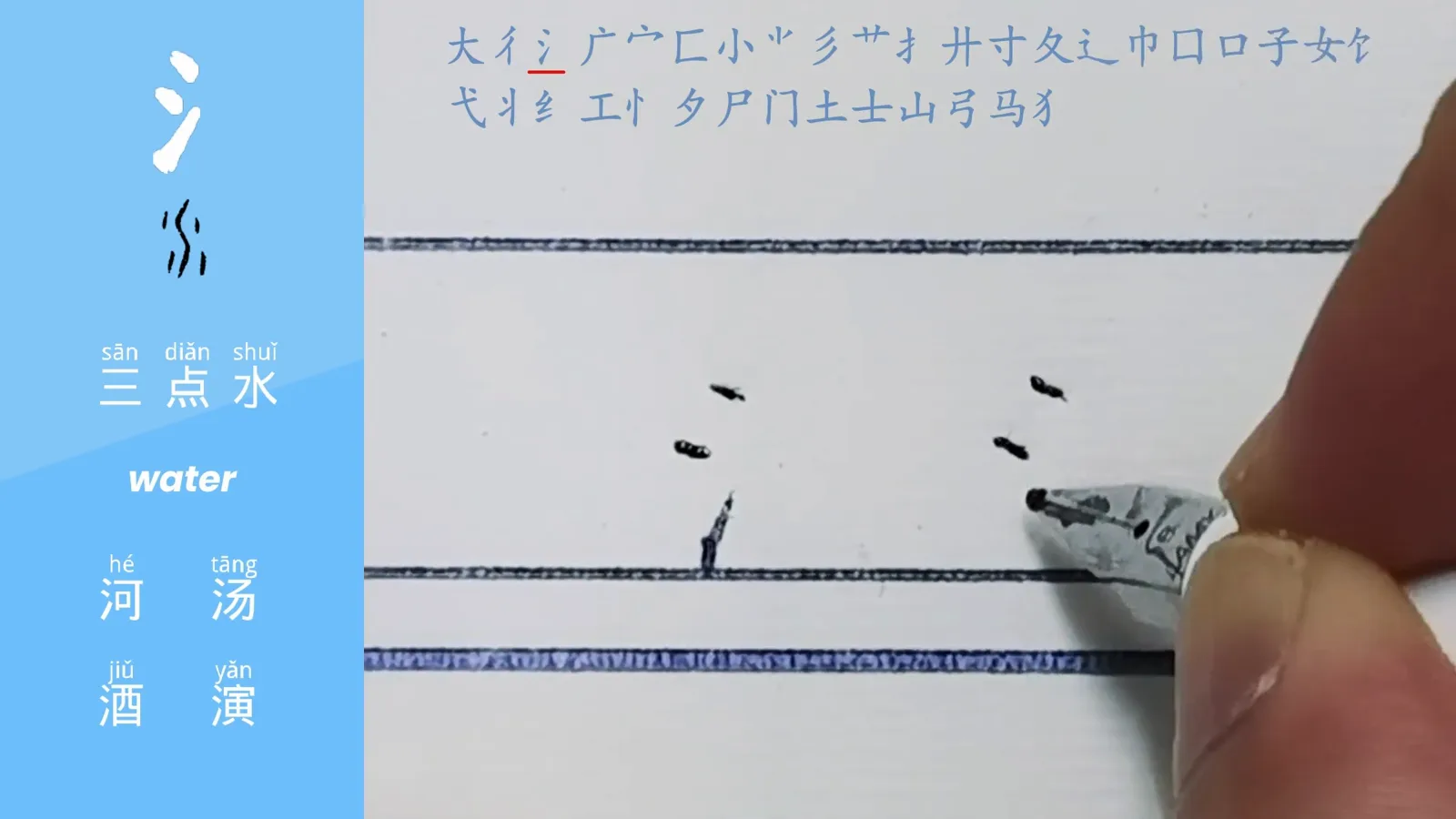
The 氵 three-dots water radical with example characters 河 汤 酒 演.Watch at 4:42 - 5
小 — the small radical
A vertical hook flanked by two dots, 小 means small or humble and lends a gentle, modest tone to names. It appears on its own and inside characters like 少, 尖, 肖 and 尚.
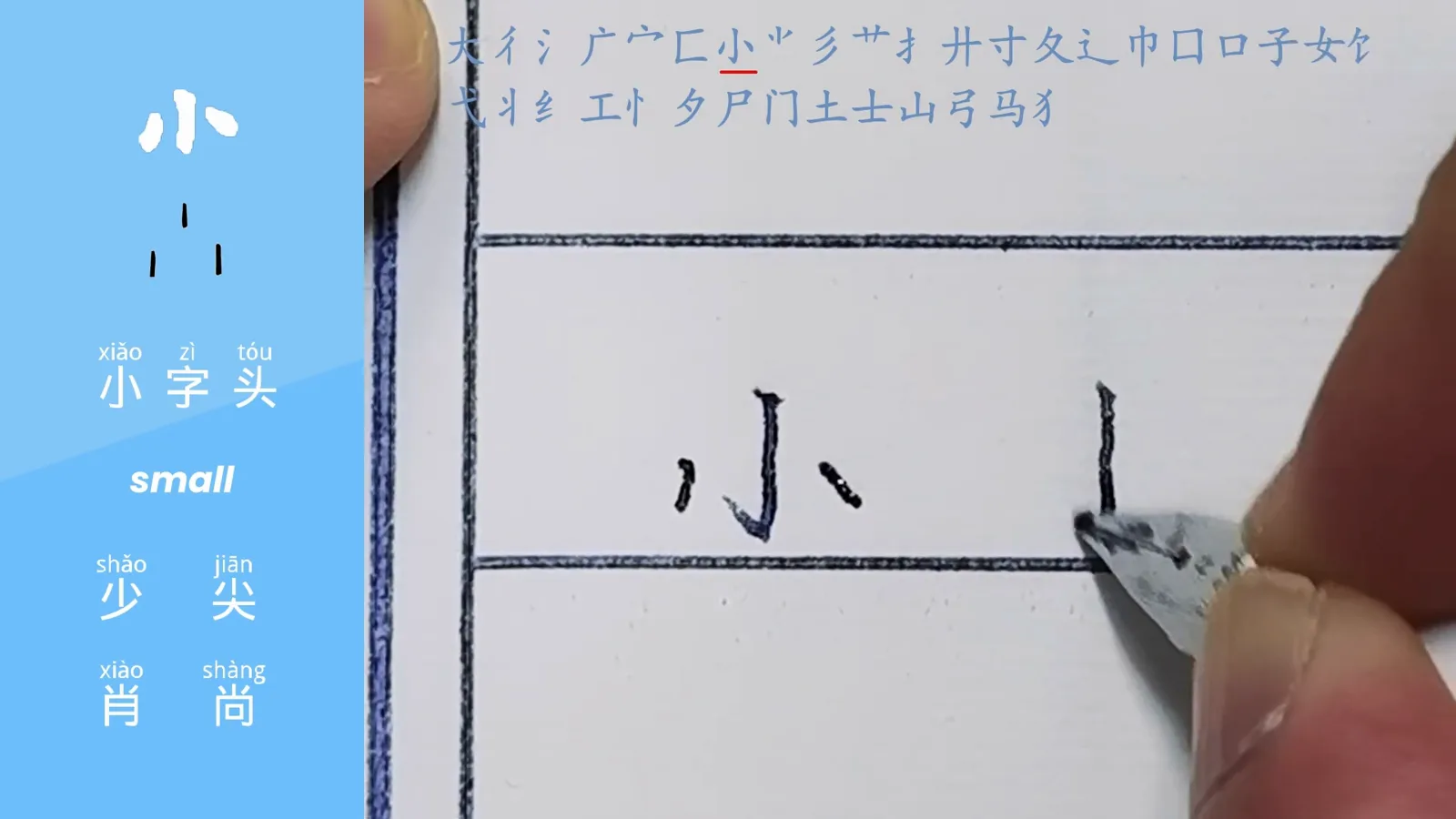
The 小 small radical with example characters 少 尖 肖 尚.Watch at 5:22 - 6
艹 — the grass radical
The little double-cross on top, 艹, marks plants and herbs. It is one of the most common radicals in feminine given names because it evokes fragrance and growth — 草, 花 (flower), 茶 and 药 all carry it.
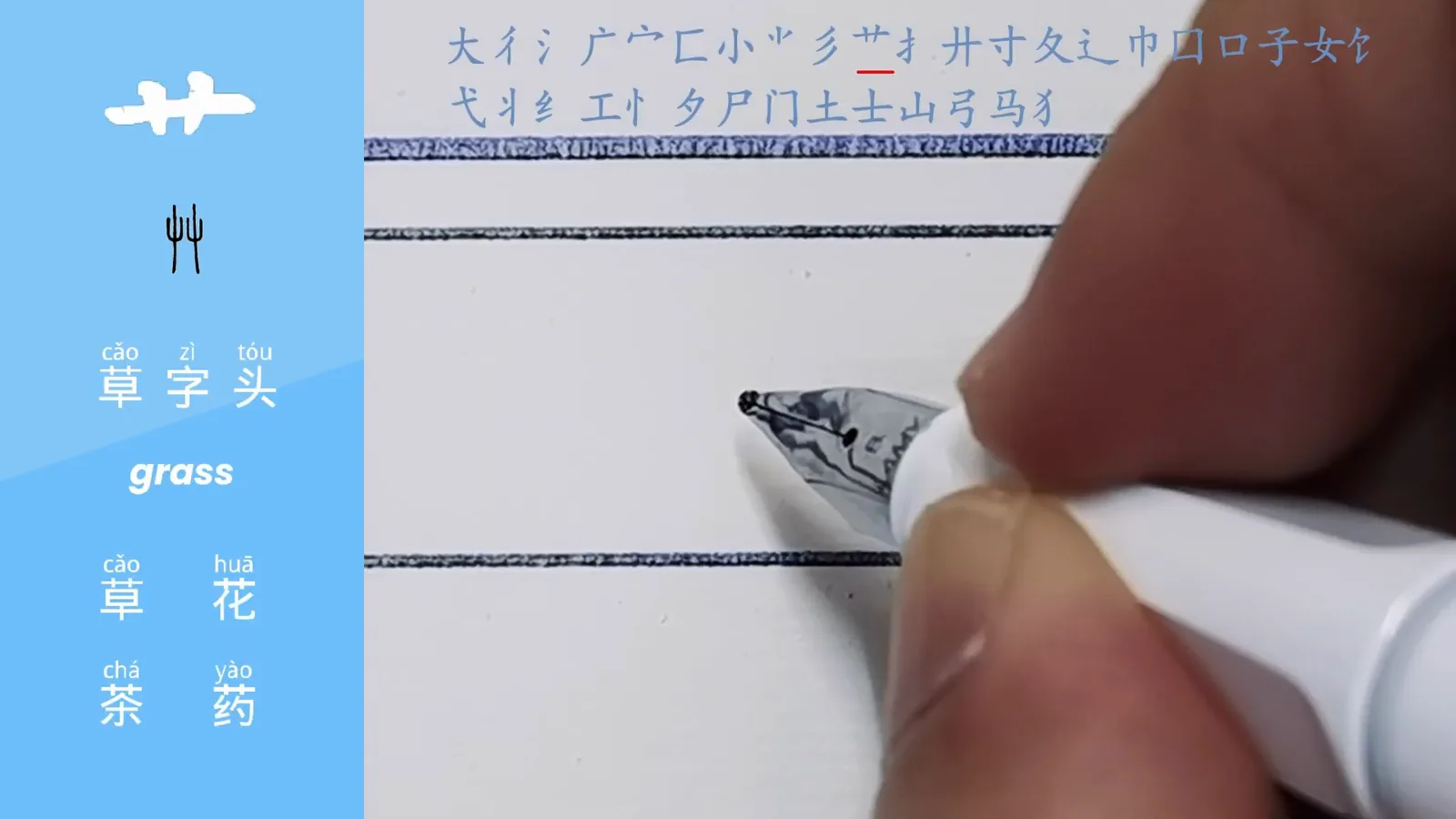
The top 艹 grass radical with example characters 草 花 茶 药.Watch at 5:42 - 7
巾 — the cloth radical
Shaped like a hanging towel, 巾 relates to textiles and cloth. It appears in name-adjacent characters such as 帕, 布 (cloth), 帽 and 市, and quietly signals something woven or draped.
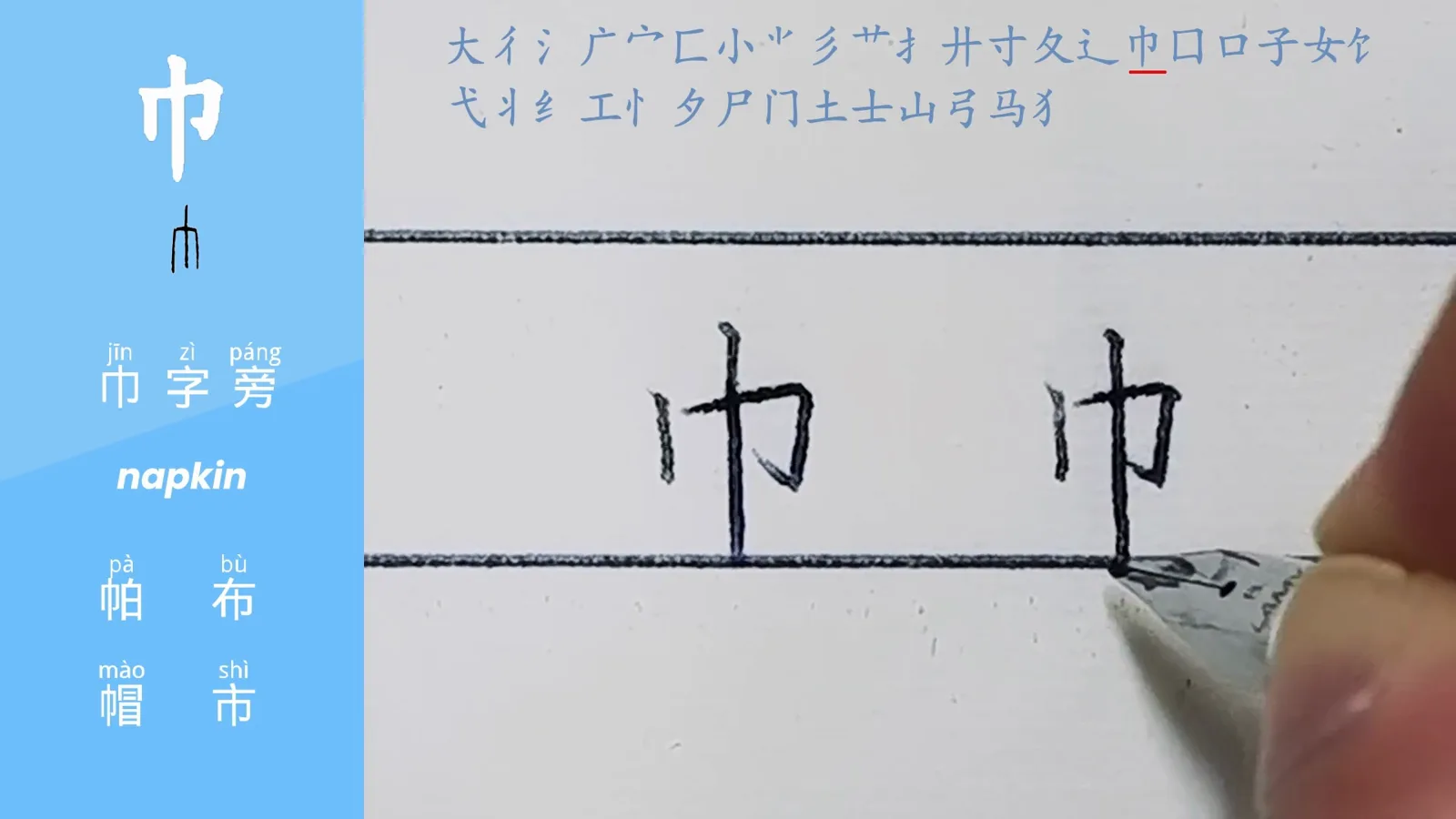
The 巾 cloth radical with example characters 帕 布 帽 市.Watch at 7:02 - 8
口 — the mouth radical
A simple square, 口, stands for the mouth and, by extension, speech, eating, and expression. It is everywhere — 吃, 喝, 扣 and 问 all borrow its sense of an opening or an utterance.
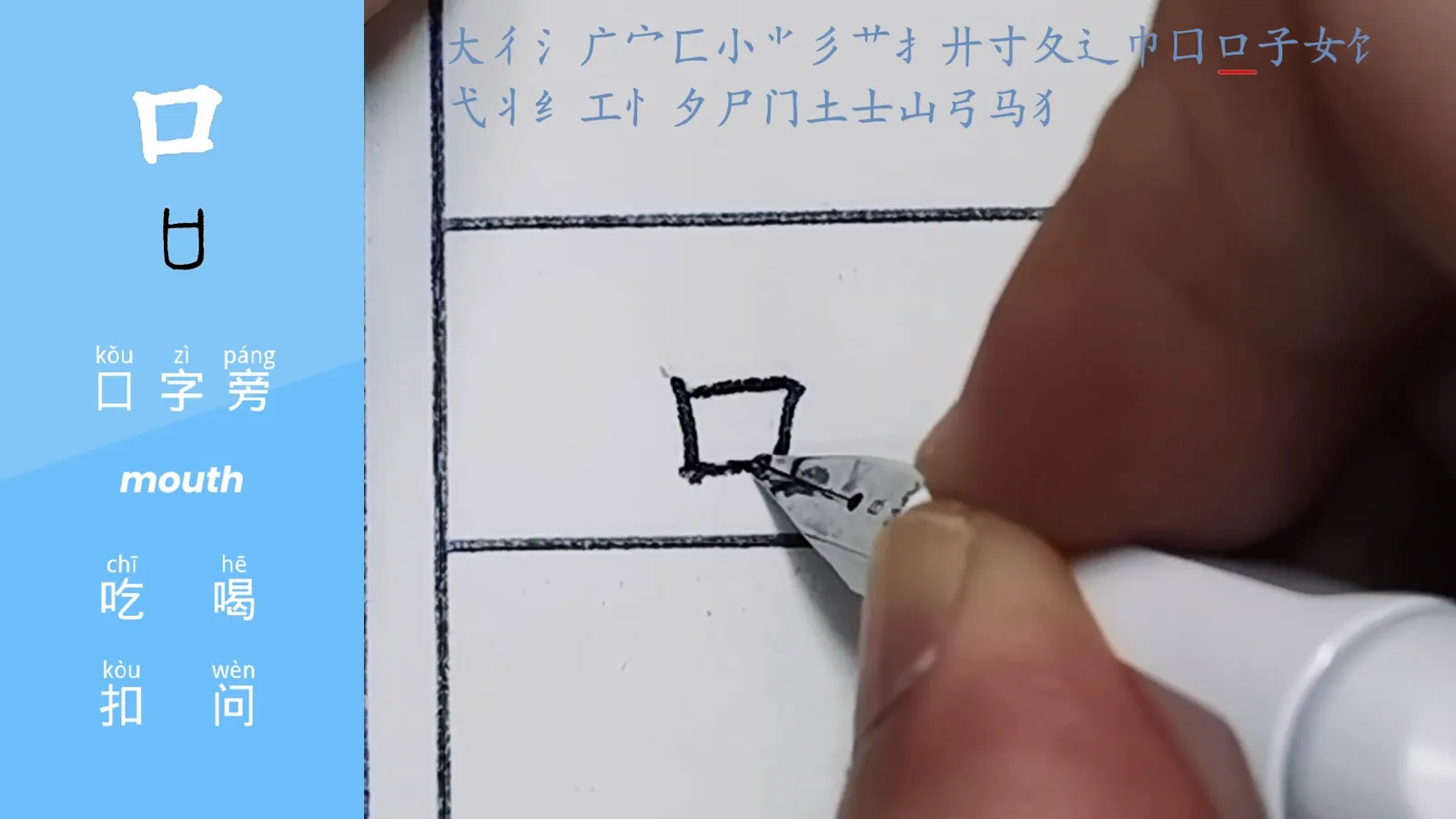
The 口 mouth radical with example characters 吃 喝 扣 问.Watch at 7:22
Frequently asked questions
- What is the difference between a radical and a component?
- A component is any reusable part of a character; a radical is the component a dictionary files the character under, and the one that most often hints at meaning. In everyday use the two words overlap.
- Can I pick a name just from radicals I like?
- Radicals are a great starting point, but a full character has its own meaning, pronunciation, and cultural associations. Check the whole character, not only its radical, before settling on a name.
- Do these radicals change meaning inside a name?
- Rarely. The water radical still reads as water and the grass radical still reads as plant life; that stability is exactly what lets you infer a name's mood from its parts.
Keep going
© 2026 AIChineseName.