
The Eight Principles of Yong: Every Brush Stroke a Chinese Name Needs
Calligraphers have a shortcut for learning brush control: master the single character 永 (yǒng, eternity). Its eight strokes contain every basic movement used across Chinese writing, which is why the classic drill is called the Eight Principles of Yong. This guide follows a beginner calligraphy lesson from preparing the Four Treasures of the Study through brushing each core stroke, so you can write a Chinese name with a real brush and steady confidence.
Key takeaways
- The character 永 packs all eight fundamental brush strokes into one drill.
- The Four Treasures of the Study are brush, ink, paper, and inkstone.
- A new brush is stiff — soften it in water before you load ink.
- Each stroke is taught through an image: a bird, a horse, a comb, a stride.
- The dot and hook are quick and sharp; the falling strokes open outward.
- Control of pressure and release matters more than speed.
From ink preparation to the eight strokes
- 1
Begin with 永, the eight-stroke character
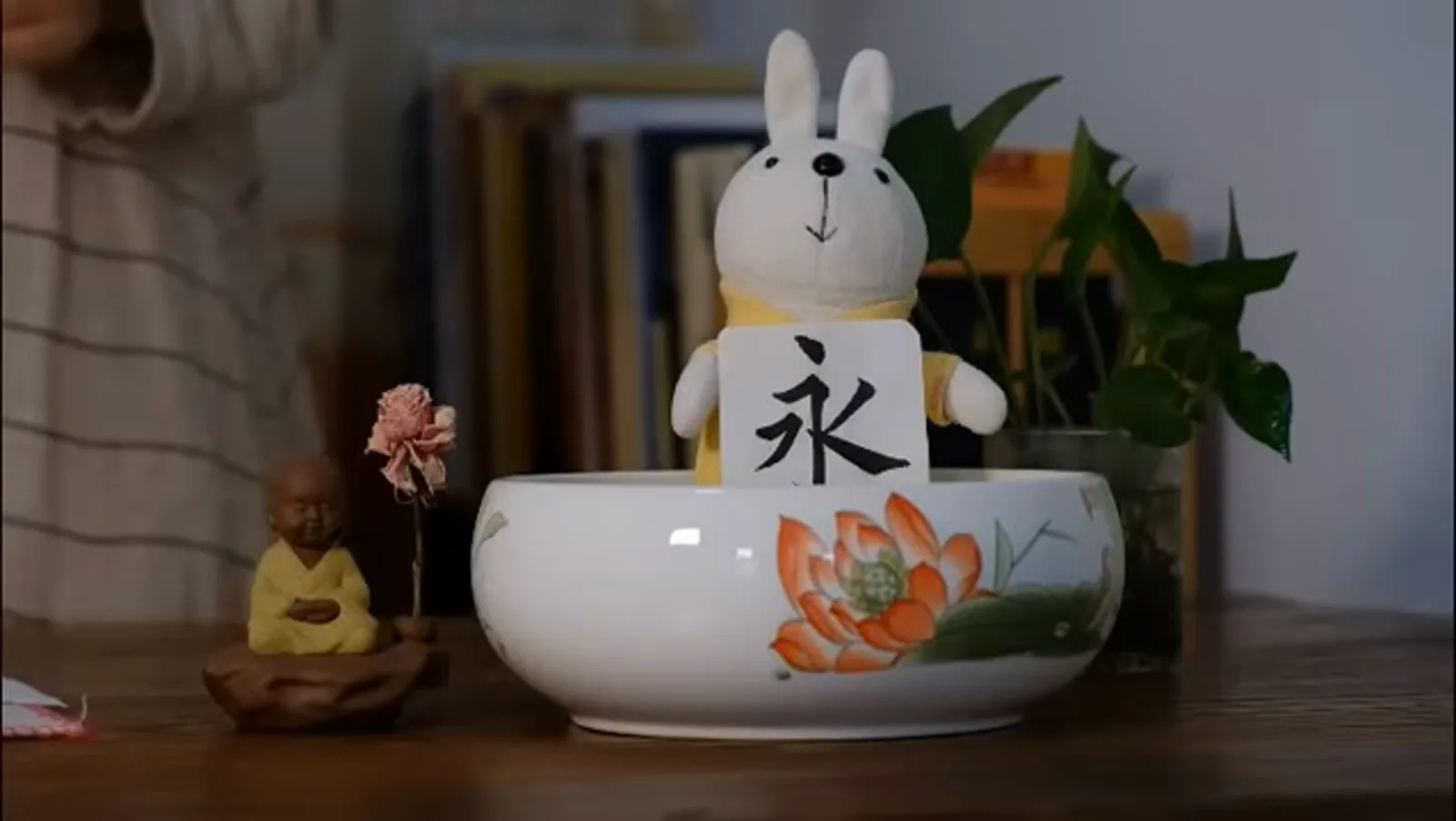
The whole tradition is summarised by one character resting on the brush holder: 永. Its eight strokes — dot, horizontal, vertical, hook, upward flick, and the two falling strokes — are the complete vocabulary of brush writing.
A ceramic brush rest shaped like a rabbit holding a card printed with the character 永.Watch at 0:06 - 2
Know your ink: stick versus bottled
Calligraphy ink comes in two forms — a solid inkstick and modern bottled liquid ink. The lesson lays out both alongside the brush, whose shaft is bamboo and whose tip is weasel, marten, or goat hair.
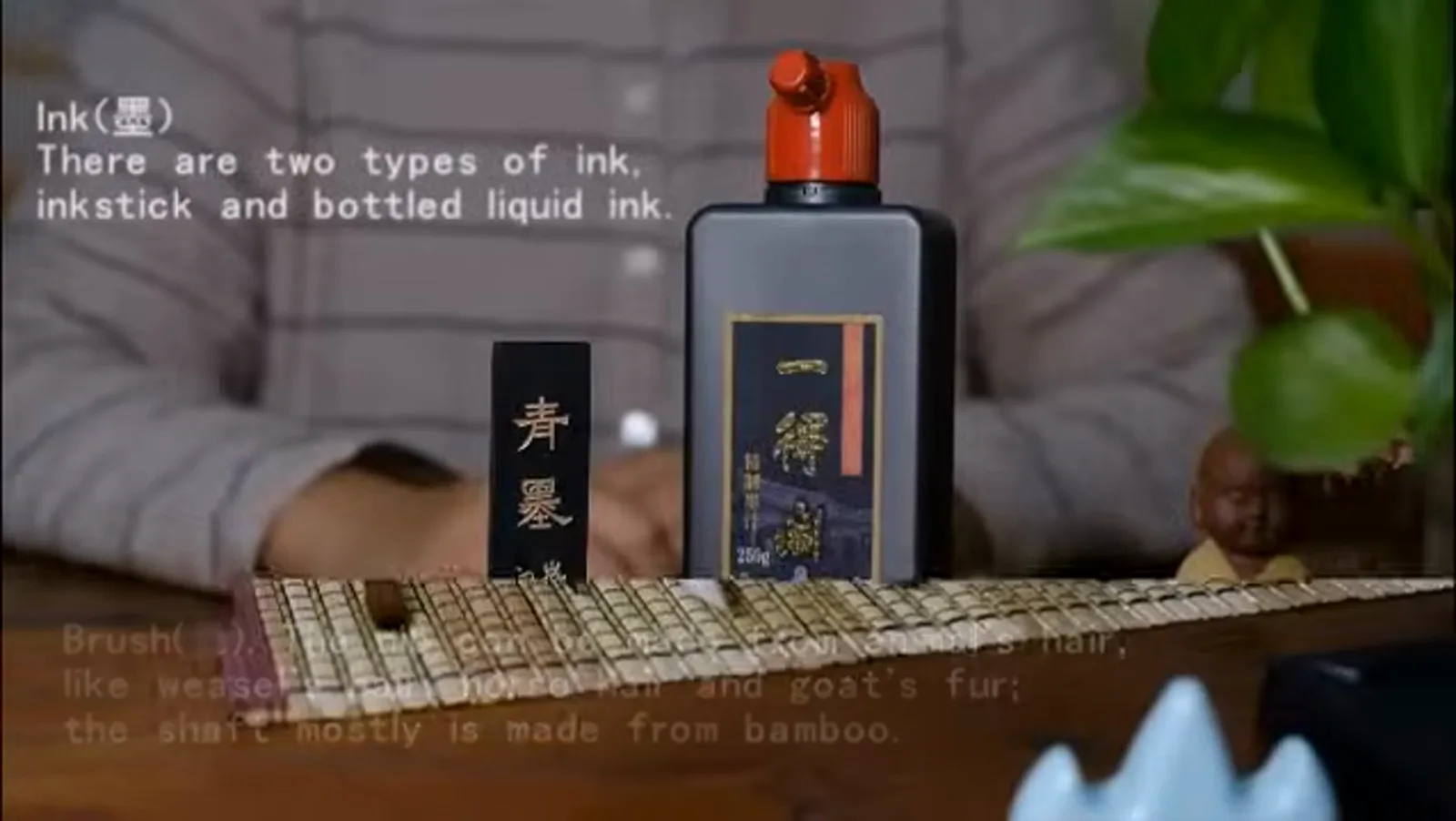
A solid inkstick in its box beside a bottle of liquid ink and a bamboo-shaft brush.Watch at 0:26 - 3
Grind the inkstick before you write
Traditional ink has to be ground before use. Add a little water to the inkstone and rub the inkstick in slow circles until the ink reaches an even, workable density.
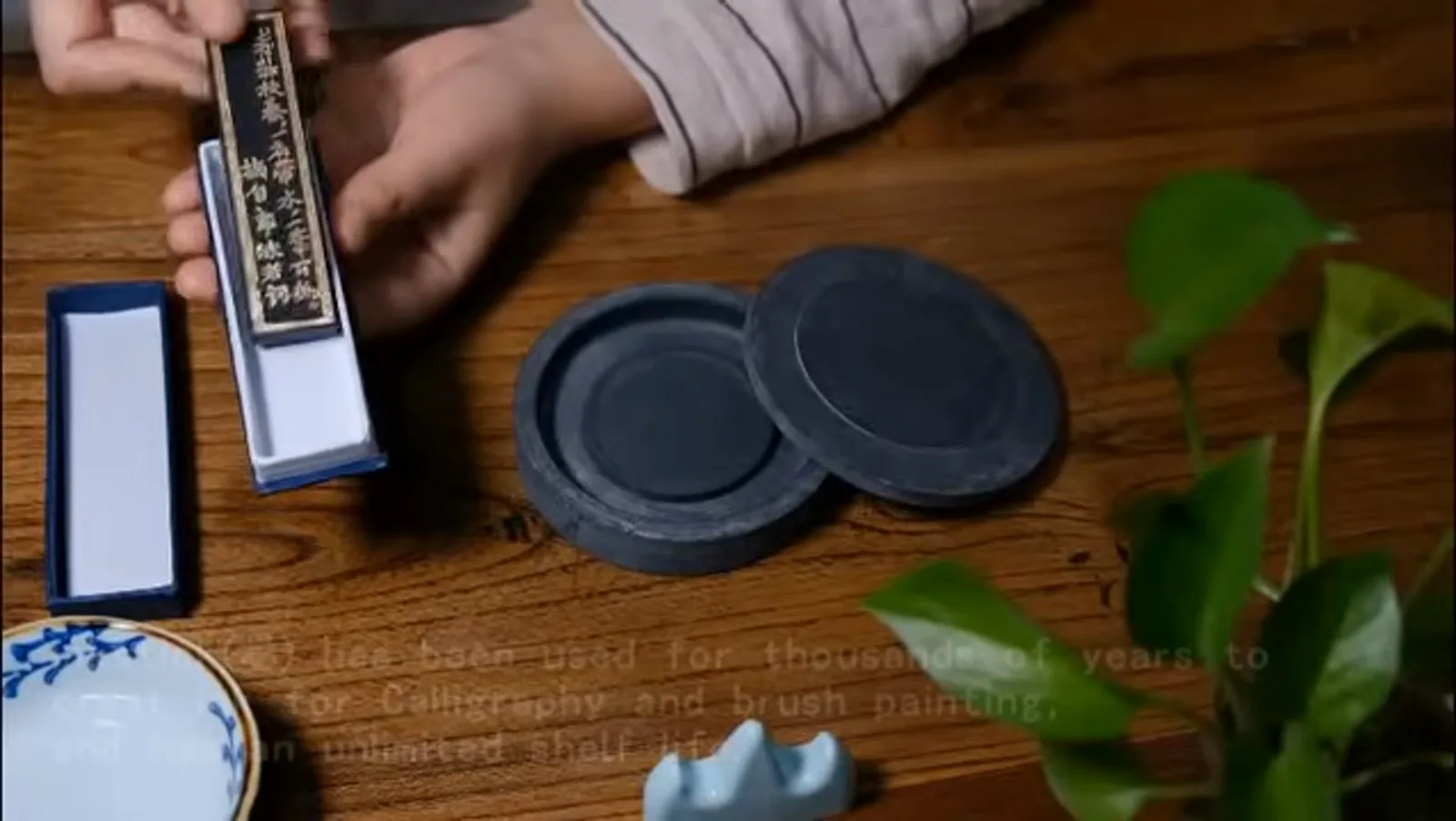
Hands grinding an inkstick in circles on a round stone inkstone.Watch at 0:38 - 4
Soften a new brush in water
A brand-new brush arrives stiff with sizing glue. Before loading any ink, dip the tip in water and let the hairs relax and come to a point, so the brush can hold ink and move cleanly.
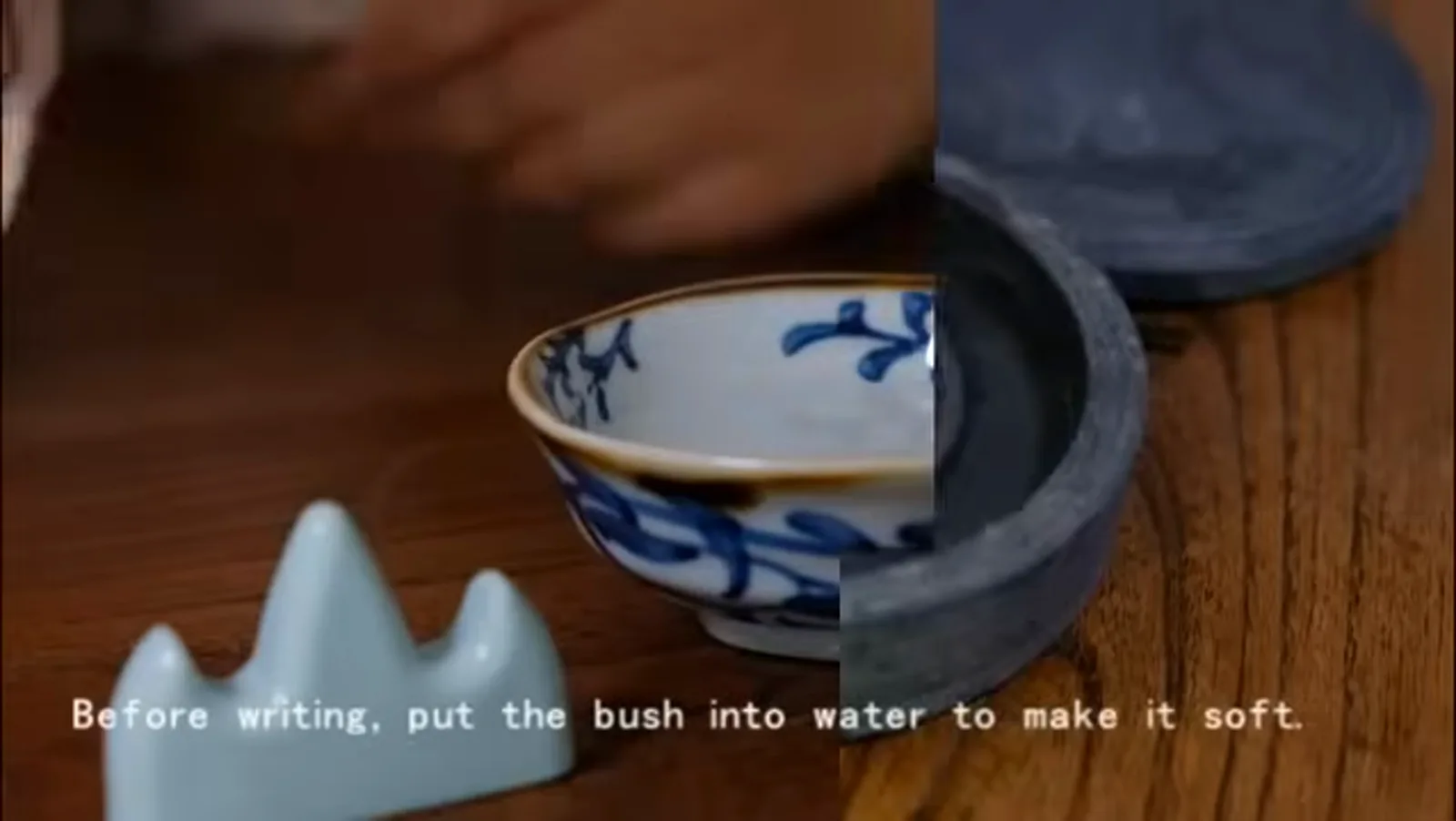
A brush being dipped into a blue-and-white bowl of water to soften its bristles.Watch at 1:14 - 5
Map the eight principles onto 永
With ink ready, the lesson redraws 永 and labels each stroke: the dot (diǎn), horizontal (héng), vertical (shù), hook (gōu), upward flick (tí), and the left- and right-falling strokes (piě and nà).
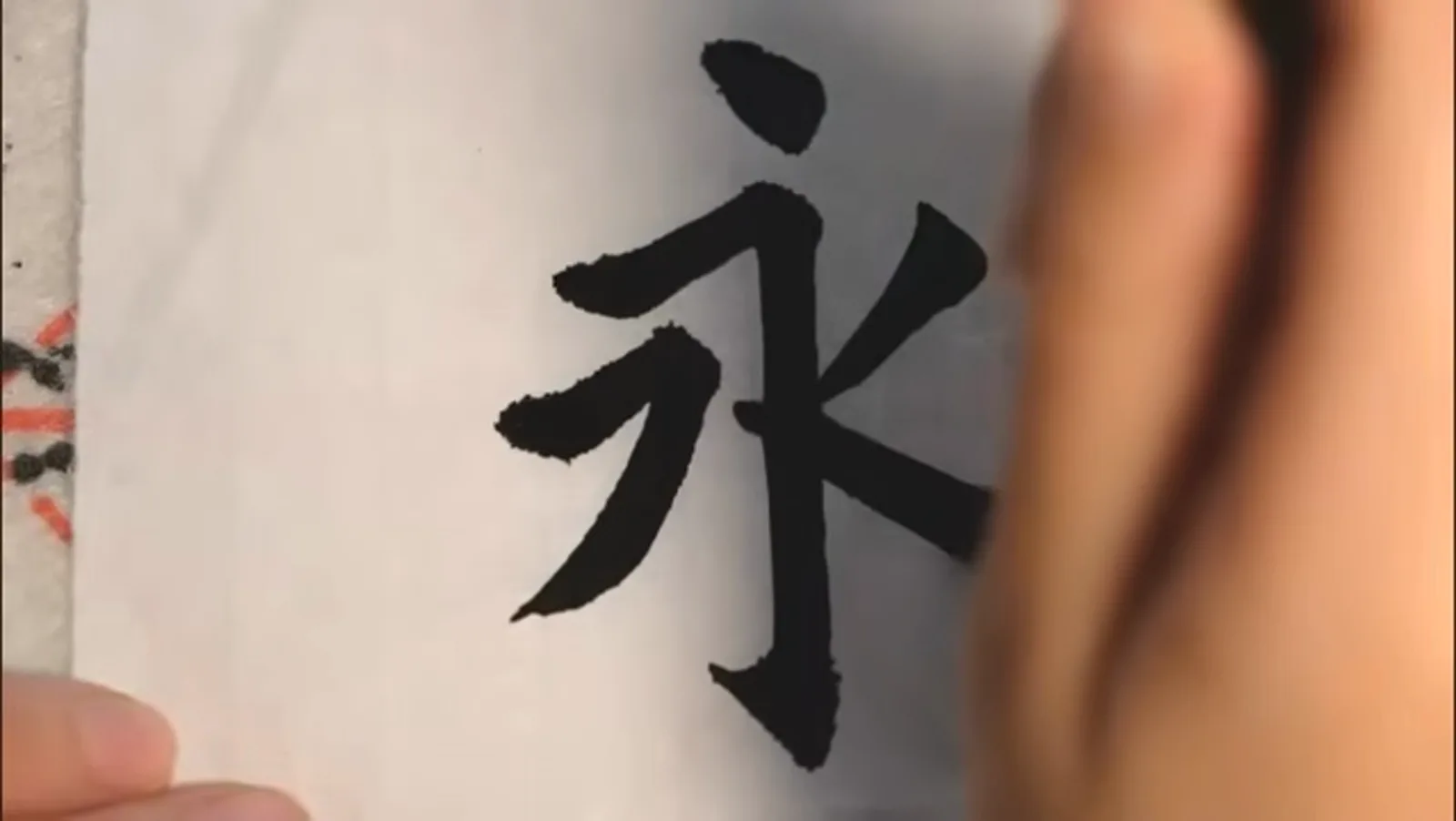
The character 永 written large with all eight stroke names labelled around it.Watch at 1:38 - 6
The dot (diǎn) — like a bird landing
The dot is described as a bird suddenly folding its wings and dropping sideways. It is short and decisive: touch down, gather, and lift without dragging.
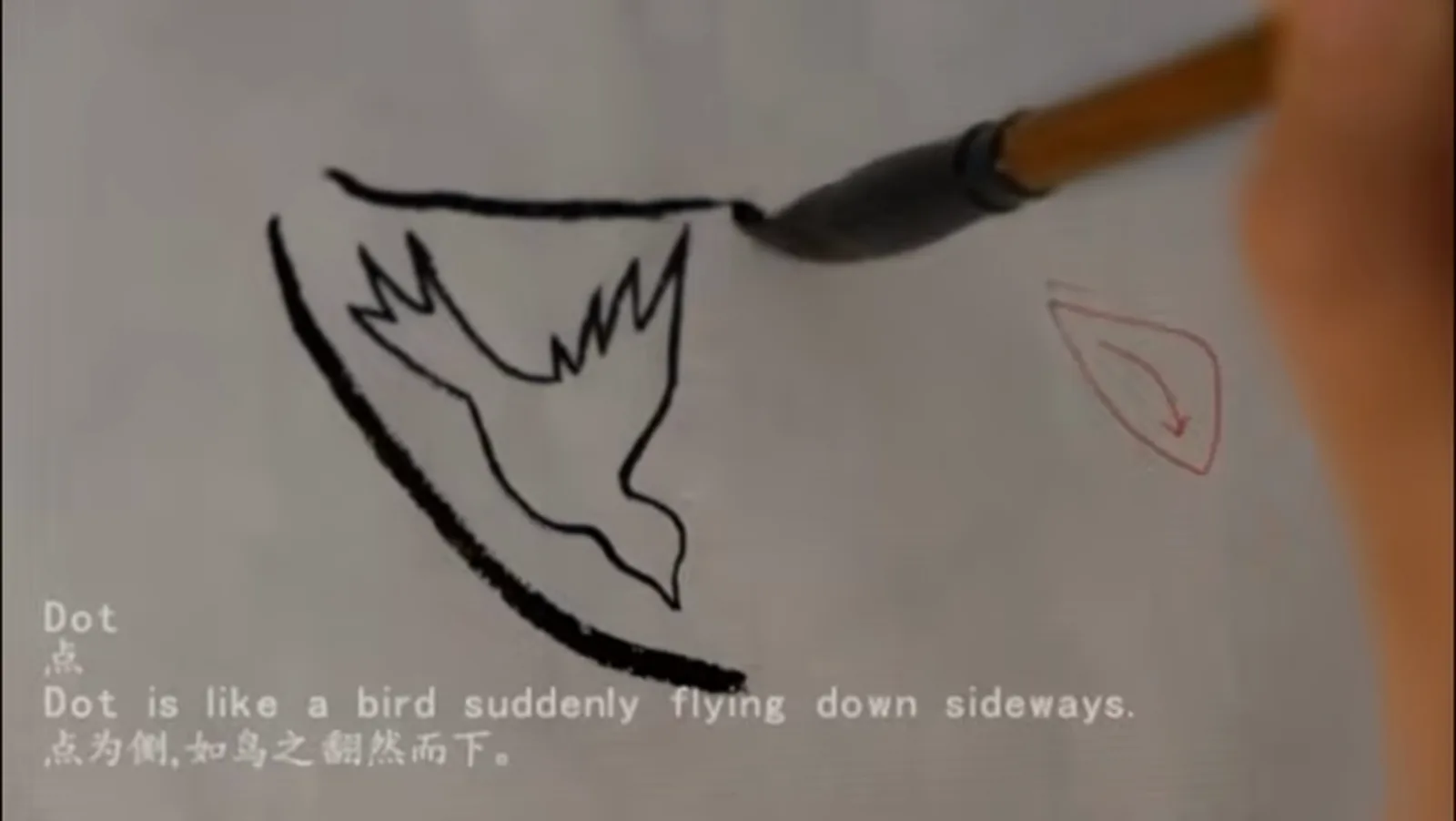
A brush laying down the dot stroke beside a sketch of a bird diving sideways.Watch at 1:58 - 7
The horizontal (héng) — like reining a horse
The horizontal stroke is compared to riding a horse: it travels with momentum, and to stop you draw the reins. Move steadily, then check the tip cleanly at the end.
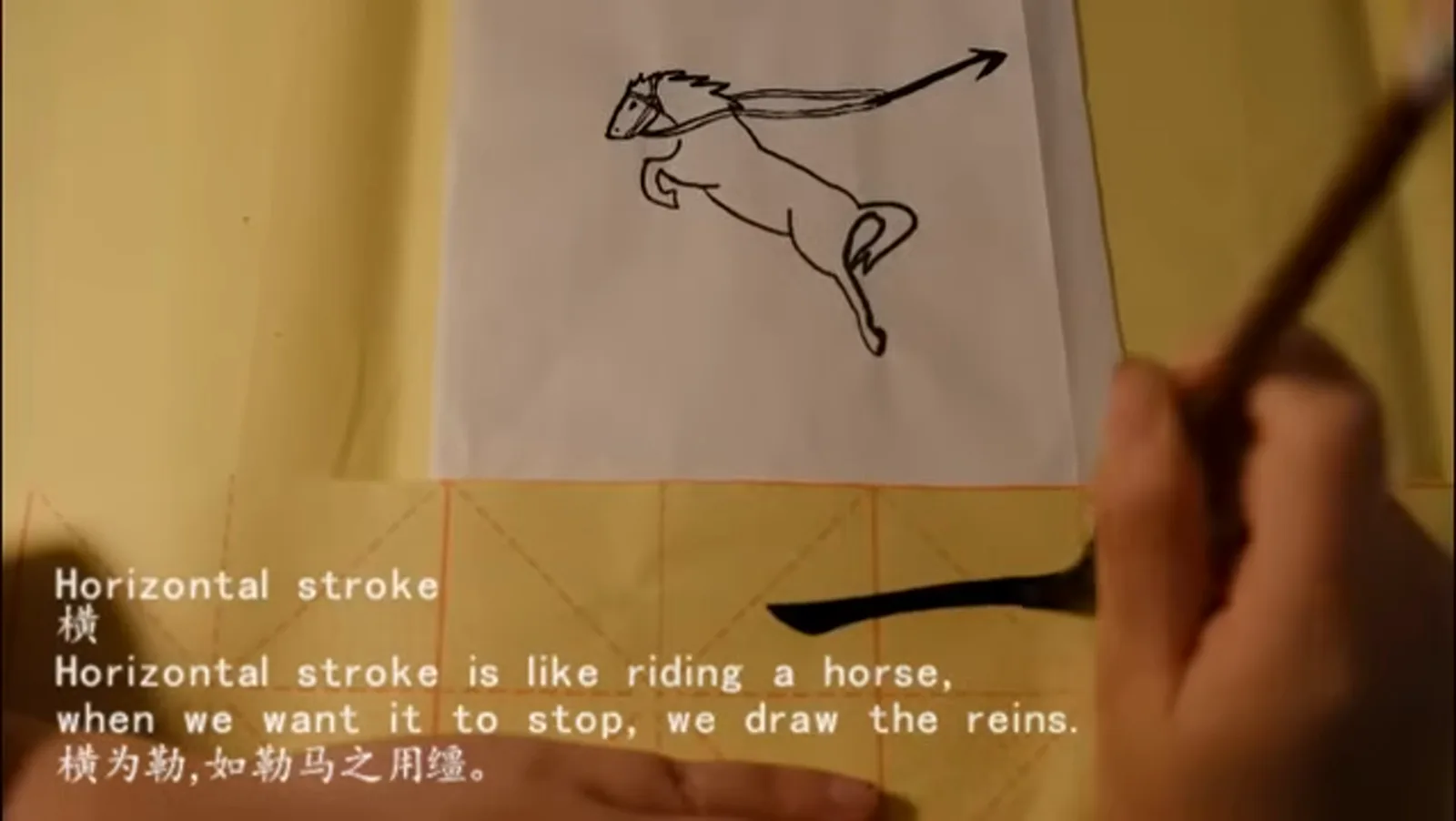
A horizontal brush stroke drawn next to a running-horse sketch illustrating the rein-check finish.Watch at 2:12 - 8
The hook (gōu) — like a person leaping
The hook stores energy and releases it in a quick flick, likened to a person springing into a jump. Press, gather the weight, then snap the tip out sharply.
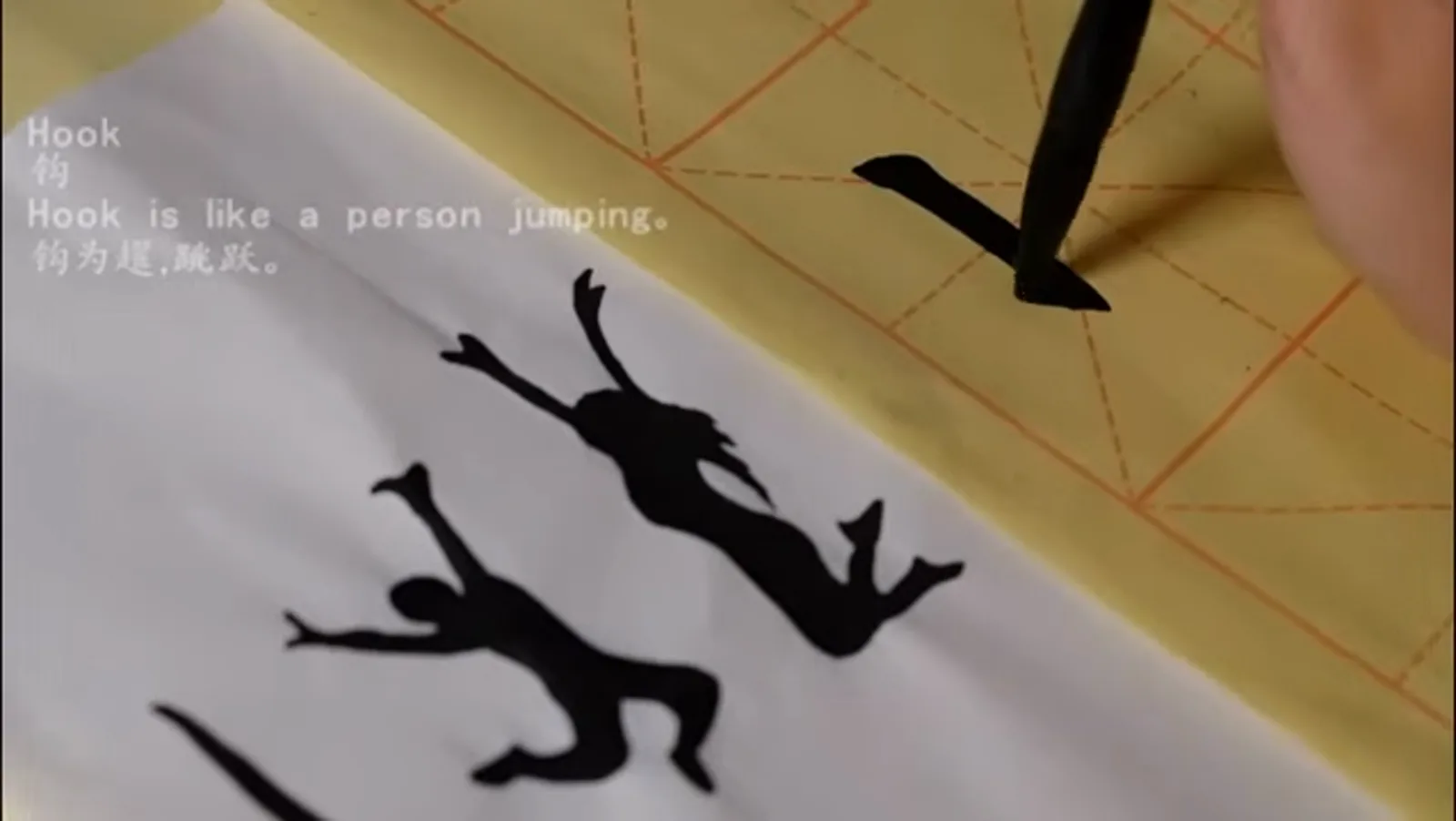
A hooked stroke flicked out at the end, paired with a sketch of a leaping figure.Watch at 2:26 - 9
The left-falling stroke (piě) — like combing hair
The long left-falling stroke is drawn like passing a comb lightly through hair: it starts with contact and thins smoothly as it sweeps down and to the left.
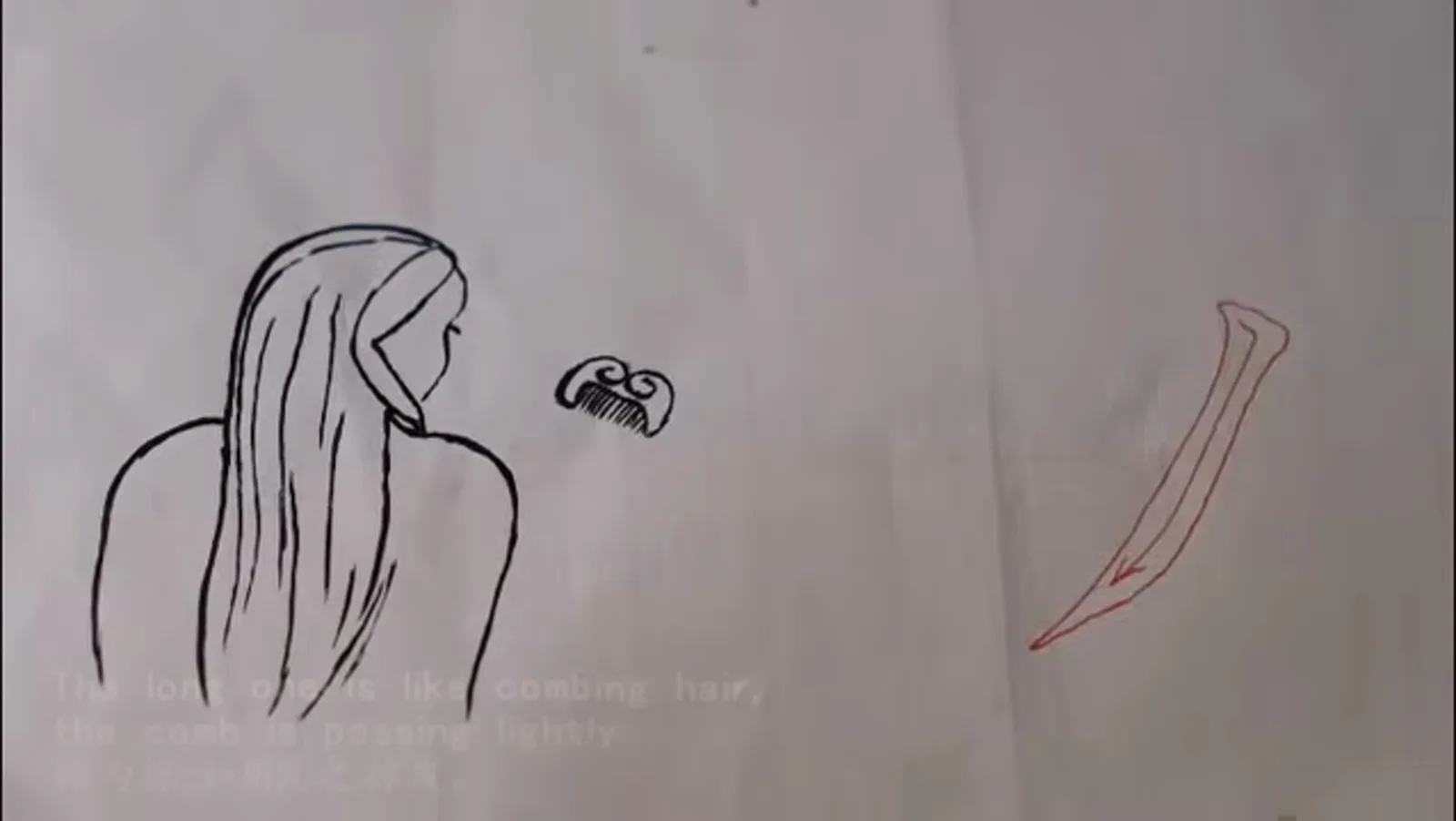
A long left-falling stroke tapering outward beside a sketch of hair being combed.Watch at 2:38 - 10
The right-falling stroke (nà) — like a big stride
The right-falling stroke literally means "separate": it lands like a person taking a long stride. Press gradually to build the foot, then release outward in one confident push.
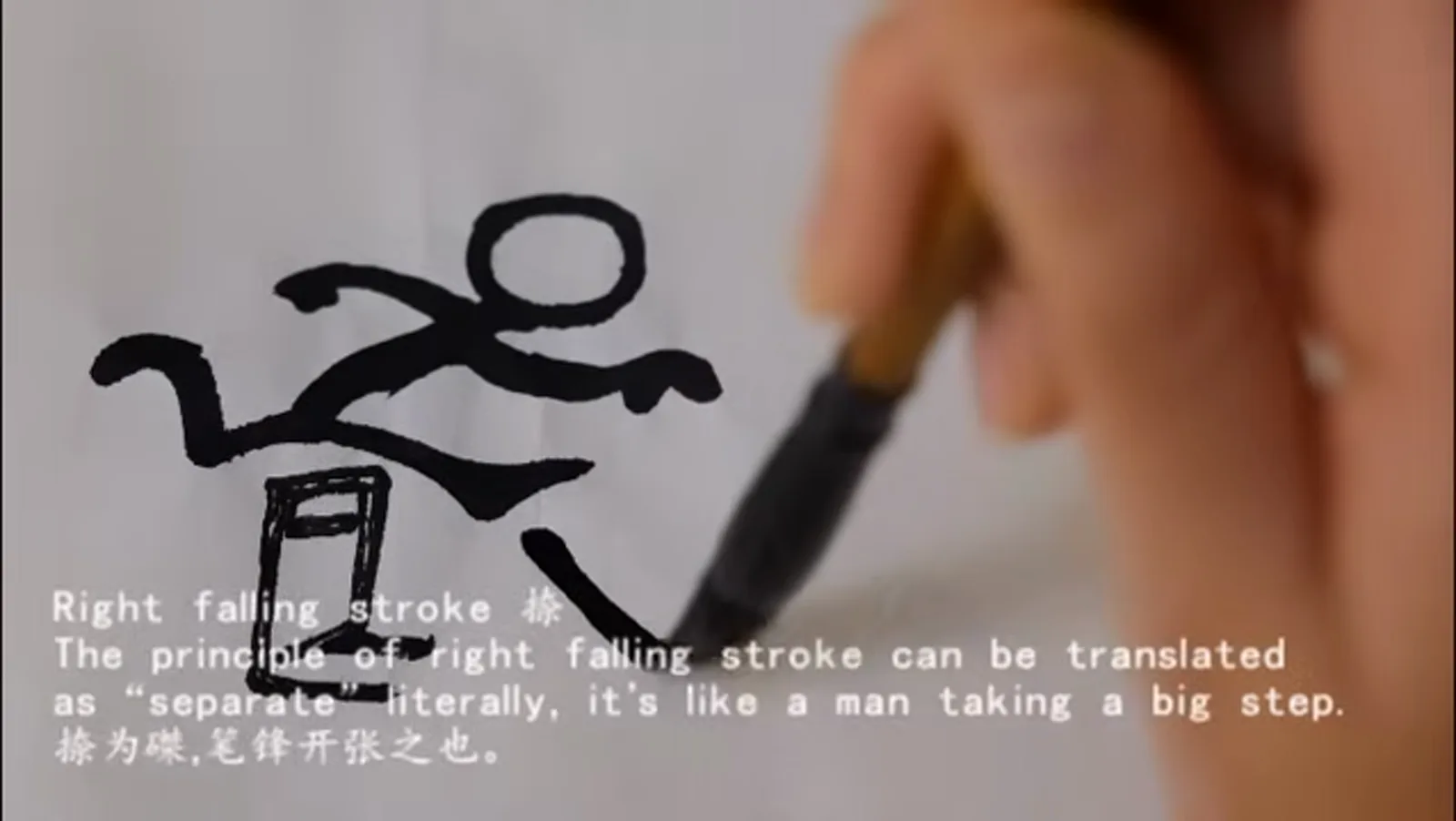
A right-falling stroke pressed and released, drawn while writing the character 瓷.Watch at 3:02
Frequently asked questions
- Why is the character 永 used to teach all the strokes?
- Because 永 happens to contain one clear example of each of the eight basic strokes, so practising it alone trains every fundamental brush movement.
- Do I need real ink and an inkstone to start?
- No. Bottled ink and a simple practice paper let you focus on stroke shape. Grinding an inkstick is a traditional ritual you can adopt later.
- Can calligraphy help me with my Chinese name?
- Yes. Writing your name in brush strokes forces you to learn each character's structure and order, and a hand-brushed name certificate makes a keepsake of the result.
Keep going
© 2026 AIChineseName.