
Chinese Character Stroke Order: The Rules That Make a Name Look Right
Chinese characters are not drawn in any order you like. Write the strokes in the wrong sequence and the character ends up unbalanced, cramped, or hard to read — and it is the same whether you are practising your own new Chinese name or copying one from a certificate. This guide walks through the eight basic stroke-order rules using six simple characters, each illustrated from a frame of the source lesson.
Key takeaways
- The default direction is top to bottom, then left to right.
- A horizontal stroke comes before a vertical stroke when they cross.
- A central stroke that splits a character is written before the two sides.
- Enclosures are drawn outside first, and the bottom edge closes them last.
- Overall flow runs from the top-left corner toward the bottom-right.
- A dot inside the upper-right area is almost always written last.
The eight stroke-order rules, step by step
- 1
Write from top to bottom
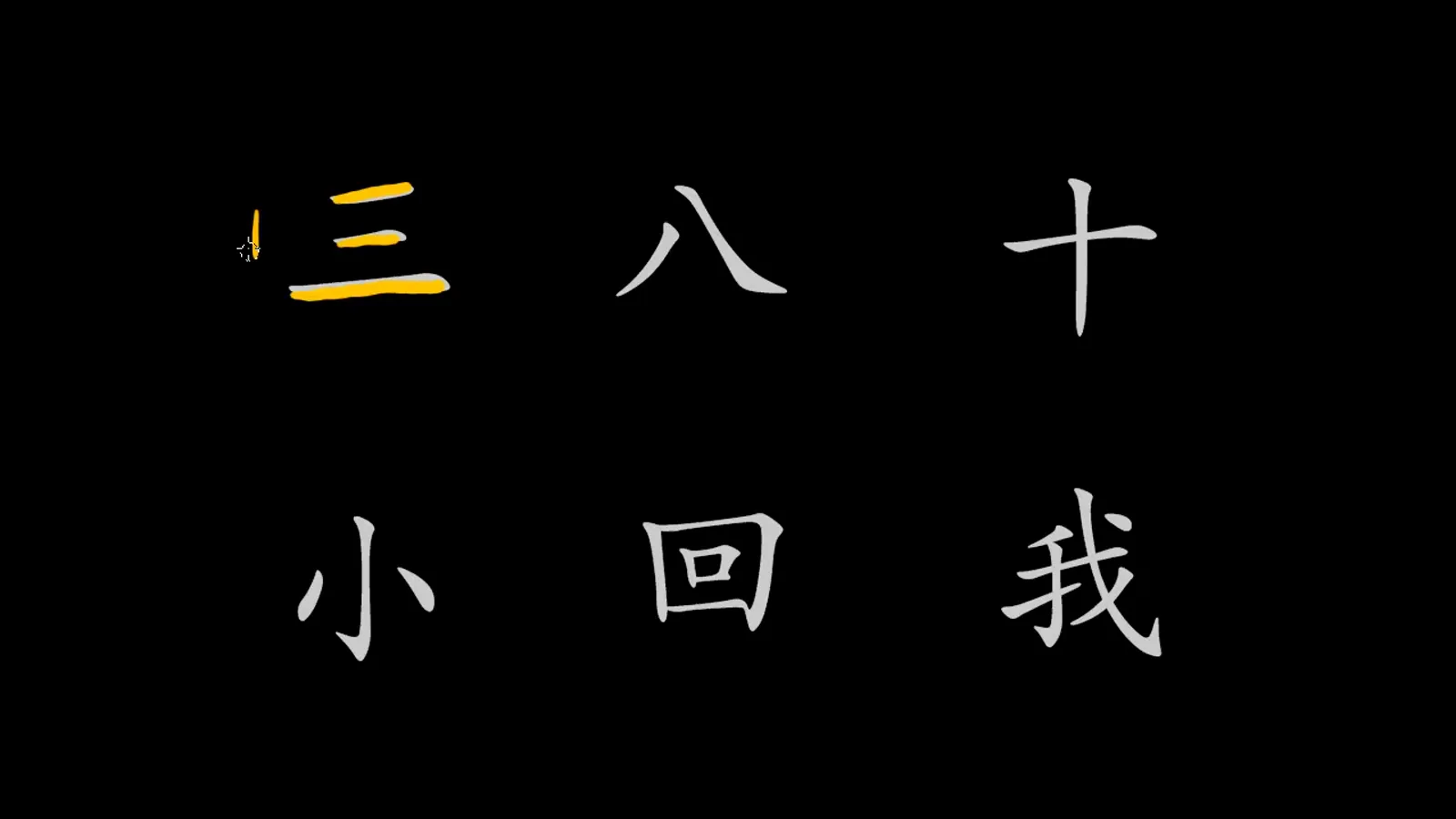
Start at the highest stroke and work downward. The character 三 (three) is three stacked horizontals: top, middle, then bottom. When a character is built from a top element and a bottom element, finish the whole top element before you begin the bottom one.
三 highlighted as its three horizontal strokes are laid down from the top edge downward.Watch at 1:00 - 2
Write from left to right
When two strokes or two elements sit side by side, the left one comes first. In 八 (eight) the left-falling stroke leads and the right-falling stroke follows. This also governs characters made of a left radical and a right component.
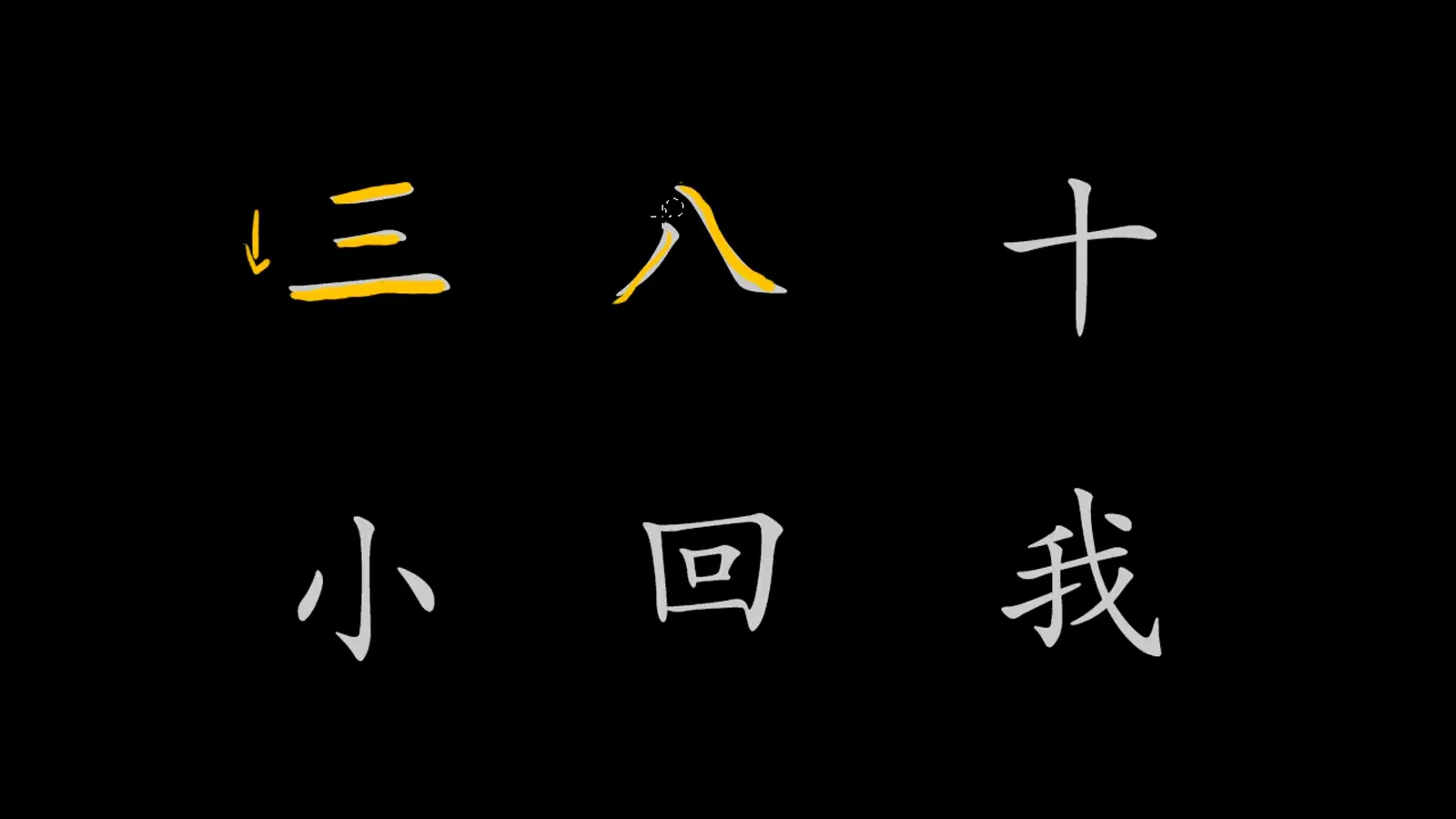
八 shown with the left-falling stroke drawn before the right-falling stroke.Watch at 1:50 - 3
Horizontal before vertical
Whenever a horizontal and a vertical stroke cross, lay down the horizontal first no matter where in the character the crossing happens. 十 (ten) is the clearest case: the horizontal is drawn, then the vertical is dropped through it.
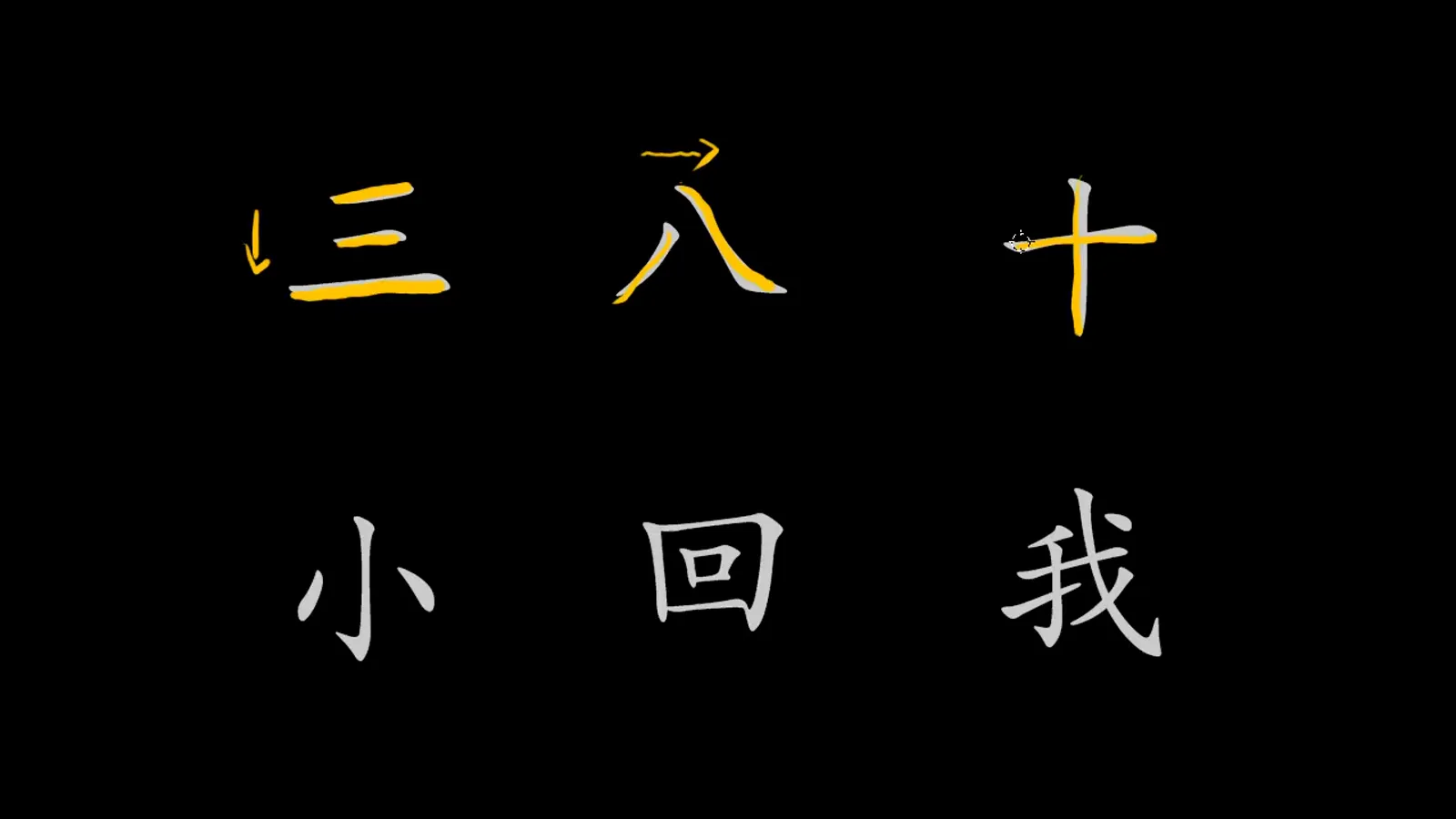
十 with the horizontal stroke completed before the vertical crosses it.Watch at 2:35 - 4
Central stroke before the sides
If a stroke runs down the middle and divides the character into two halves, write that middle stroke first, then add the left and right parts. In 小 (small) the central vertical hook is placed before the two dots flanking it.
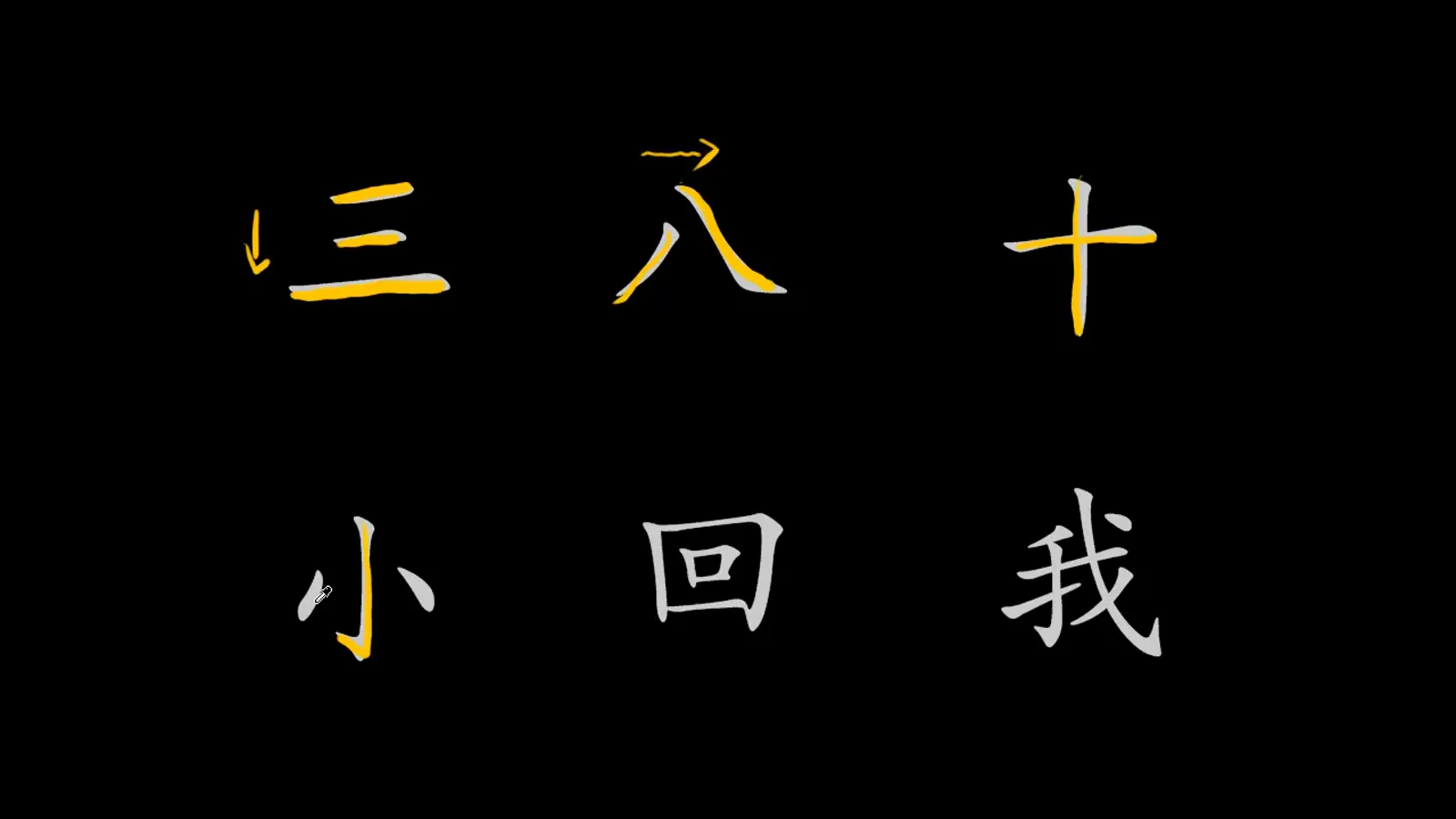
小 with the middle vertical hook written ahead of the two flanking dots.Watch at 3:05 - 5
Outside first, close the bottom last
For characters with an enclosing frame, draw the outside before the inside — but leave the closing horizontal until the end. In 回 (return) you build the outer box's top and sides, drop in the inner element, then seal the bottom edge last.
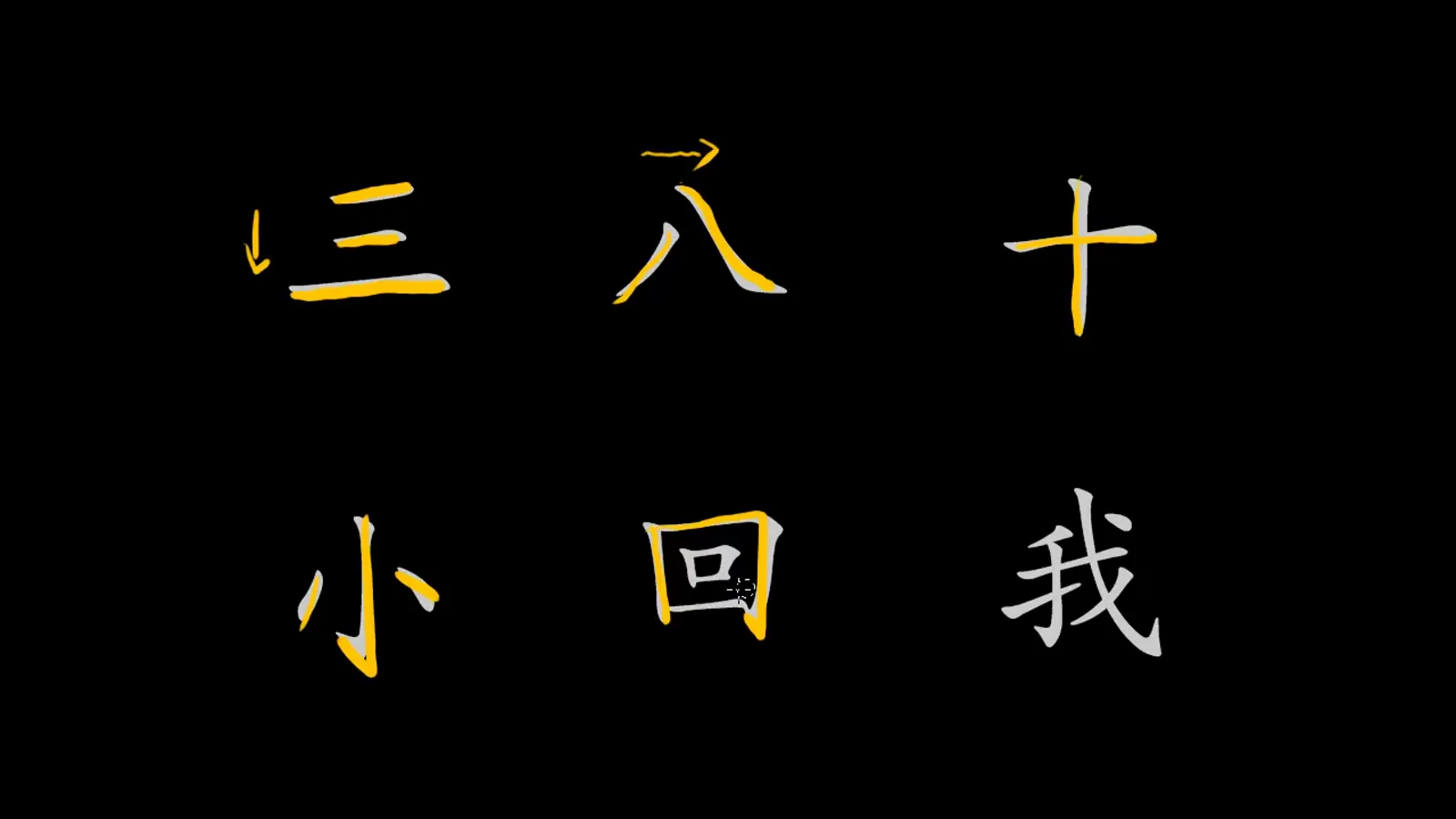
回 with the outer box begun before the inner square, and the bottom edge left open.Watch at 4:25 - 6
Flow from top-left to bottom-right
Across a whole character the general current runs from the upper-left corner toward the lower-right. The character 我 (I / me) starts with the top-left strokes and works diagonally down to the final right-hand stroke.
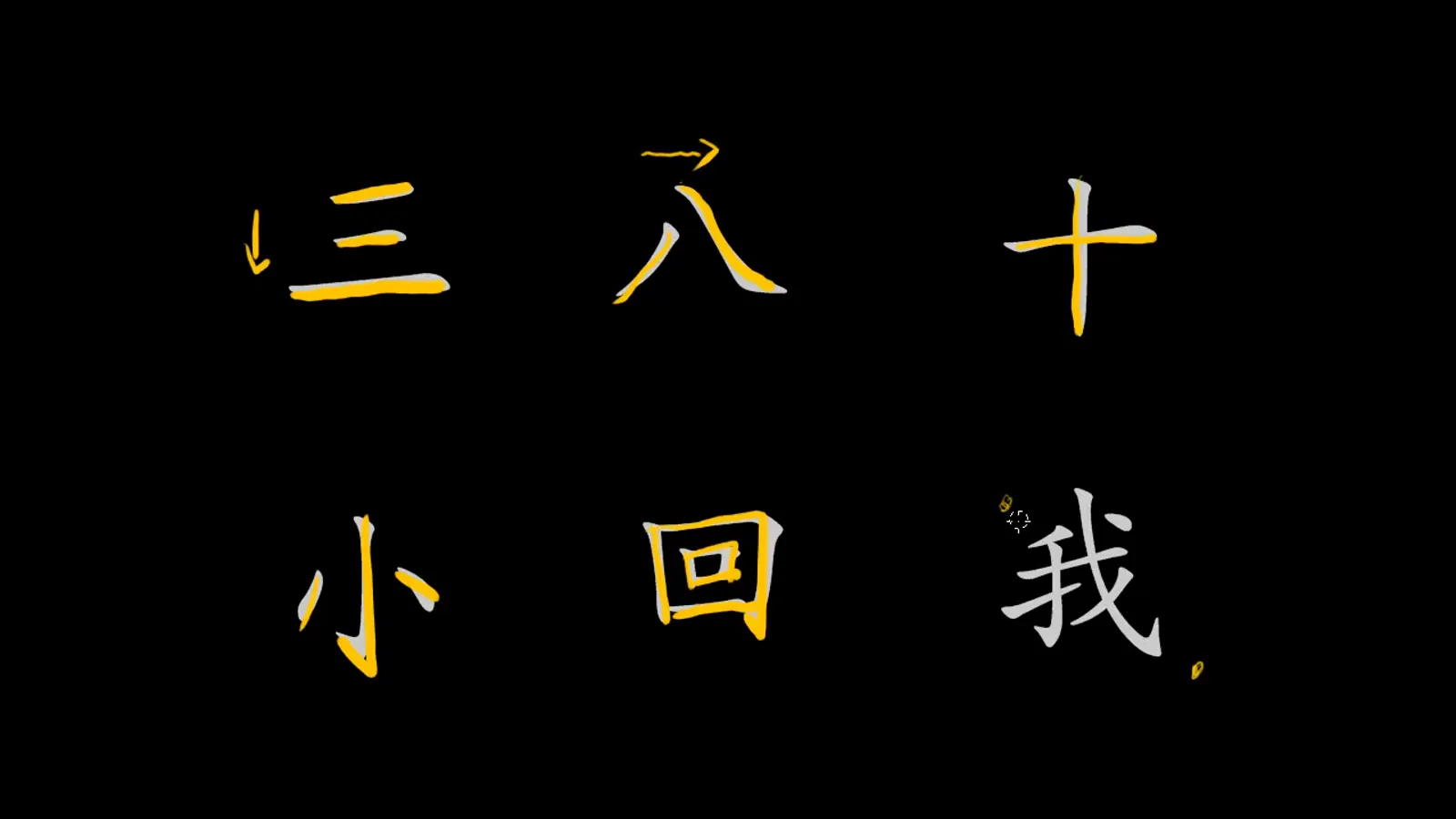
我 traced from its top-left strokes diagonally down toward the bottom-right.Watch at 5:05 - 7
Dots in the upper-right come last
One important exception to the top-left-to-bottom-right flow: a dot sitting in the upper-right region of a character is written after everything around it, even though it is not the lowest stroke. Watch the dot land last in 我.
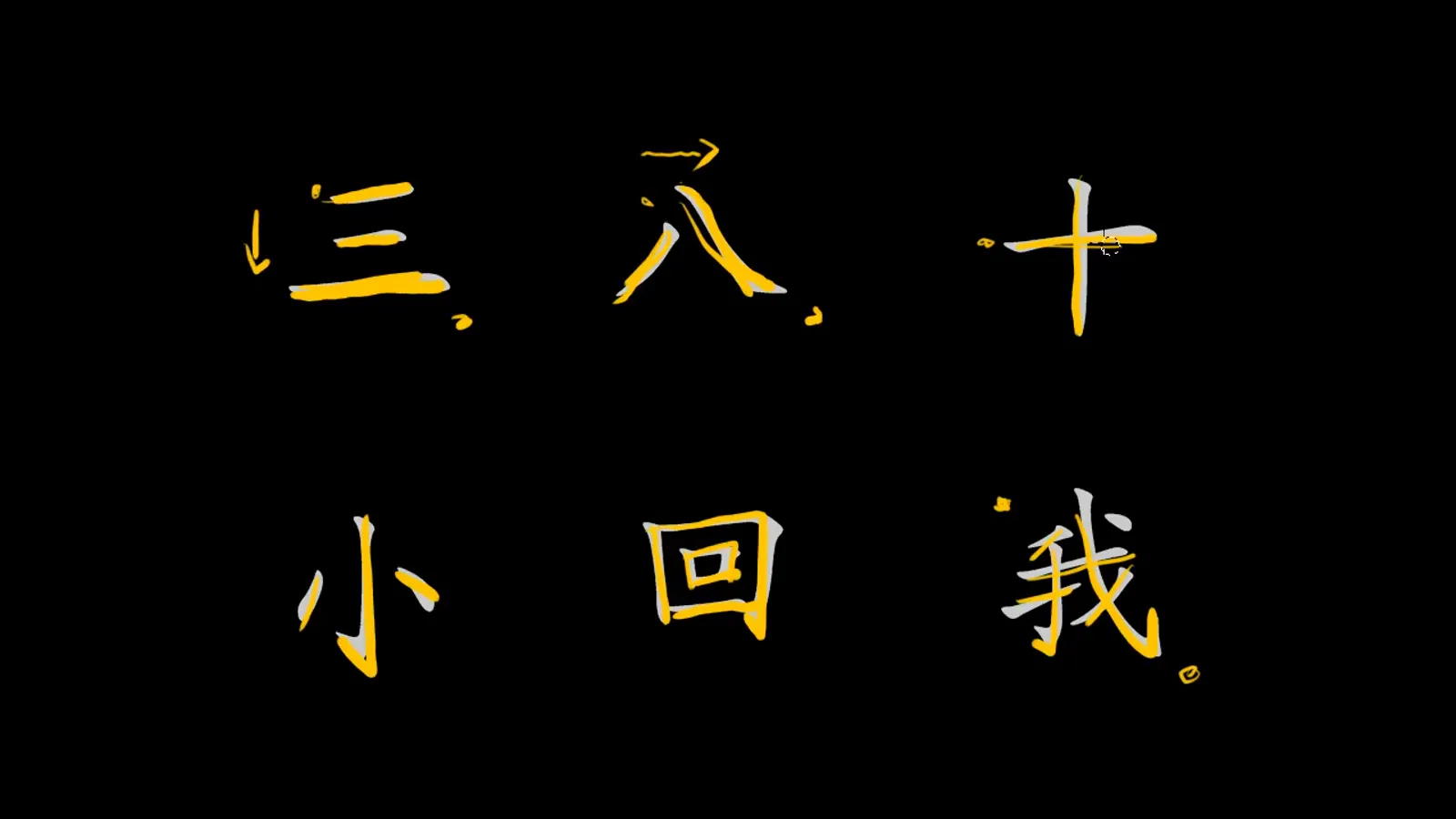
我 completed, with the upper-right dot added as the final stroke.Watch at 5:45
Frequently asked questions
- Does stroke order really matter for a Chinese name?
- Yes. Handwritten names written in the wrong order look visibly off to native readers and the characters can become hard to recognise. Correct stroke order also matters if you plan to learn to type or write your name by hand.
- Are these rules always true?
- They cover the overwhelming majority of characters, but a handful of common characters have conventional exceptions. When in doubt, check an authoritative stroke-order diagram for that specific character.
- How many strokes does a typical Chinese name have?
- A two-character given name plus a surname is usually somewhere between roughly 15 and 40 strokes in total, depending on how dense the characters are.
Keep going
© 2026 AIChineseName.