
Chinese Seal Carving: Turn Your Name into a Stone Stamp
A carved stone seal — known as a chop — is the traditional way to sign a Chinese name on art, letters, and documents. This guide follows an English-language carving tutorial from mirror-reversed design on tracing paper through knife work on soft Qingtian stone to a finished red-ink test impression, with every step illustrated from the source video.
Key takeaways
- Designs must be drawn in mirror-reverse so the stamped image reads correctly.
- Transfer the flipped pattern onto the stone face before any cutting begins.
- Yin seals show white characters on red; yang seals show red characters on white.
- Each stroke edge is cut with a V-shaped groove for clean raised or recessed lines.
- Interior corners require angled blade scraping to open tight junctions.
- Always test the finished seal in red paste before calling it done.
Seal carving, step by step
- 1
Draw the character in mirror-reverse
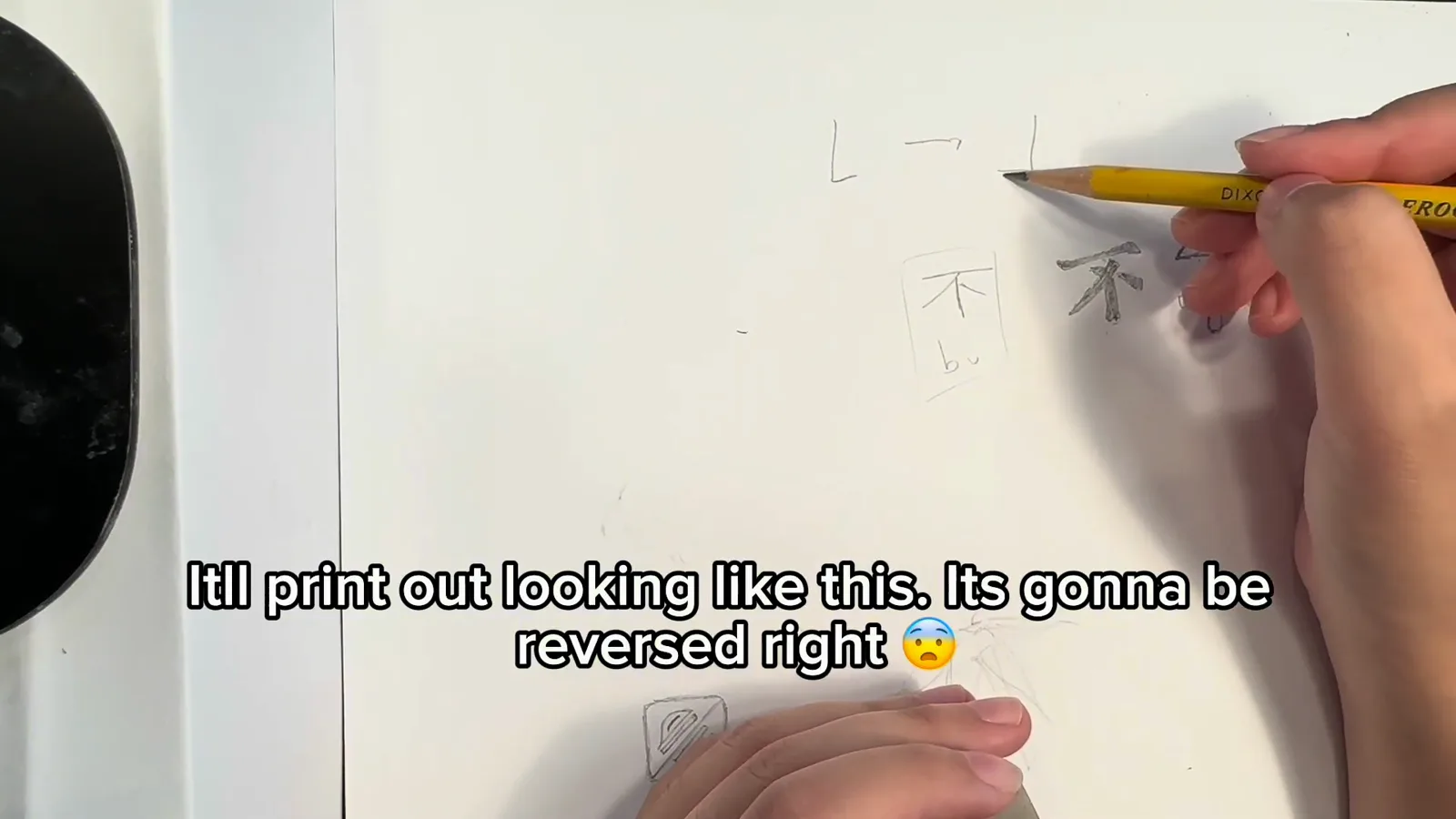
Start on tracing paper with the character flipped horizontally. Because the seal prints a mirror image, the reversed drawing ensures your name reads correctly on paper. Check proportions carefully — seal faces are small and every millimetre counts.
Mirror-reversed character layout sketched on tracing paper.Watch at 0:30 - 2
Transfer the design onto the stone
Place the tracing paper ink-side down on the flat face of your carving stone and rub firmly to transfer the pattern. Soft Qingtian stone accepts the impression well. Any missing lines can be touched up with a fine pen before carving.
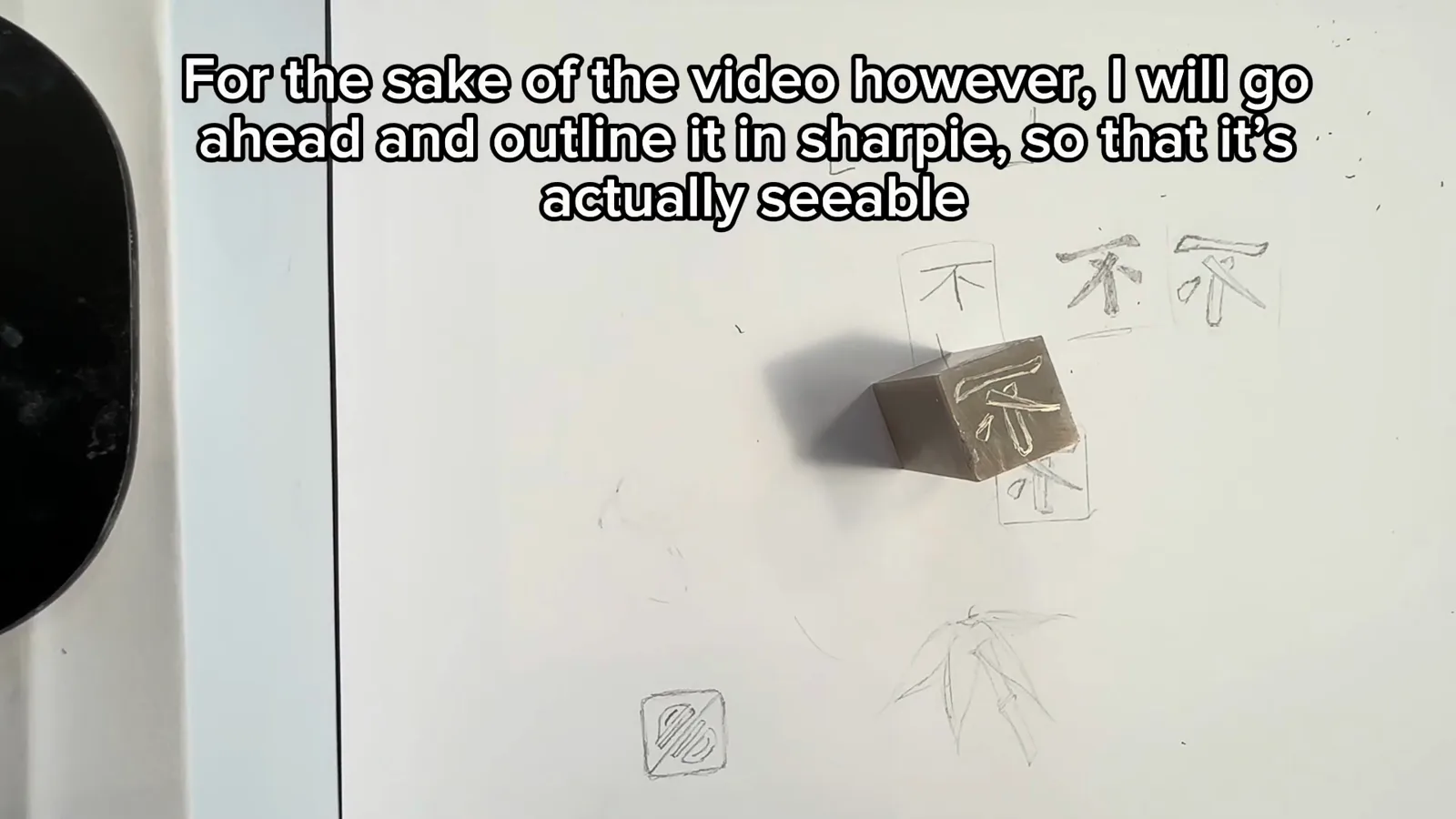
Flipped design rubbed from tracing paper onto the stone surface.Watch at 1:35 - 3
Choose yin or yang carving
A yin (intaglio) seal cuts away the background so characters appear white on a red stamp. A yang (relief) seal leaves characters raised so they print red on white. Name seals are traditionally yin, but either style works if you carve consistently.
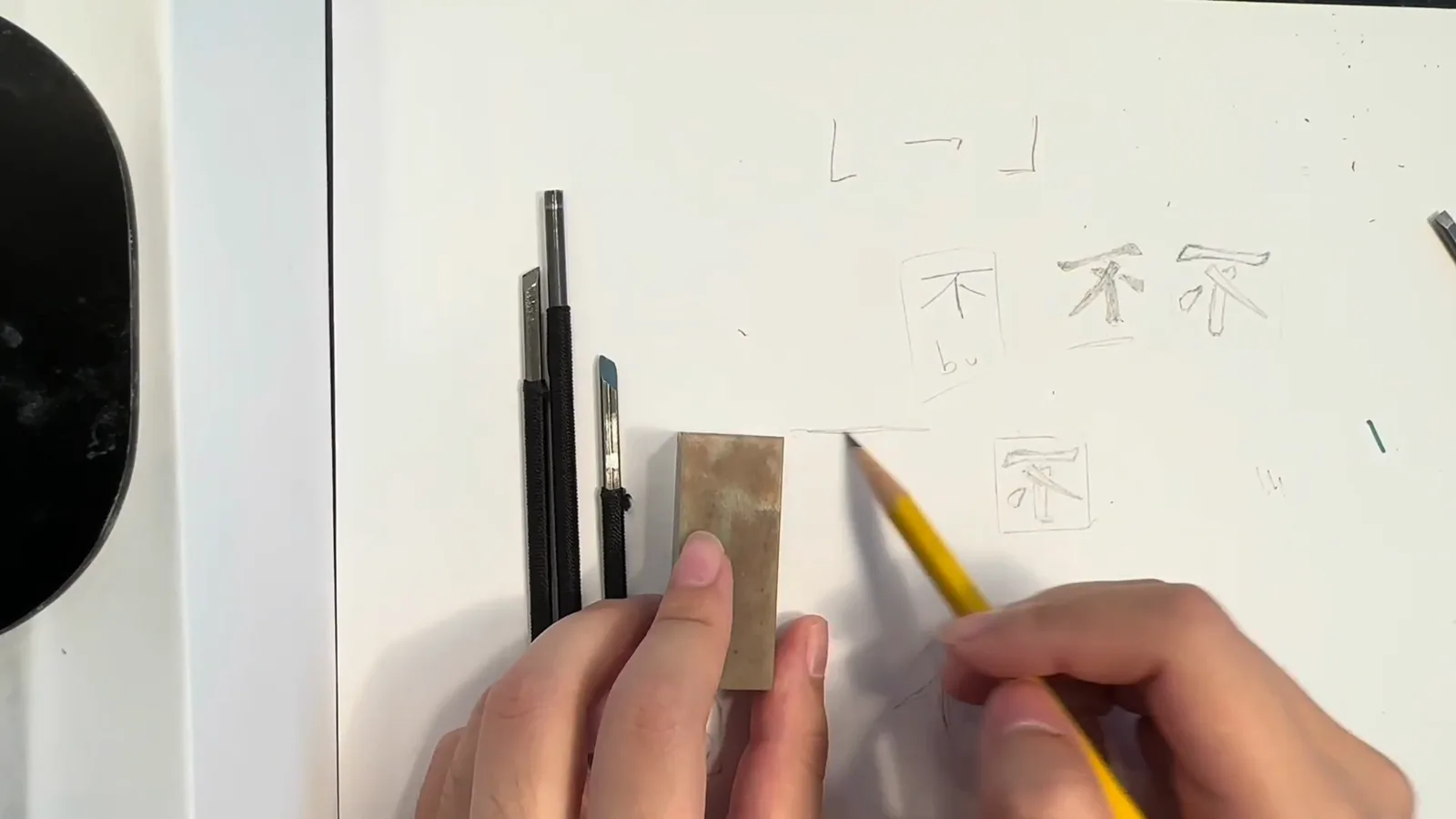
Printed samples contrasting yin and yang seal impressions.Watch at 2:30 - 4
Cut V-shaped grooves along each stroke
The seal knife cuts a V-groove along both edges of every stroke. The angle of the blade determines how deep and clean the line looks in the final impression. Practice on scrap stone until the groove feels controlled.
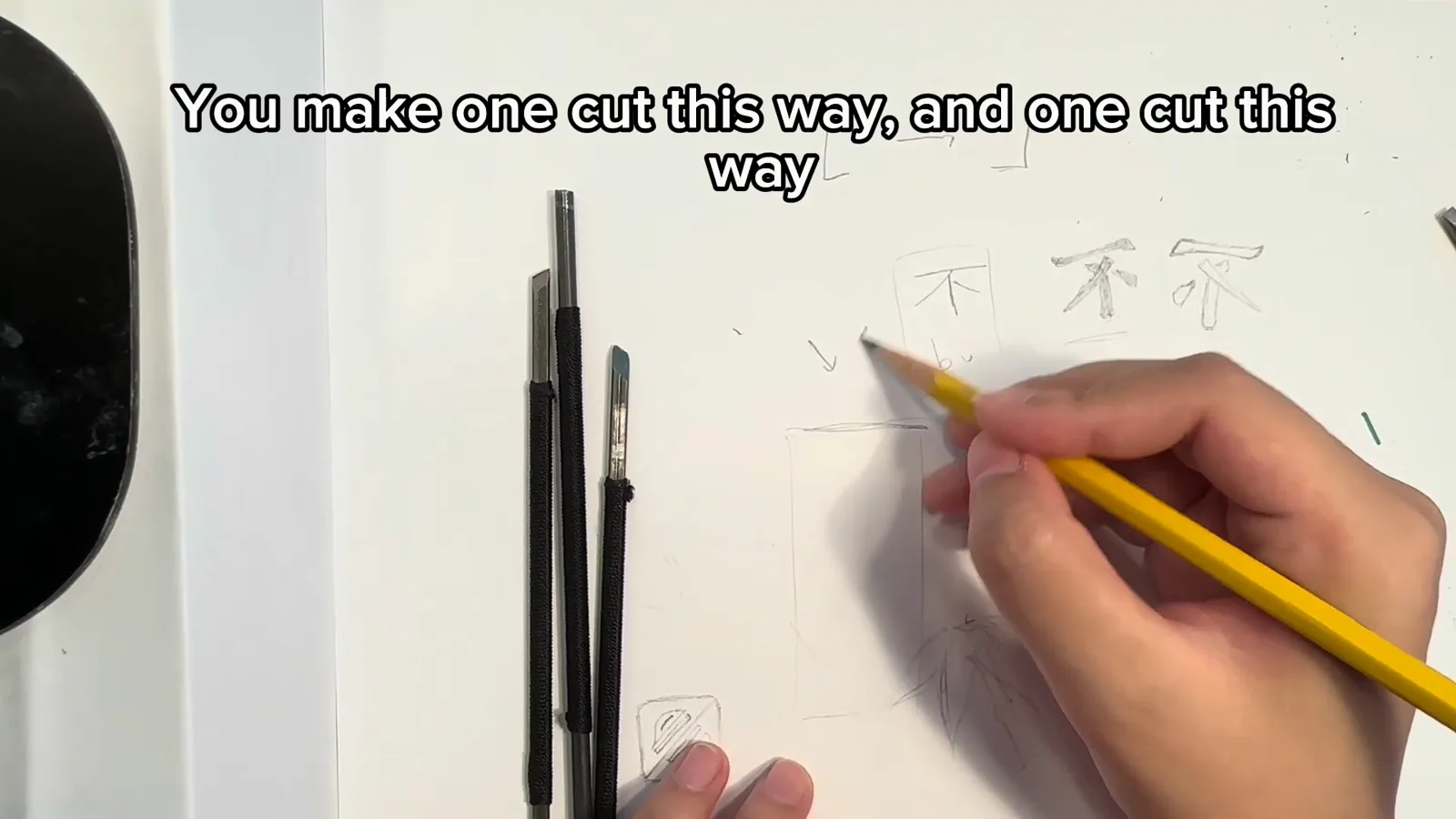
Cross-section diagram of the V-cut carving technique.Watch at 2:38 - 5
Scrape tight corners with an angled blade
Square interior corners cannot be reached with a straight push. Turn the knife so the blade edge scrapes into the corner at an angle, removing stone in small chips. Work slowly — one slip can break a thin stroke.
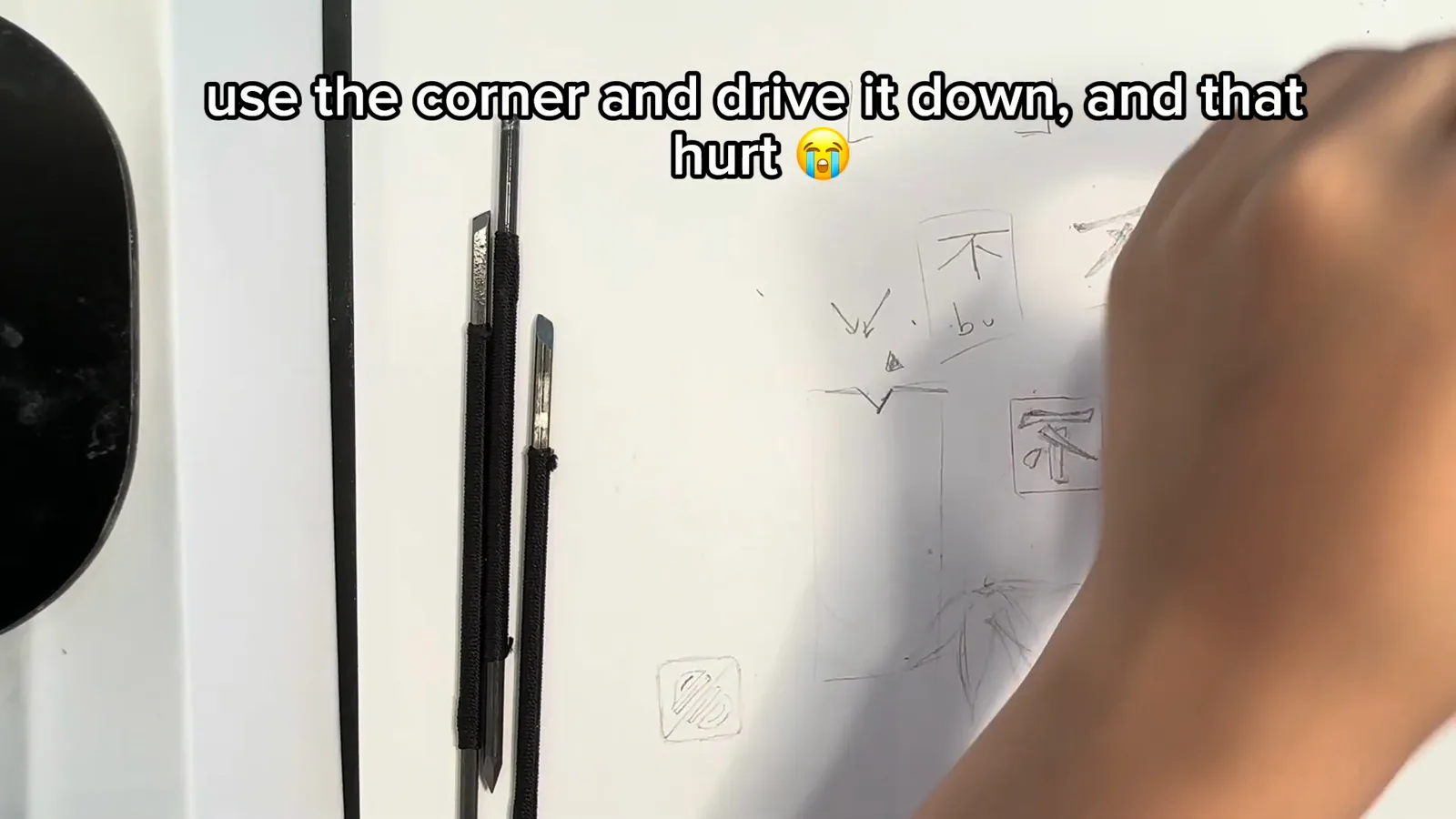
Angled blade scraping an interior corner on the stone face.Watch at 4:25 - 6
Carve each stroke on Qingtian stone
Follow the transferred outline stroke by stroke. Soft Qingtian stone is forgiving for beginners but still holds fine detail. Keep the knife moving away from your fingers and clear debris frequently so you can see the remaining outline.
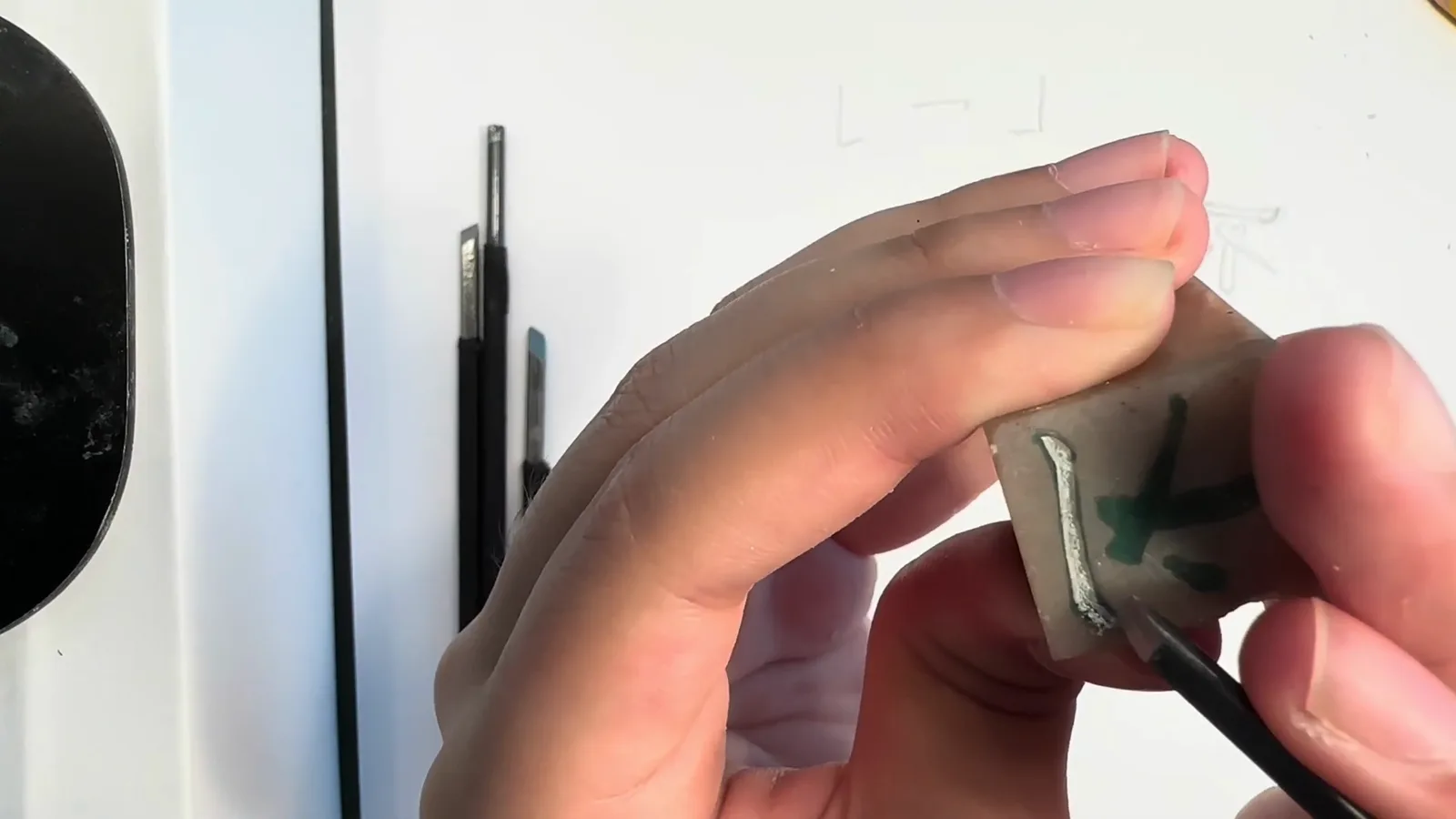
Hands carving individual strokes into soft Qingtian stone.Watch at 5:35 - 7
Clean the face and test your stamp
Brush away all stone dust from the carved face. Press the seal into red paste and stamp onto paper. The test impression reveals any strokes that need deepening or cleaning. Repeat until every line prints clearly.
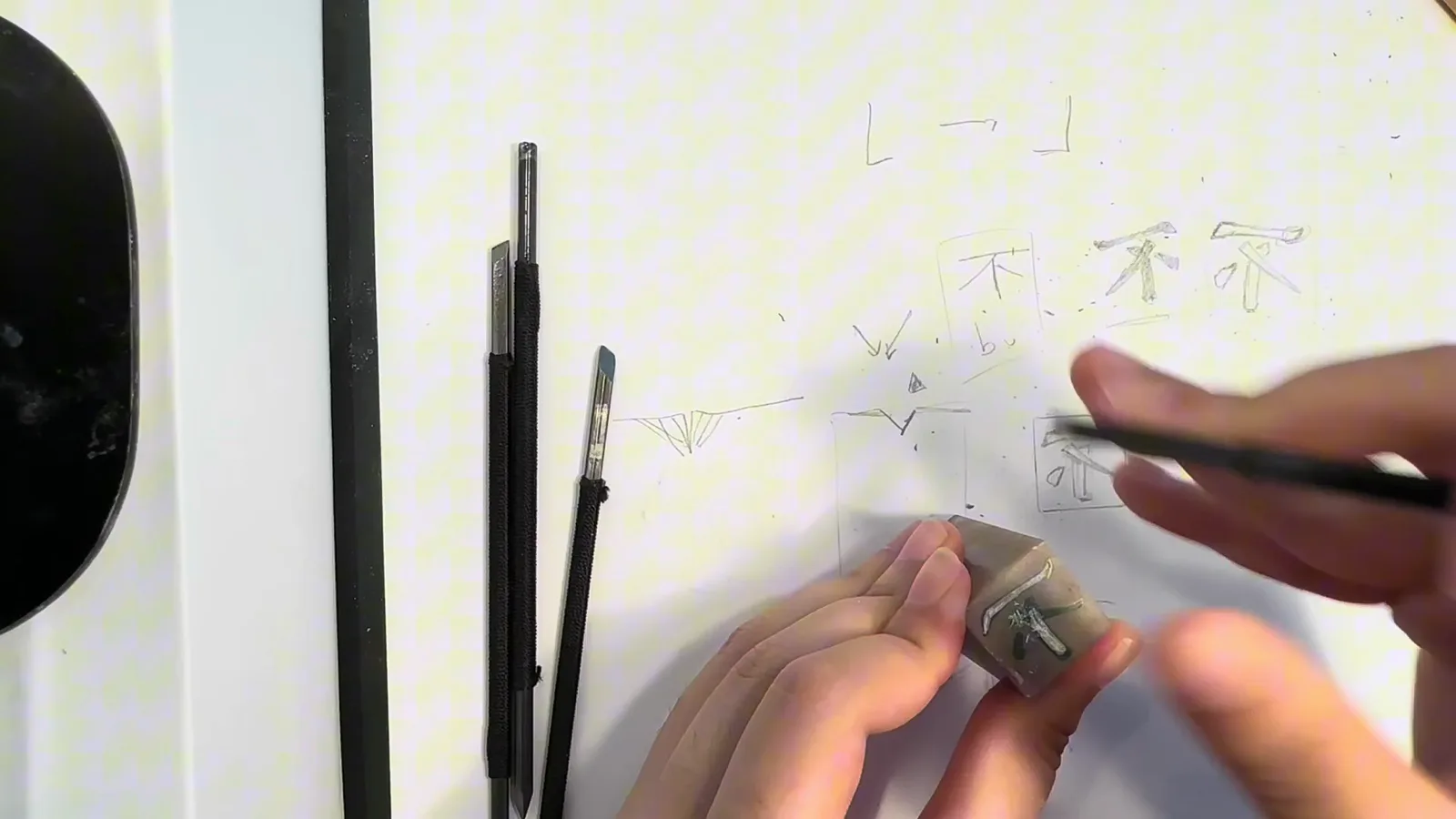
Debris removed and a red-ink test impression of the finished seal.Watch at 7:00
Frequently asked questions
- Can I carve a seal for my generated Chinese name?
- Yes. Use the Chinese characters from your generated name, draw them mirror-reversed, and follow the transfer and carving steps in this guide. Start with two or three characters on a stone at least 2 cm square.
- What stone is best for beginners?
- Soft Qingtian stone is widely recommended for first projects. It cuts easily with a tungsten-carbide seal knife and forgives small mistakes. Harder stones like Shoushan require more skill.
- What is the difference between yin and yang seals?
- Yin seals cut the background away so characters print white on red — the traditional style for name chops. Yang seals leave characters raised so they print red on white. The carving technique differs but the mirror-reverse design rule is the same.
- Do I need special tools?
- At minimum you need a seal carving knife, a soft stone blank, tracing paper, transfer ink or carbon paper, red seal paste, and a brush for cleaning. A magnifying lamp helps for small characters.
Keep going
© 2026 AIChineseName.