
Chinese Handwriting Basics: The Strokes Behind Every Character in Your Name
Before you write a full Chinese name, you need the handful of basic strokes that every character is built from. This guide introduces horizontal héng, vertical shù, and dot diǎn, shows how they appear inside simple characters, and walks through writing 上 (up) and 下 (down) — each step illustrated from a beginner handwriting lesson.
Key takeaways
- Horizontal héng is written left to right in one steady motion.
- Vertical shù is written top to bottom, often ending in a suspended-needle tip.
- Dot diǎn is a short angular press, not a round blob.
- Simple characters like 十, 日, 三, and 土 reuse the same few strokes.
- Combining strokes in the correct order keeps characters balanced.
- Practice individual strokes before attempting your full name.
Basic strokes, step by step
- 1
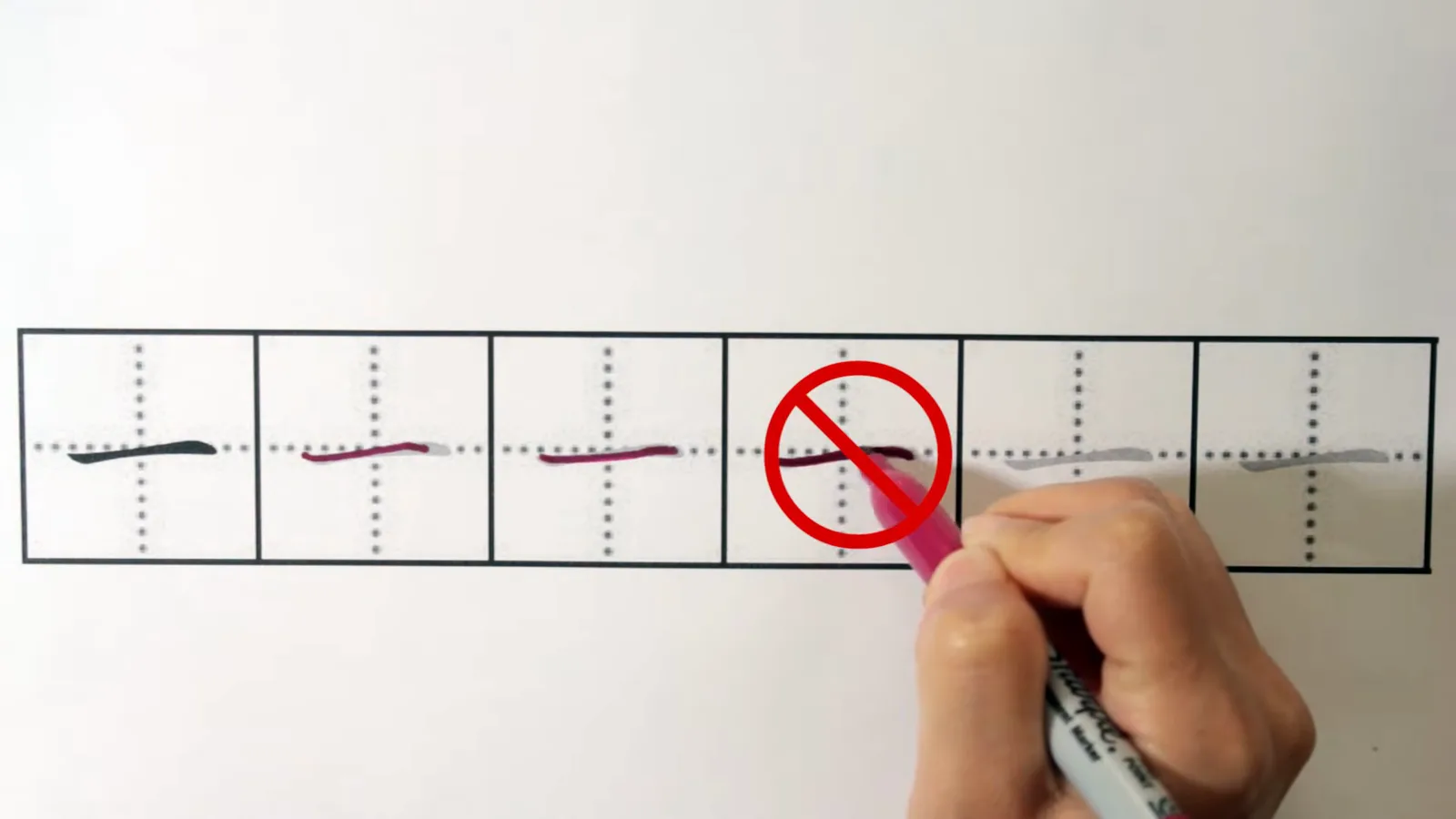
Horizontal stroke — héng (left to right)
The héng is a straight horizontal line written from left to right. Keep it level and end with a clean stop rather than a hook. Most characters in a Chinese name contain at least one horizontal stroke.
Héng drawn left to right with a directional arrow on the lesson grid.Watch at 1:30 - 2
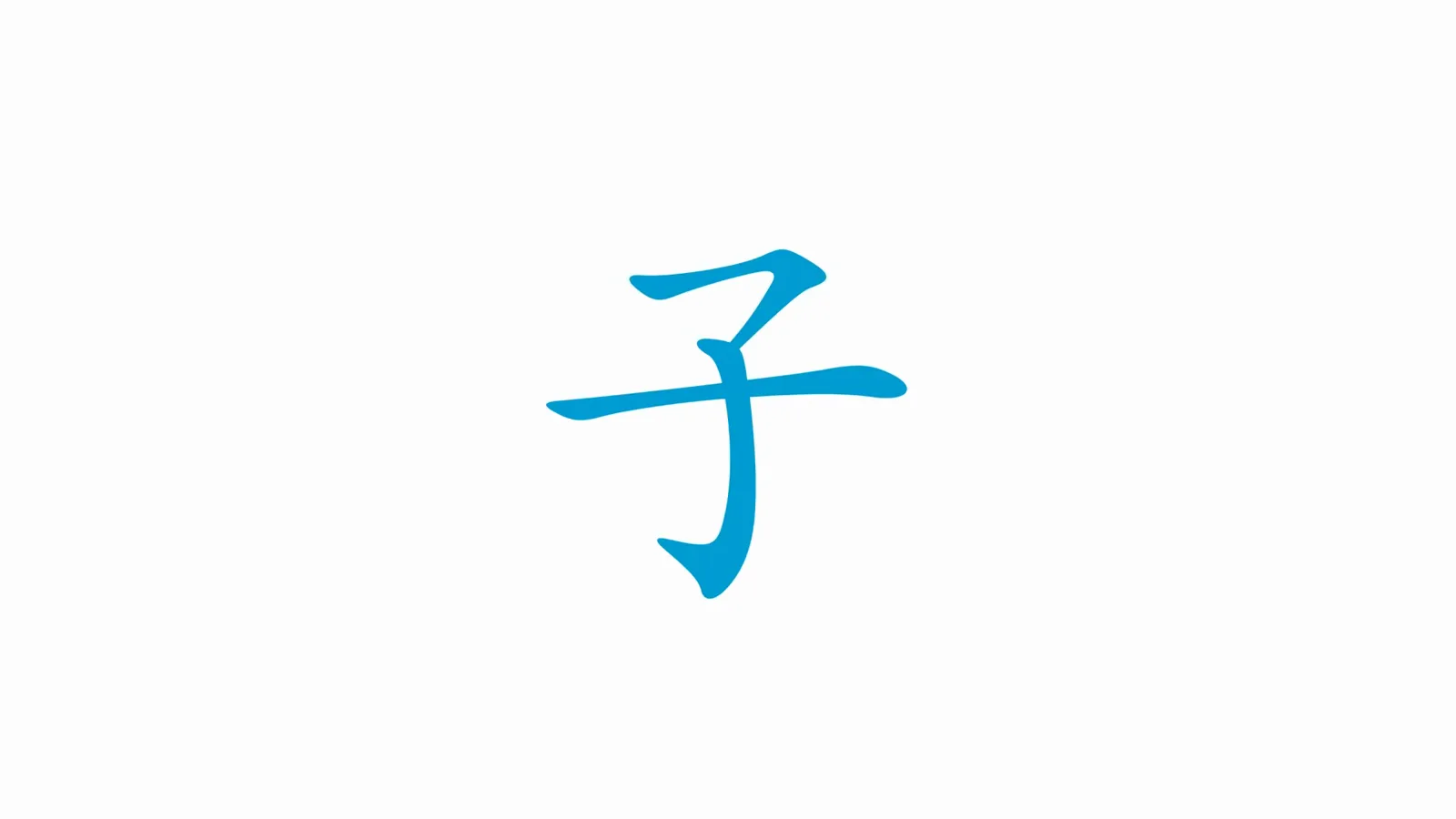
Spot strokes in 十, 日, and 三
十 (ten) combines one héng and one shù. 日 (sun) stacks two héng with a shù down the middle. 三 (three) is three parallel héng lines. Recognising these building blocks makes every new character less intimidating.
十, 日, and 三 with their horizontal and vertical strokes highlighted.Watch at 2:05 - 3
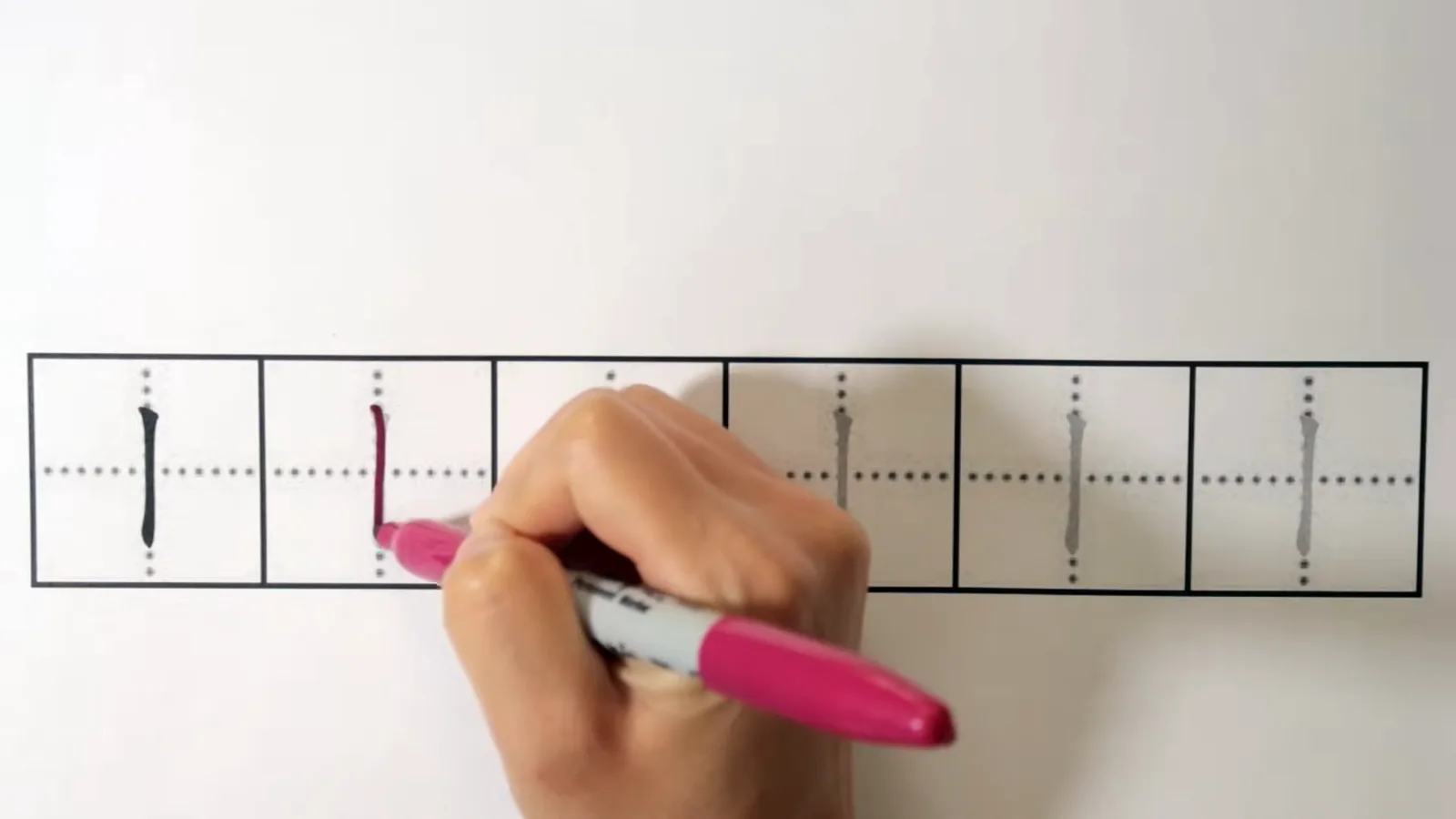
Vertical stroke — shù (top to bottom)
The shù runs from top to bottom. In this lesson it finishes with a suspended-needle tip — the stroke tapers to a sharp point without a foot. Pull the pen downward smoothly and lift cleanly at the end.
Shù written top to bottom with a suspended-needle finish.Watch at 2:40 - 4
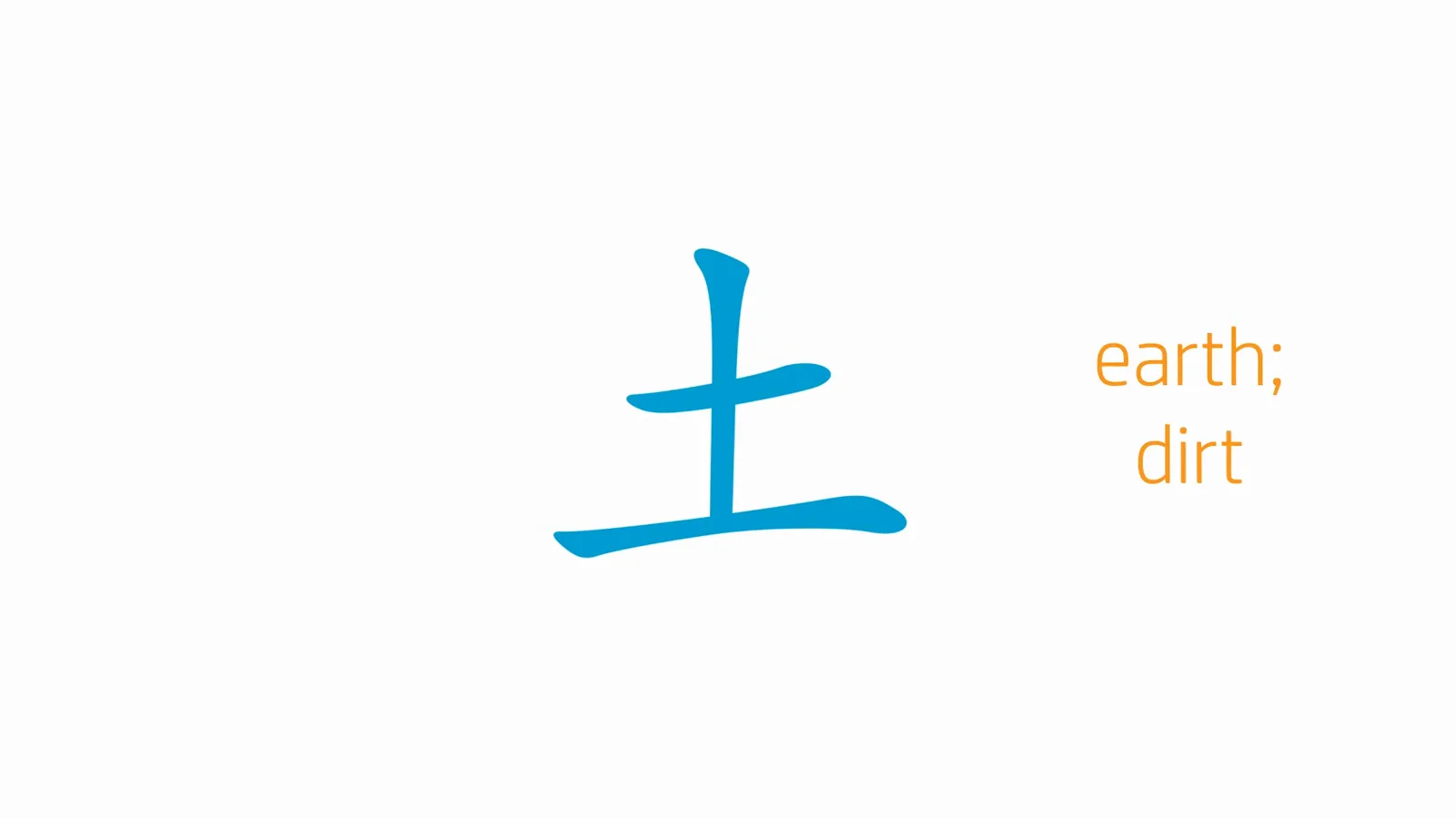
Find strokes inside 土 (earth)
土 breaks into two héng strokes and one shù. The top héng is shorter, the bottom héng spans wider, and the shù connects them through the centre. Identifying strokes inside real characters is the bridge from drills to writing names.
土 decomposed into its horizontal and vertical components.Watch at 3:15 - 5
Dot stroke — diǎn (angular press)
The diǎn is not a circle — it is a quick angular press, often slanting from upper-right to lower-left. Dots appear in many common name characters and are almost always written last when they sit in the upper-right corner.
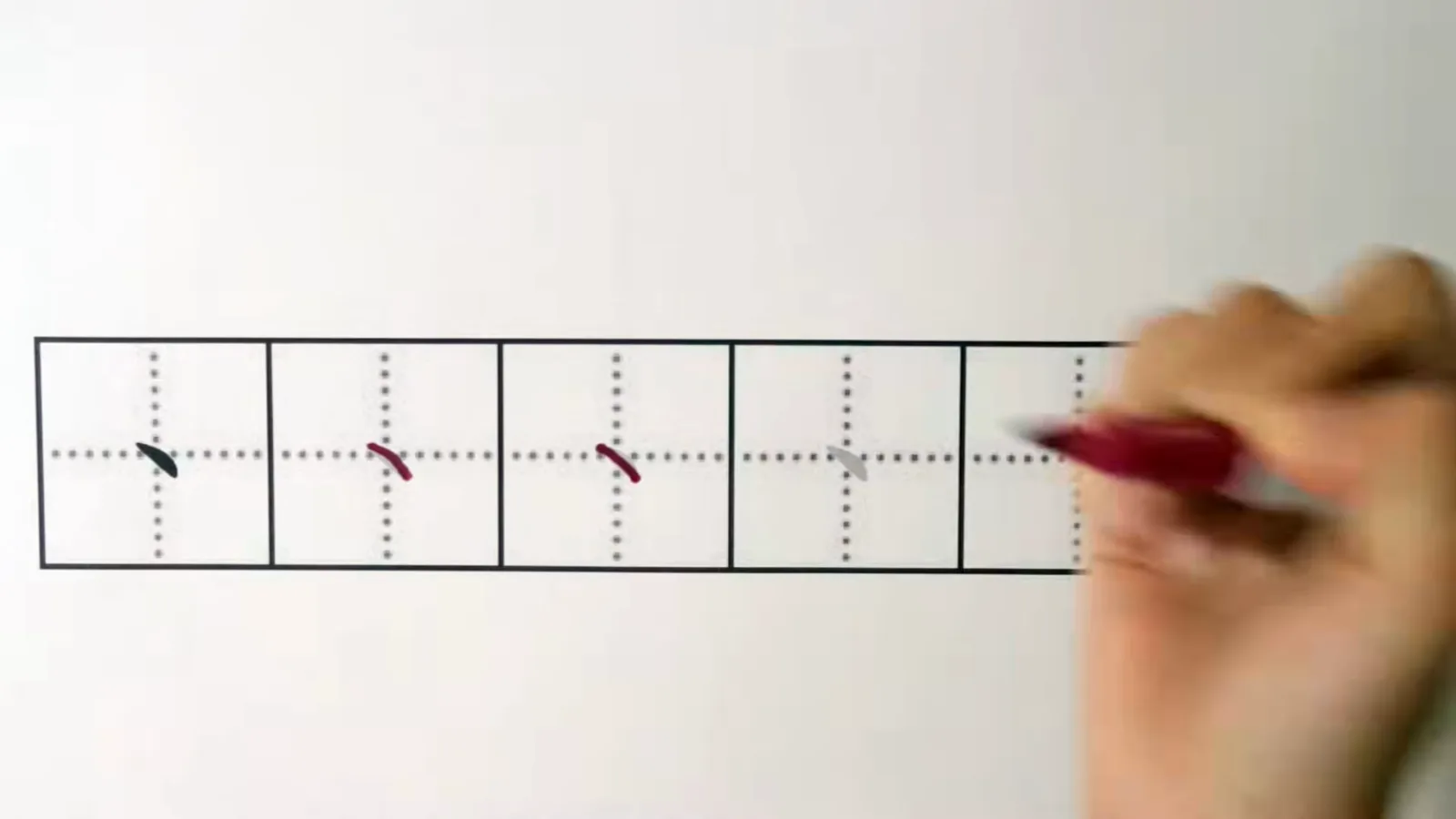
Diǎn shown as a short angled press with direction marked.Watch at 4:15 - 6
Write 上 (up) by combining strokes
上 is built from a short héng on top, a longer shù through the middle, and a final héng at the base. Follow the stroke order shown in the lesson: top horizontal, vertical, then bottom horizontal.
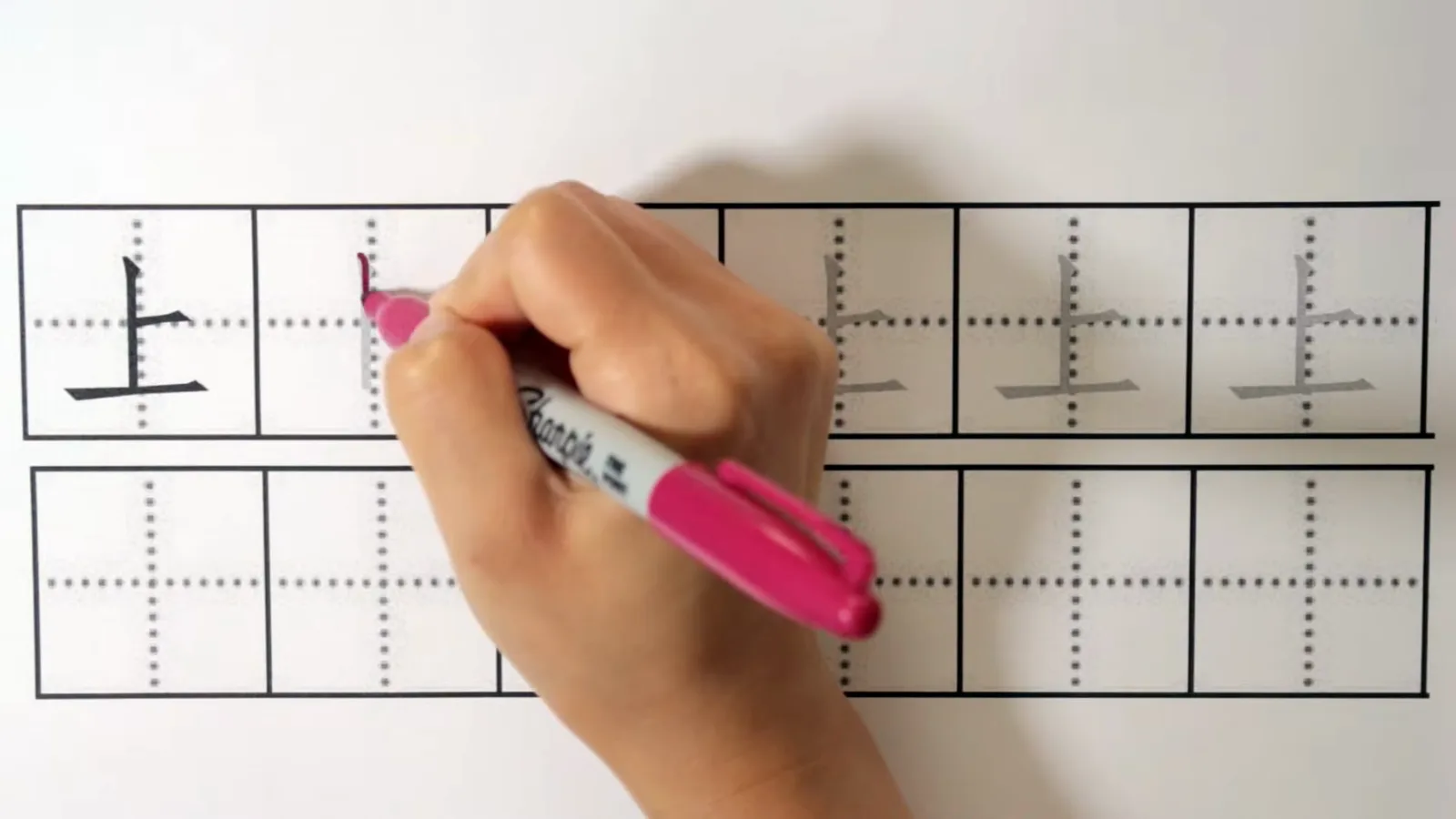
上 assembled stroke by stroke on the practice grid.Watch at 5:35 - 7
Write 下 (down) by combining strokes
下 uses the same basic strokes rearranged: a héng on top, a shù on the left, and a diagonal dot on the right. Comparing 上 and 下 side by side shows how a small change in stroke placement creates a different character.
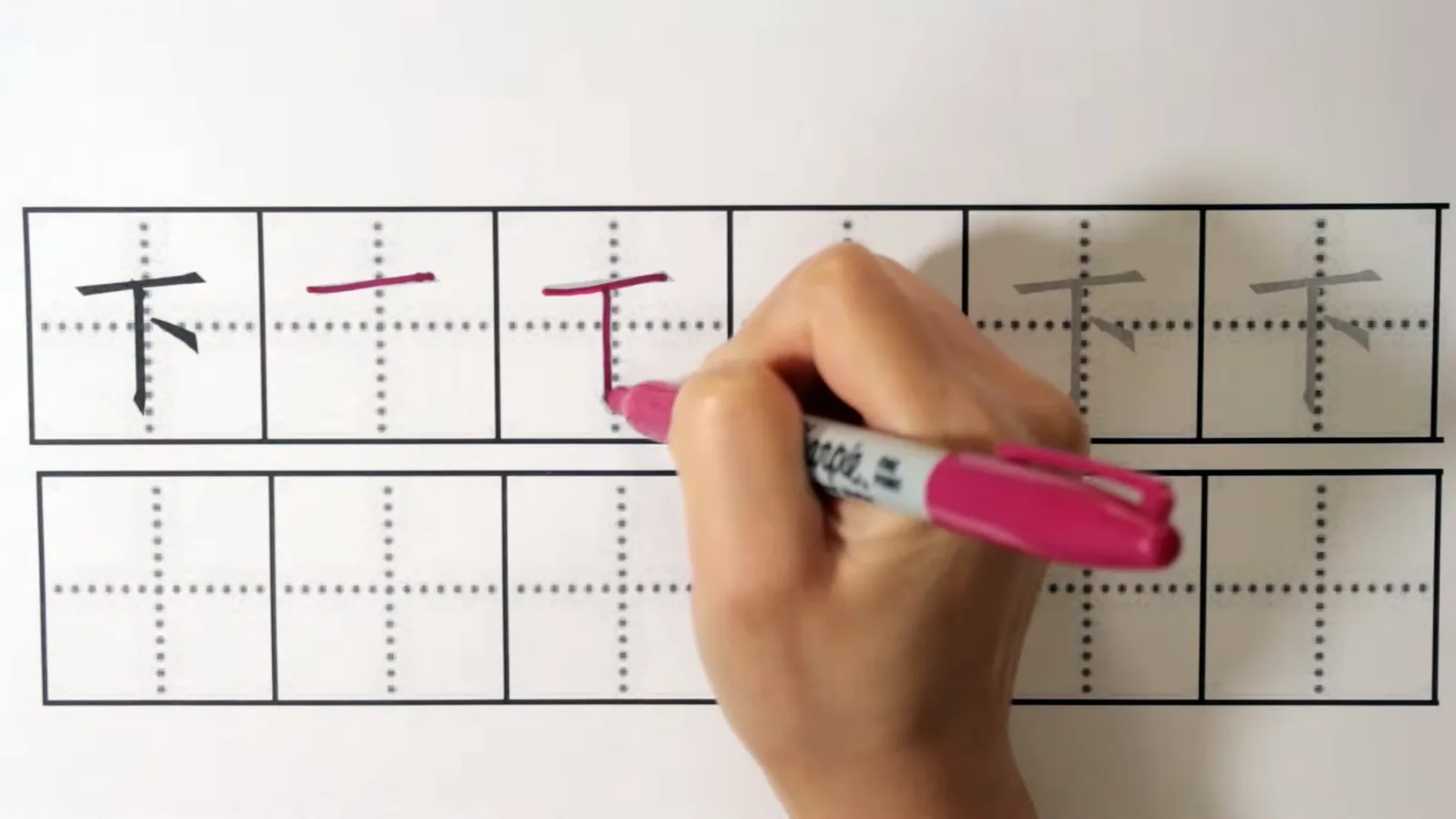
下 built beneath 上 using the same fundamental strokes.Watch at 6:30
Frequently asked questions
- How is pen handwriting different from calligraphy?
- Calligraphy uses a soft brush with varied pressure and ink flow. Everyday handwriting uses a pen or pencil with simpler, more uniform strokes. The basic stroke names and directions are the same in both.
- Should I learn these strokes before writing my Chinese name?
- Yes. Names are made of the same héng, shù, and diǎn strokes shown here. Mastering them on simple characters like 上 and 下 makes writing your own name much smoother.
- How many basic strokes are there in total?
- Traditional analysis lists eight basic strokes (the Eight Principles of Yong). This beginner lesson focuses on the three most common — héng, shù, and diǎn — which appear in nearly every character.
- Do stroke directions matter in handwriting?
- They do. Writing left-to-right for héng and top-to-bottom for shù produces cleaner, faster characters. Wrong direction leads to awkward shapes and slows you down.
Keep going
© 2026 AIChineseName.