
Chinesische Radikale: Was die Bausteine in Ihrem Namen bedeuten
Jedes chinesische Zeichen setzt sich aus Radikalen zusammen — kleinen Bedeutungsbausteinen, die Hinweise auf Charakter, Natur und Kultur geben. Dieser Leitfaden erklärt die wichtigsten Radikale, die in echten Namen vorkommen.
Wichtigste Erkenntnisse
- A radical is the recurring semantic component inside a character.
- Radicals on the left or top usually carry the core meaning.
- The water radical 氵 hints at rivers, flow, and adaptability.
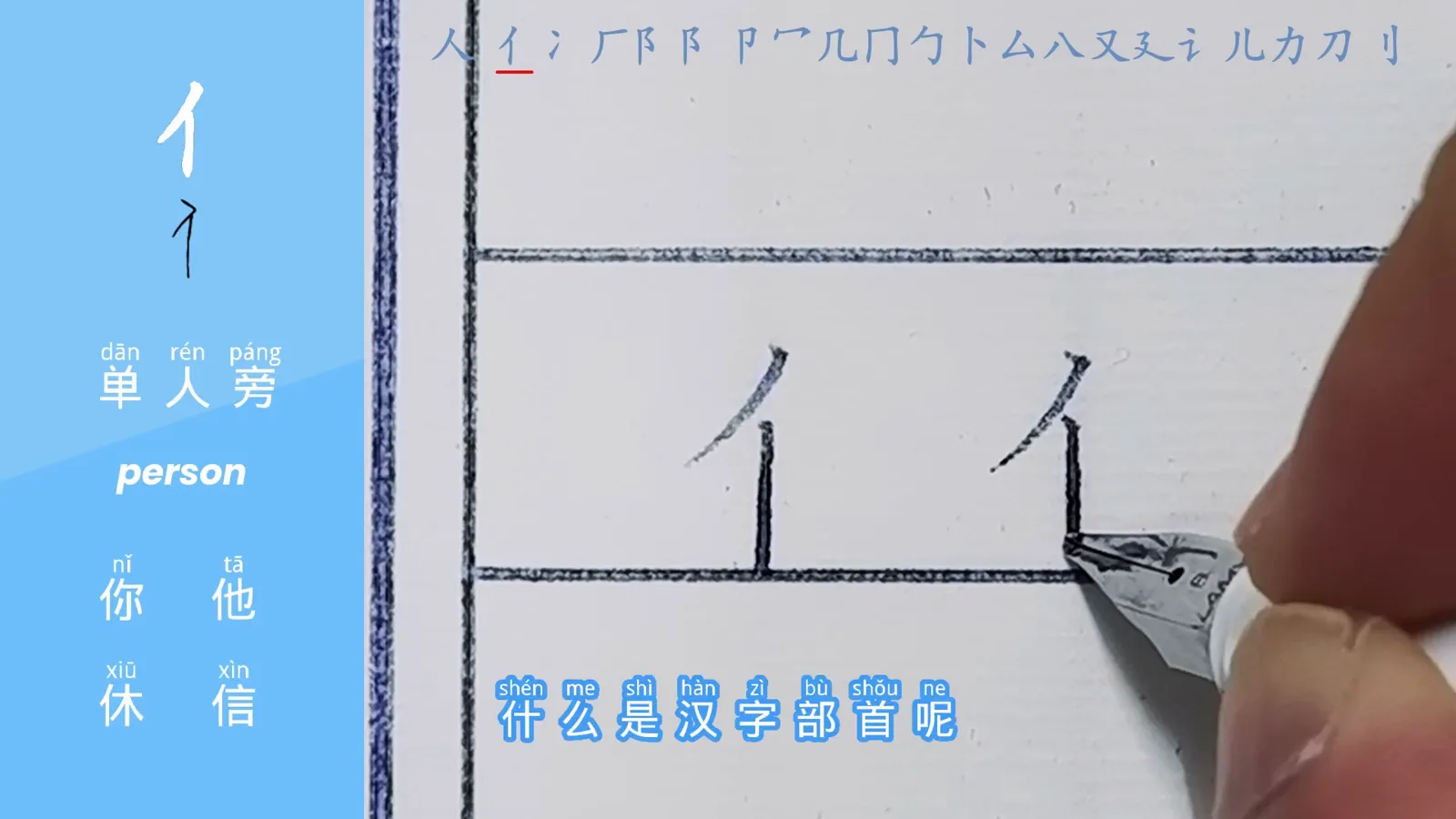
- The person radical 亻 marks characters about people and conduct.
- Knowing a few radicals lets you guess a name's feel without a dictionary.
- The same radical keeps its meaning across many different name characters.
Radikale Schritt für Schritt
- 1
亻 — the standing-person radical
Written as a lean 人 shifted to the left side of a character, 亻 signals that the character concerns a person or their behaviour. It appears in 你 (you) and the name characters 休 and 信 (trust).
The left-side 亻 person radical, shown with example characters 你 他 休 信.Ansehen bei 0:12 - 2
儿 — the legs radical
The 儿 component at the foot of a character originally depicted legs or a person standing. It underpins warm, human name characters such as 元, 光 (brightness), 先 and 兄.
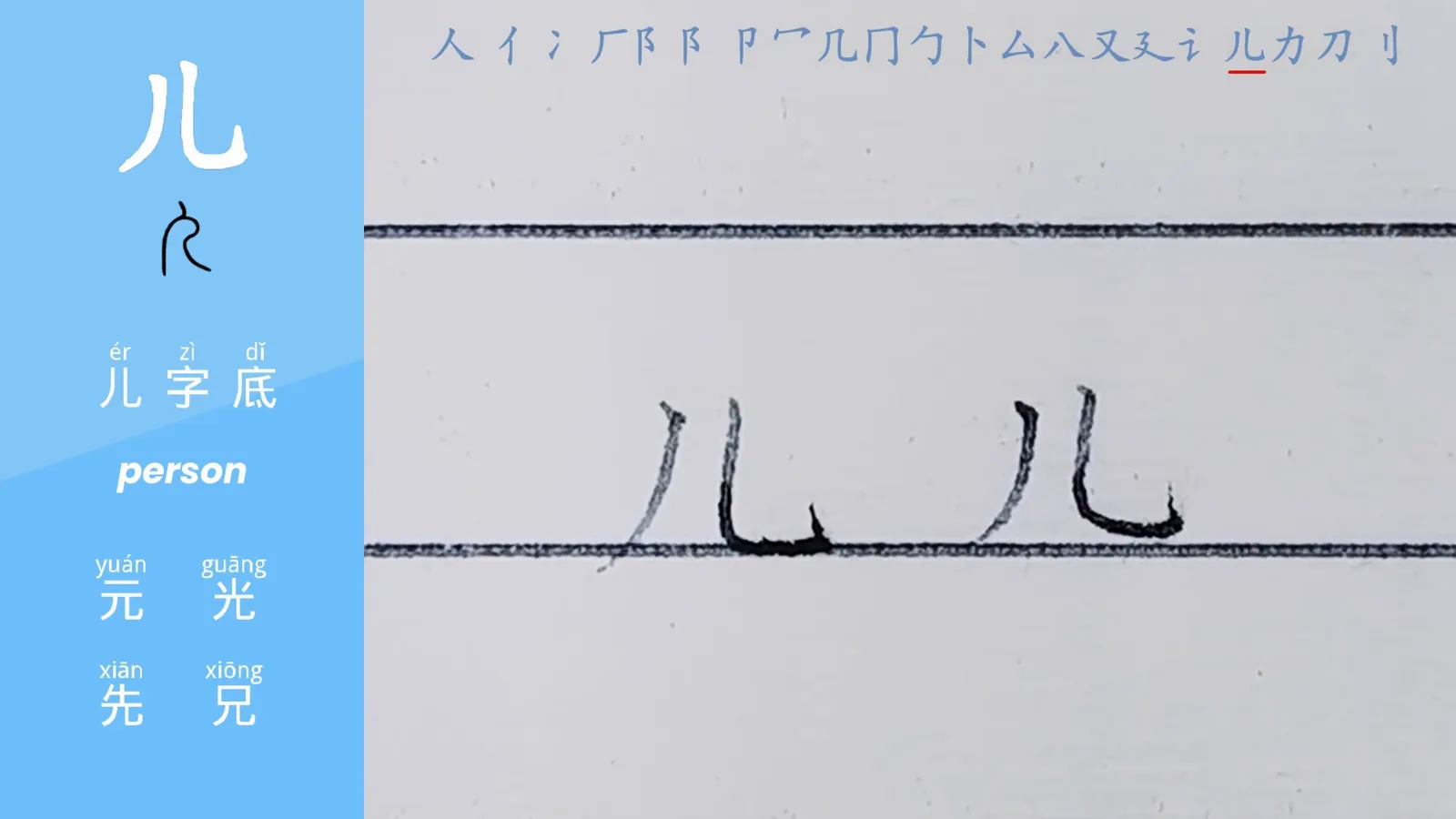
The bottom 儿 legs radical with example characters 元 光 先 兄.Ansehen bei 3:42 - 3
刀 / 刂 — the knife radical
Derived from the picture of a blade, the knife radical carries ideas of cutting, decisiveness, and sharpness. It shows up as 刀 or, on the right edge, as the two vertical strokes 刂, in characters like 刃 and 分.
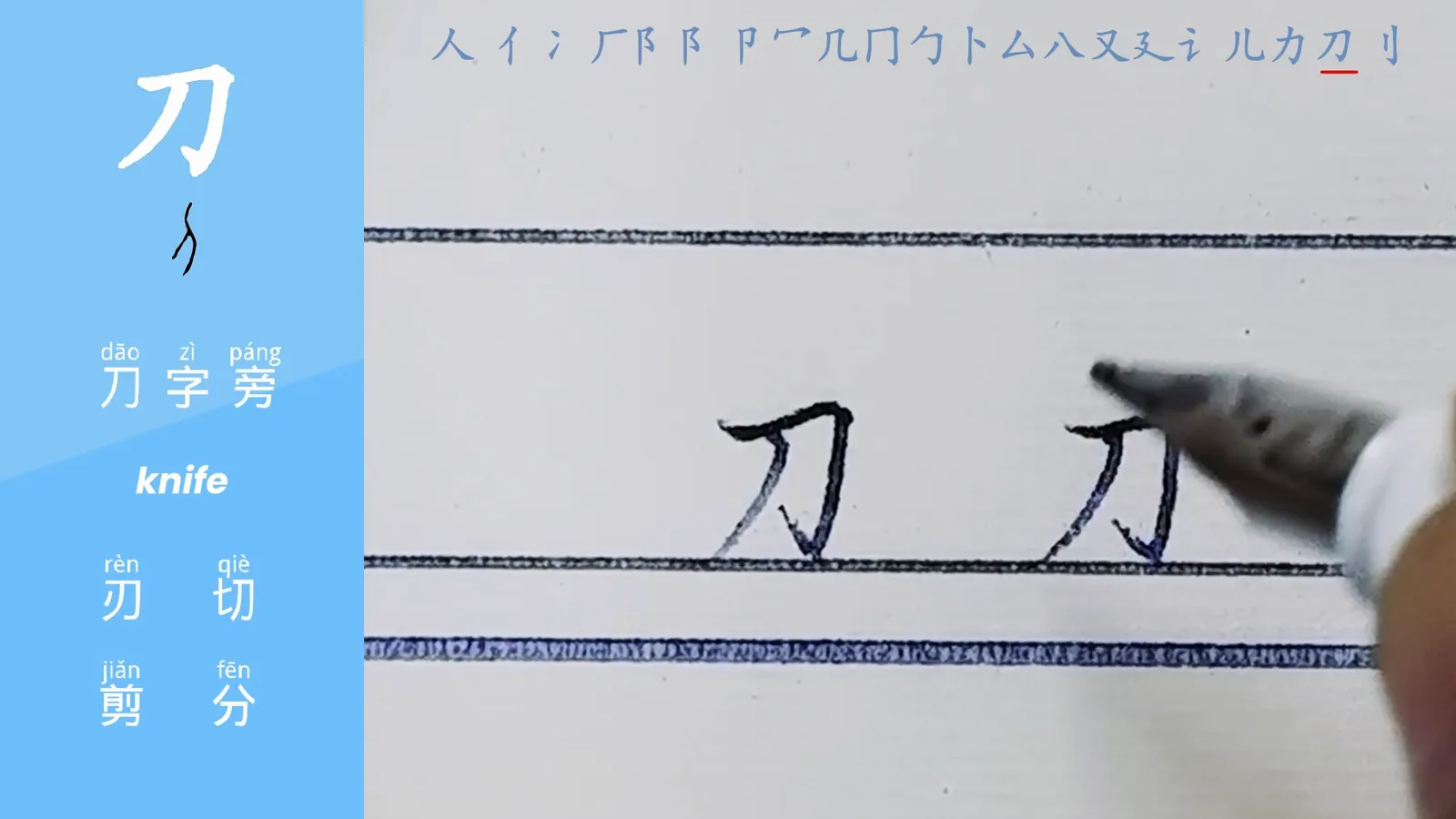
The 刀 knife radical with example characters 刃 切 剪 分.Ansehen bei 4:02 - 4
氵 — the three-dots water radical
Three quick dots on the left stand for 水, water. Names carrying 氵 often evoke rivers, depth, clarity, and flow — you meet it in 河 (river) and countless given names such as 汤 and 演.
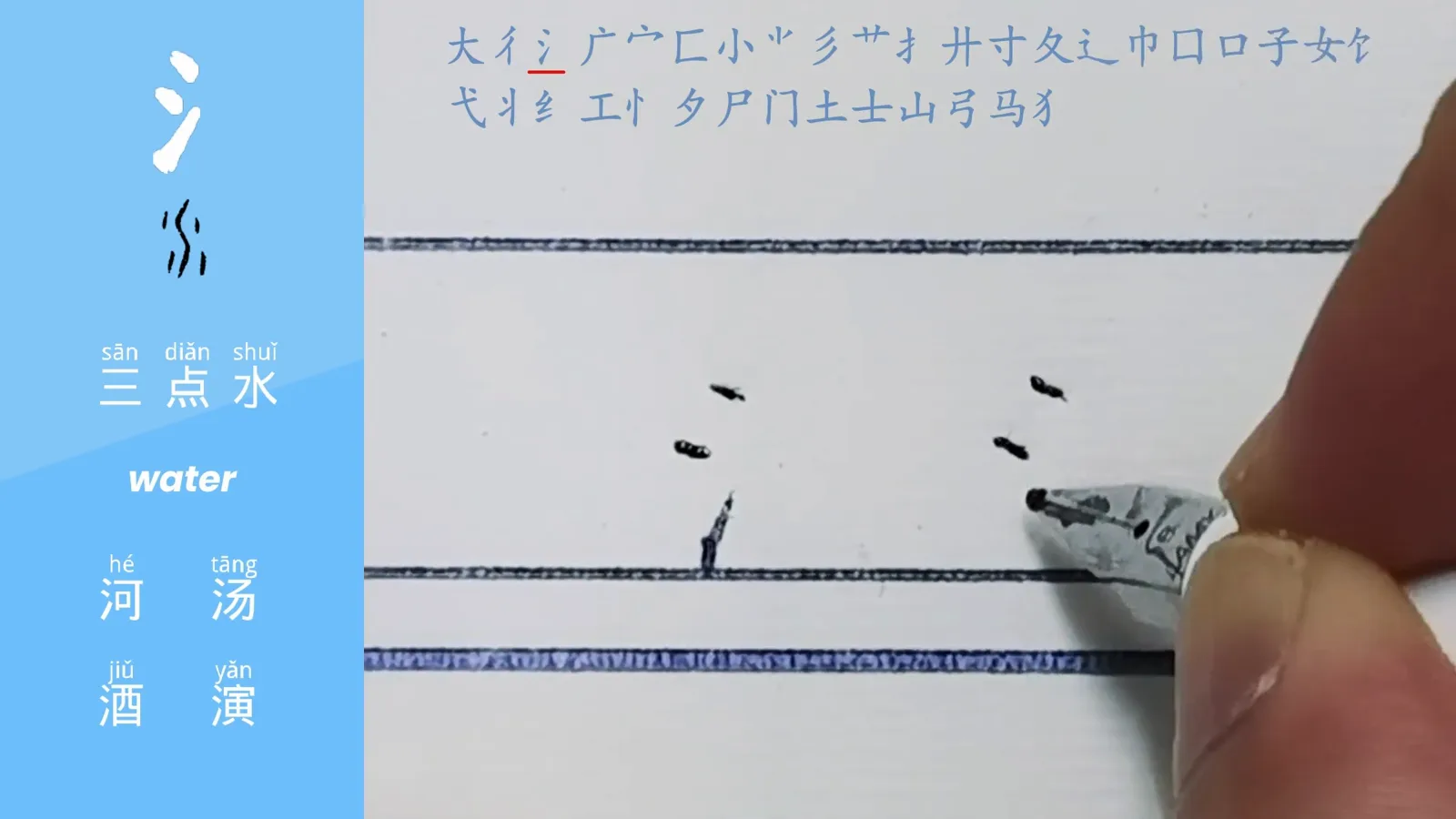
The 氵 three-dots water radical with example characters 河 汤 酒 演.Ansehen bei 4:42 - 5
小 — the small radical
A vertical hook flanked by two dots, 小 means small or humble and lends a gentle, modest tone to names. It appears on its own and inside characters like 少, 尖, 肖 and 尚.
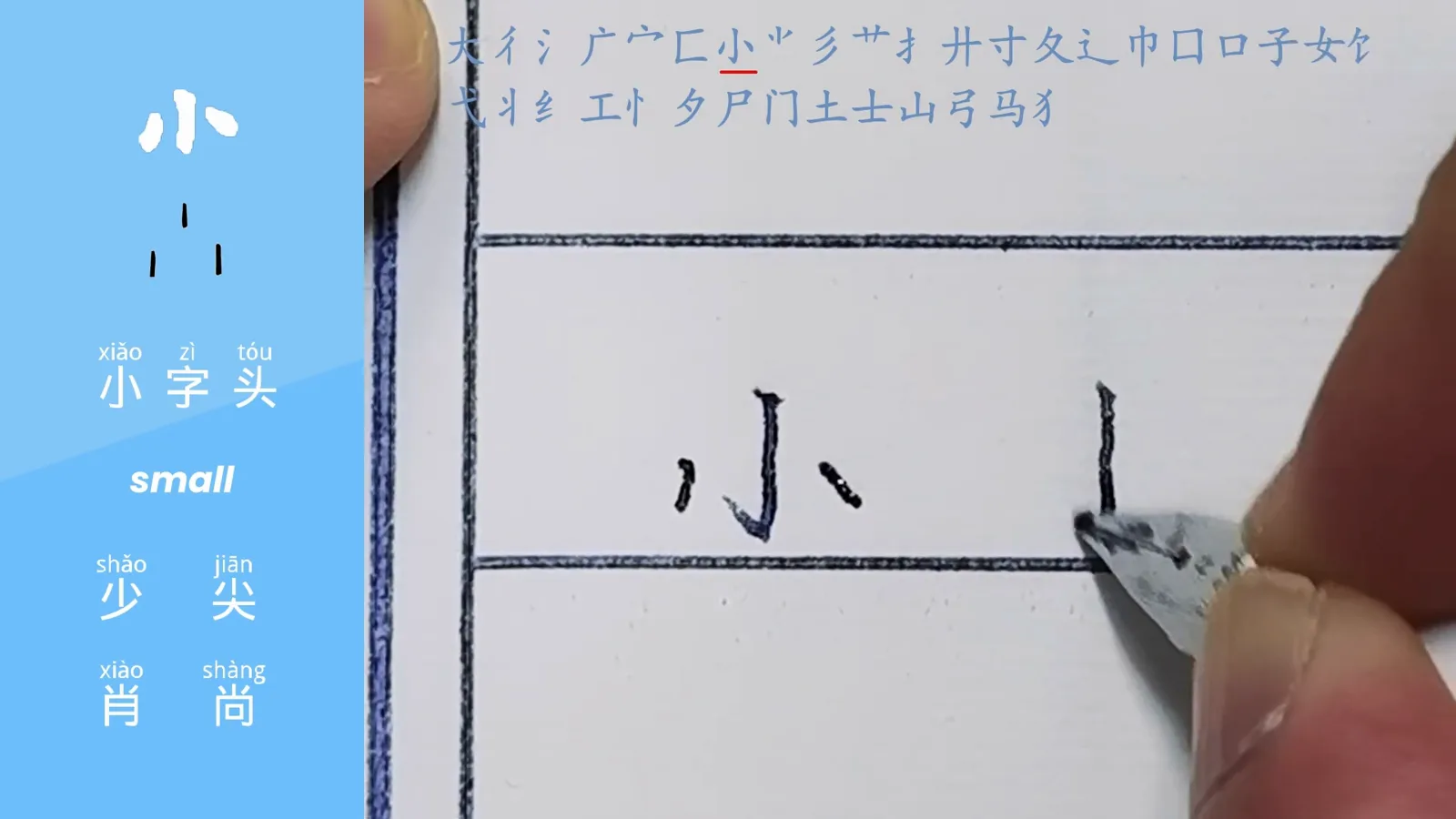
The 小 small radical with example characters 少 尖 肖 尚.Ansehen bei 5:22 - 6
艹 — the grass radical
The little double-cross on top, 艹, marks plants and herbs. It is one of the most common radicals in feminine given names because it evokes fragrance and growth — 草, 花 (flower), 茶 and 药 all carry it.
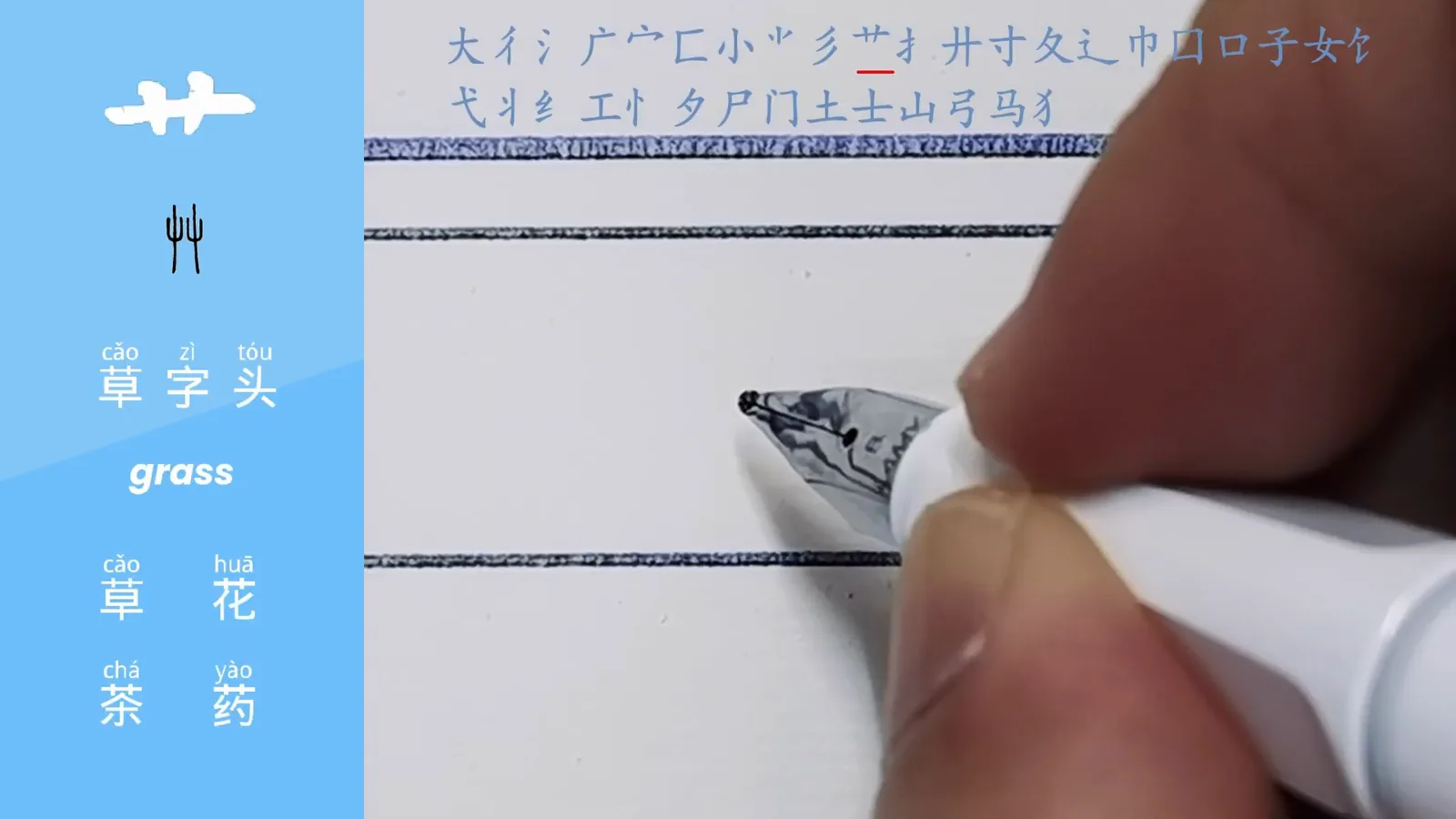
The top 艹 grass radical with example characters 草 花 茶 药.Ansehen bei 5:42 - 7
巾 — the cloth radical
Shaped like a hanging towel, 巾 relates to textiles and cloth. It appears in name-adjacent characters such as 帕, 布 (cloth), 帽 and 市, and quietly signals something woven or draped.
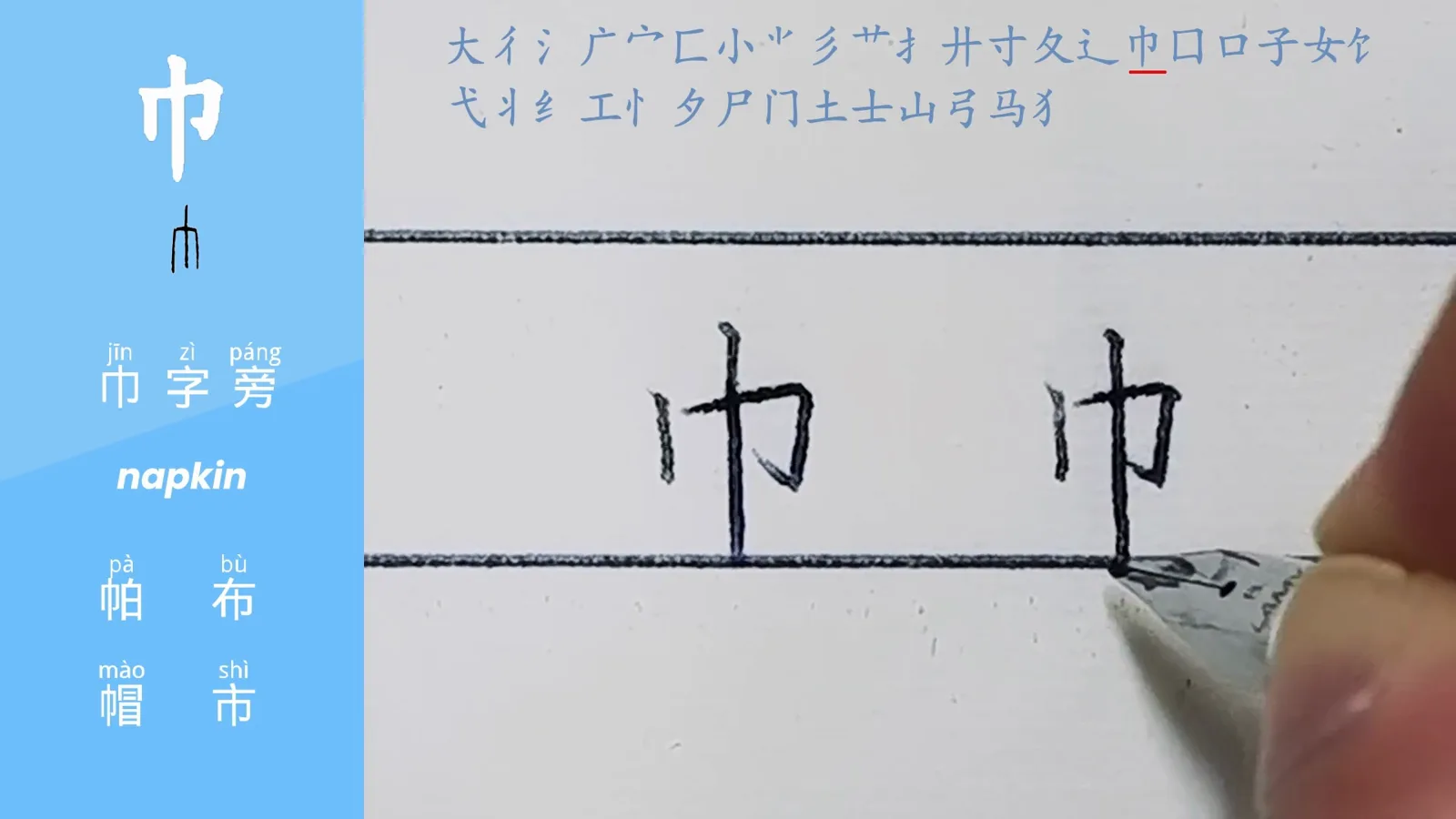
The 巾 cloth radical with example characters 帕 布 帽 市.Ansehen bei 7:02 - 8
口 — the mouth radical
A simple square, 口, stands for the mouth and, by extension, speech, eating, and expression. It is everywhere — 吃, 喝, 扣 and 问 all borrow its sense of an opening or an utterance.
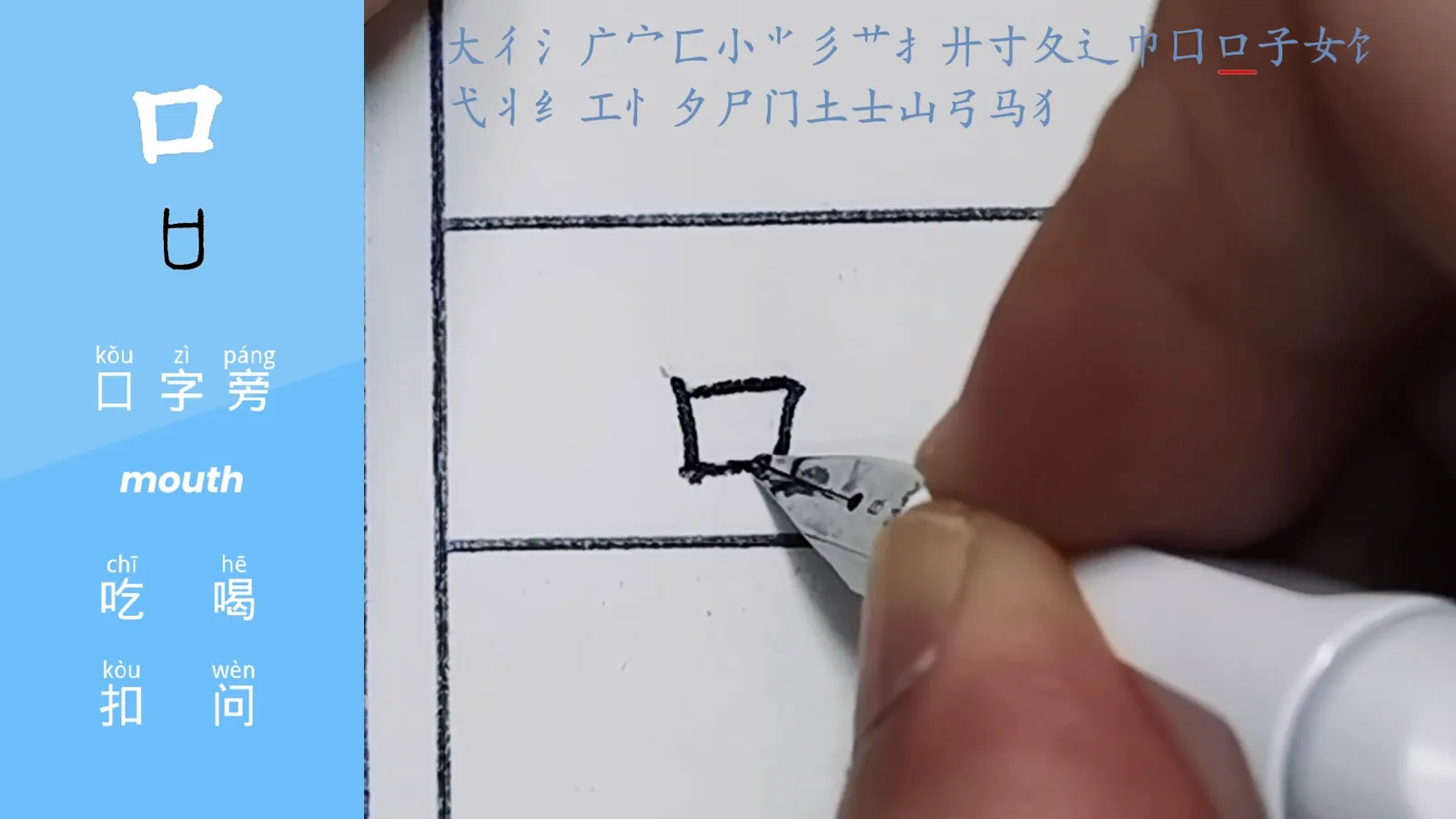
The 口 mouth radical with example characters 吃 喝 扣 问.Ansehen bei 7:22
Häufig gestellte Fragen
- What is the difference between a radical and a component?
- A component is any reusable part of a character; a radical is the component a dictionary files the character under, and the one that most often hints at meaning. In everyday use the two words overlap.
- Can I pick a name just from radicals I like?
- Radicals are a great starting point, but a full character has its own meaning, pronunciation, and cultural associations. Check the whole character, not only its radical, before settling on a name.
- Do these radicals change meaning inside a name?
- Rarely. The water radical still reads as water and the grass radical still reads as plant life; that stability is exactly what lets you infer a name's mood from its parts.
Weiterlesen
© 2026 AIChineseName.